
Business
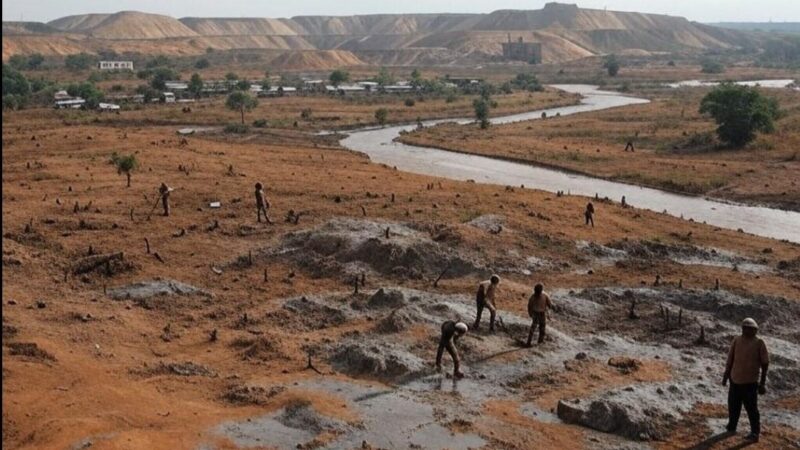
From Diamonds to Lithium: Africa’s Chance to Rewrite the Resource Story
LESEDI (not her real name), a promising entrepreneur in Gaborone, the capital city of Botswana, sounds very dejected as she reflects on her garment manufacturing business.
“We haven’t had any orders since October last year, I think. They were going through a transition, trying to cut down costs,” she says.
There have been indications that this could change for the better in the near future, but expectations are not high.
“They had a meeting with us that they are done with the transition and promised that orders should start coming through. But I don’t think it will be like before, as you know the diamond sales have gone down,” she added.
Botswana has long been regarded as one of the world’s most stable democracies, and Lesedi’s story is one of the reasons the sparsely populated country is often celebrated as one of Africa’s greatest success stories in natural resource management.
She had managed to build a thriving business supplying personal protective equipment to the diamond mines under an agreement brokered by the government for local suppliers.
Yet this strong reputation has tended to obscure deeper concerns about how much of the country’s natural resource wealth truly benefits its people.
Botswana has not sold any diamonds for months, and the ensuing economic fallout has begun to strip away the veneer of stability, revealing deep-seated structural cracks.
Lab-grown gems are now more sought after, and Anglo American is offloading De Beers.
The decision follows a series of value hits triggered by Anglo American itself: a US$2.3 billion write-down, coming on the heels of a US$3 billion reduction reported the previous year, both of which significantly impacted the company’s valuation.
The country had been locked in negotiations spanning different administrations with Anglo American’s majority-owned miner, De Beers, for a greater share of the diamonds.
Negotiations over the deal started in 2018, but an agreement announced in 2023 under former President Mokgweetsi Masisi was never formally signed.
Only after the appointment of Masisi’s successor, Duma Boko, was the agreement sealed.
Among the provisions of the deal, during the first five years, the state-owned Okavango Diamond Company (ODC) will sell 30% of Debswana’s output, up from 25% previously, with the remainder going to Anglo American.
The provisional agreement reached with Botswana’s previous government had ODC’s allocation from Debswana Botswana’s joint venture with De Beers reaching 50% at the end of the 10-year pact.
The allocation will now reach 40% after the same period.
The deal was seen as critical for the southern African country since its economy is largely dependent on the export of diamonds.
As of early 2026, the Botswana government, under President Duma Boko, is actively working to take advantage of Anglo American’s disinvestment and increase its 15% stake in De Beers to a controlling share of over 50%.
This move aims to secure economic sovereignty and greater control over the diamond value chain, with potential financing secured from partners like the Oman sovereign wealth fund.
However, with the write-downs, the economic viability of any potential deal is still in question.
Context: Botswana supplies roughly 70% of De Beers’ rough diamond production, making the company a strategic asset.
Timeline & Status: Following announcements in late 2025, the government is proceeding with acquisition steps despite a challenging, low-demand diamond market.
Botswana’s move is driven by the need to have a stronger voice in the diamond industry as Anglo American divests its stake.
Diversification Efforts: The government is urgently seeking to diversify by exploring for other critical minerals, such as copper and cobalt, and investing in renewable energy, technology, and agriculture.
Exploration Push: Roughly 70% of unexplored territory is being targeted for new mineral development to replace lost diamond revenue.
Slow Recovery: Projections suggest only a modest economic recovery, with growth potentially returning to around 1.9% in 2026, assuming successful structural reforms.
As a result, Botswana is at a critical juncture, needing to swiftly pivot away from its 50-year reliance on diamonds to avoid deeper economic hardship.
The falling diamond revenues have already begun to reshape national economic policy. Botswana’s economy contracted by 1% in 2025, prompting intensified efforts to diversify the mining sector and support the government’s target of 3.1% GDP growth in 2026.
According to the country’s statistics agency, gross domestic product decreased by 5.3% on a year-on-year basis, the steepest quarterly contraction since the COVID-19 pandemic.
Botswana’s economy is forecast to rebound in 2026 after two years of decline, although increasing fiscal deficits are likely to drive public debt above the government’s legal ceiling, Finance Minister Ndaba Gaolathe has also said.
Speaking during the national budget presentation on Monday, Gaolathe projected 3.1% economic growth for 2026, following estimated contractions of 0.4% in 2025 and 2.8% in 2024.
Diamonds continue to underpin the economy, accounting for roughly one-third of government revenue and about three-quarters of foreign exchange earnings, official figures show.
Even with a projected economic rebound, public finances remain strained. The budget deficit for the fiscal year beginning in April is expected to reach 26.35 billion pula (US$1.91 billion), or 8.9% of GDP, up from a projected 25.48 billion pula (US$1.9 billion) deficit in the current fiscal year.
Gaolathe noted that the growing deficit stems from a persistent gap between spending obligations and realistically available resources.
Consequently, the debt load is set to climb. The debt-to-GDP ratio was projected to reach 38.7% by March 2026 and rise further to 44.6% by March 2027, surpassing the current statutory limit of 40%.
The minister recognised that breaching the debt ceiling could raise short-term concerns among investors and markets. However, he argued that the economic harm from drastic spending cuts needed to stay within the limit would be even greater.
Botswana’s challenge in achieving economic balance from its natural resources reflects a common pattern across much of Africa, where economies continue to rely heavily on primary resource-based industries.
This pattern is evident throughout the continent, and as global powers once again scramble for access to Africa’s critical mineral resources, concerns are growing that Africans could be left empty-handed once the minerals are depleted.
This article is taken from Finance Africa quarterlyFinance Africa quarterly, a Bard Global Finance Institute, a newly-formed local research organisation.
Business
COTTCO Scandal: US$70 Million Vanishes as Farmers Suffer, Governance in Crisis
Harare, Zimbabwe – A shocking exposé has rocked the Cotton Company of Zimbabwe Limited (COTTCO), revealing that over US$70 million in crucial funding has allegedly been mismanaged within a single year. This staggering revelation comes as COTTCO continues to fail in its fundamental duty to pay thousands of struggling cotton farmers, sparking outrage and raising serious questions about corporate governance and accountability within state-linked entities.
The bombshell dropped during a Parliamentary Portfolio Committee hearing on Lands, Agriculture, Fisheries, Water and Rural Development. John Mangudya, the Chief Executive of the Mutapa Investment Fund, laid bare the grim reality: despite receiving massive financial injections, COTTCO remains a financial black hole, unable to meet its obligations to the very people who sustain the cotton industry.
Mangudya’s testimony painted a damning picture. He disclosed that COTTCO benefits from approximately US$60 million annually in government-backed input support. On top of this, the Mutapa Investment Fund injected an additional US$11 million last year, specifically intended to help clear COTTCO’s mounting debts. Yet, despite this colossal sum – a total exceeding US$70 million – the company still failed to settle an estimated US$25 million in debts.
“This points to serious financial mismanagement,” Mangudya asserted, directly implicating COTTCO’s board and executive for their glaring failures in oversight. He highlighted a disturbing pattern of corporate governance lapses and strong indications of financial irregularities that demand immediate and thorough investigation. In a particularly egregious revelation, Mangudya confirmed that a significant portion of the US$11 million from Mutapa – approximately US$6.6 million – which was explicitly allocated for farmer payments, was instead diverted to service bank debts. This desperate move was reportedly made under duress, as lenders threatened to seize company assets, leaving farmers in the lurch.
In a move that smacks of crisis management, COTTCO’s board resolved on April 28, 2026, to place the company under voluntary corporate rescue. This decision, made under Section 122 of the Insolvency Act (Chapter 6:07), acknowledges the company’s dire financial state, characterized by crippling liquidity constraints, astronomical debt levels, and an ever-growing pile of arrears. While Mangudya attempted to spin this as a “strength” – a necessary intervention to protect COTTCO and facilitate investigation – the reality is that it exposes a profound systemic failure.
“The process that we have taken is a good one because the corporate rescue practitioner will investigate what was happening,” Mangudya stated, attempting to reassure a skeptical public. He insisted that the appointment of corporate rescue practitioners, Farai Chibisa and Ian Mtetwa of Grant Thornton Zimbabwe, would not halt any ongoing investigations or forensic audits. Their mandate is to oversee the restructuring and implement a turnaround strategy, with COTTCO optimistically claiming viability due to its asset base and market presence.
However, this optimism rings hollow for the thousands of cotton farmers who remain unpaid, their livelihoods jeopardized by what appears to be gross negligence and potential corruption. The scale of this alleged financial mismanagement is set to ignite a firestorm of demands for accountability. The corporate rescue process, while perhaps a legal necessity, must not become a shield for those responsible. It must serve as a conduit for a comprehensive, transparent review of COTTCO’s financial affairs, with a clear commitment from Mangudya that any evidence of wrongdoing will be met with decisive action. The Zimbabwean public, and especially its hardworking farmers, deserve nothing less than full transparency and justice for this egregious misuse of public and farmer funds.
Business
Kutsaga fueling food security and rural growth
Kutsaga Research Station, once synonymous with Zimbabwe’s tobacco industry, is now spearheading a transformative agricultural revolution, pivoting its scientific prowess towards rural industrialisation and national food security.
This monumental shift, lauded by Agriculture Permanent Secretary Prof. Dr. Obert Jiri at the recent ZITF 2026, marks a critical stride in aligning research with commercial viability and the nation’s ambitious Vision 2030 agricultural agenda.
Prof. Dr. Jiri said Kutsaga’s innovative expansion beyond its traditional mandate.
He specifically praised the station’s success in developing tissue-cultured virus-free sweet potatoes and pioneering industrial hemp cultivation.
These initiatives exemplify how institutional expertise can be leveraged to create commercially viable products, underscoring the imperative that research must be commercialised to ensure its long-term sustainability.
“Kutsaga’s transformation is not just about diversifying crops, it is about building resilient value chains that directly benefit our rural communities,” said Prof. Dr. Jiri.
ALSO READ: Global seed giants eye Zimbabwe as strategic hub
This strategic redirection aims to reduce the nation’s reliance on single commodities, thereby shielding farmers from the volatile impacts of market fluctuations and climate change.
The move is a direct response to Zimbabwe’s Vision 2030, which prioritises agricultural transformation as a cornerstone for economic growth and stability.
Business
Prospect Lithium Marks Historic First with Lithium Sulphate Export
Prospect Lithium of Zimbabwe has dispatched its first consignment of lithium sulphate from its newly commissioned US$400 million processing plant at Arcadia Mine.
According to the company, this is the first time lithium sulphate has been produced not only in Zimbabwe but across the African continent.
The milestone signals a significant move towards increased local processing of lithium, rather than exporting raw or semi-processed materials.
Prospect described the development as a breakthrough for the country and region, noting that the shipment represents the first production of lithium salts in Zimbabwe and Africa, and highlights progress in mineral beneficiation and industrial growth.
Zimbabwe has been tightening its policies on lithium exports in recent years. In 2022, the government banned the export of raw lithium, pushing mining companies to process the mineral into concentrates.
At that time, major players, including Prospect Lithium (owned by Huayou Cobalt), had already begun upgrading their operations.
In 2025, authorities raised the requirements further, announcing that by 2027, lithium producers will be expected to export sulphate, a higher-value product used in the manufacture of battery materials.
To support this transition, a 10% tax was introduced on lithium concentrates to encourage further processing.
Earlier this year, the government also temporarily halted concentrate exports, later allowing limited shipments under a quota system as producers adjust to the new value-addition requirements.
-
Current Affairs6 months agoOperation restore order
-
Crime and Courts7 months agoMasasi High School Abuse Scandal Sparks Public Outcry
-
Crime and Courts8 months agoKuwadzana Man Jailed for Reckless Driving and Driving Without a Licence
-
Current Affairs9 months agoBreaking: ZIMSEC June 2025 Exam Results Now Available Online
-
Current Affairs8 months agoMunhumutapa Day: Zimbabwe’s Newest Public Holiday Set for Annual Observance
-
Current Affairs7 months agoBREAKING NEWS: ZANU PF Director General Ezekiel Zabanyana Fired
-
Current Affairs9 months agoNo Racism in Our Cricket: Government
-
Business6 months agoTino Tungwarara Launches Prevail Mart, Becoming One of Zimbabwe’s Youngest Retail Entrepreneurs