Current Affairs
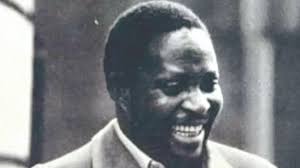
Heroes Month Spotlight- Josiah Magama Tongogara: Life, Leadership, and Legacy
Widely known as General Tongo during Zimbabwe’s liberation struggle, Josiah Magama Tongogara was the commanding figure of ZANLA (Zimbabwe African National Liberation Army), the military wing of ZANU (Zimbabwe African National Union). He played a vital leadership role in the Dare ReChimurenga (ZANU’s War Council) and its High Command, overseeing military strategies against the Rhodesian regime led by Ian Smith.
In December 2017, the Zimbabwean government officially renamed King George VI Barracks and the Air Force Headquarters in Harare to Josiah Magama Tongogara Barracks, honoring his contributions to the liberation of the country.
Early Life
Tongogara was born on 4 February 1938 in Selukwe (now Shurugwi). He grew up on a farm owned by Ian Smith’s parents, where both of his own parents worked and where he too was later employed. He completed primary education up to Standard Six. Due to challenges accessing secondary education, he migrated to Northern Rhodesia (modern-day Zambia) in 1960, where he studied bookkeeping and took up a job as secretary at Chainama Golf Club.
Path to Revolution
His brother Percy’s untimely drowning in the Kafue River—which he believed to be politically motivated—served as a turning point in Tongogara’s life, pushing him towards militant nationalism. In 1963, he began political activism in Zambia through ZANU’s youth wing. By 1966, he led the first group of liberation fighters to undergo military training in China.
Tongogara was seen as a capable and assertive leader. In 1973, he replaced Herbert Chitepo as head of ZANU’s High Command, signaling a shift in internal power dynamics within the movement. A year later, he openly opposed peace negotiations initiated by Zambian President Kenneth Kaunda, insisting that the armed struggle continue.
Arrest and Military Unity
Following the assassination of Chitepo in March 1975, Tongogara was arrested and imprisoned in Zambia on suspicion of involvement. While incarcerated, he endorsed the formation of ZIPA (Zimbabwe People’s Army), a unified military front combining fighters from both ZANLA and ZIPRA (the military arm of ZAPU). He was acquitted and released in 1976, just in time to attend the Geneva Conference.
Lancaster House Talks and Push for Unity
Tongogara played an influential role in the 1979 Lancaster House negotiations that paved the way for Zimbabwe’s independence. Known for his level-headed approach, he reportedly helped mediate tense moments, including one instance when he calmed down Robert Mugabe after a heated exchange with Lord Carrington, the talks’ chair.
He advocated for unity between ZANU and ZAPU, even holding private meetings with Joshua Nkomo. Some believe his push for post-war political integration and his strong stance during the talks may have made him a target.
Controversial Death
Tongogara died on 26 December 1979, just days after the Lancaster House Agreement. Official accounts state he perished in a car accident in Mozambique, but the circumstances of his death remain widely disputed. Conflicting reports range from mechanical failure to collision with an abandoned military vehicle. Some even allege that he was assassinated, potentially due to his influence and differing political vision from Mugabe.
Family members, including his widow Angelina, raised concerns over the secrecy surrounding his death. She claimed she was never allowed to fully view his body and questioned the official version of events. Later interviews and testimonies, including from Oppah Muchinguri and Dumiso Dabengwa, presented varying narratives—some insisting it was an accident, others suggesting an internal plot.
Personal Life and Family
Tongogara was married to Angelina, with whom he had four children: Hondo, Tichafa, Bvumai, and Nyaradzo. However, his eldest brother, Michael Tongogara, claimed Josiah fathered ten children with seven women during the war. One of his children, Conrad (born 1963), is said to be the eldest. Others include Sukai, Simba, Tichaitora, Annie, and Granger.
Legacy and Recognition
In 2012, the Tongogara Legacy Foundation was launched to preserve his memory and contributions to Zimbabwe’s liberation. Despite early neglect from the state, his family eventually received government support. Angelina even sought help from then Prime Minister Morgan Tsvangirai, alleging economic hardship due to state inaction.
Calls were made to declare 26 December as Josiah Tongogara Day, though this was not officially adopted. However, the renaming of military installations in 2017 by President Emmerson Mnangagwa was a significant gesture of recognition.
Josiah Tongogara remains a complex and revered figure in Zimbabwe’s liberation history. Respected for his military brilliance, political foresight, and commitment to unity, his untimely and controversial death left a void in Zimbabwe’s post-independence trajectory. His life continues to inspire debate, research, and remembrance.

Current Affairs
POTRAZ Q4 Report Highlights NetOne’s Strong Digital Growth and Rural Connectivity Expansion
The latest Fourth Quarter 2025 Postal and Telecommunications Sector Performance Report released by the Postal and Telecommunications Regulatory Authority of Zimbabwe (POTRAZ) has highlighted NetOne’s growing role in driving Zimbabwe’s digital transformation through infrastructure expansion, rising data usage and improved rural connectivity.
According to the report, NetOne recorded significant growth in mobile internet and data traffic during the final quarter of 2025, with usage increasing by 18.50 percent from 25.29 billion megabytes in the third quarter to 29.97 billion megabytes in Q4.
The growth also resulted in a 1.14 percentage point increase in the operator’s mobile internet and data traffic market share, strengthening NetOne’s competitiveness in the country’s fast-growing digital communications sector.
The report further noted growth in NetOne’s active subscriber base, which rose from 4,062,894 subscribers to 4,101,492 during the quarter, reflecting continued customer confidence in the operator’s services and digital products.
POTRAZ acknowledged the company’s continued investment in network infrastructure, particularly in expanding broadband access across the country.
“NetOne continued to make strides particularly in 3G and LTE deployments, to expand its network coverage,” the report stated.
During the quarter, the operator added 89 LTE base stations while increasing its 5G sites from 21 to 26 as part of efforts to improve connectivity and digital inclusion.
The report also identified NetOne as a major contributor to rural telecommunications infrastructure, revealing that the operator now controls 46.14 percent of Zimbabwe’s rural base stations.
The expansion of rural connectivity is helping bridge the digital divide by improving access to online learning, financial services, healthcare information and digital commerce opportunities in underserved communities.
Under the leadership of Group Chief Executive Officer Raphael Mushanawani, the company has continued repositioning itself as a modern digital services provider focused on innovation, accountability and customer-centred solutions.
Commenting on the latest sector performance results, Engineer Mushanawani said the company remained committed to inclusive national development through digital connectivity.
“These results affirm our commitment to connecting communities, empowering businesses and accelerating Zimbabwe’s digital transformation through resilient and accessible network infrastructure,” said Engineer Mushanawani.
NetOne has also expanded customer-focused services through affordable broadband packages, improved OneMoney solutions and data bundles designed for students, entrepreneurs and rural communities.
Beyond telecommunications services, the company has intensified its corporate social responsibility programmes, including borehole drilling initiatives, support for schools through digital learning tools and partnerships with healthcare institutions on community wellness programmes.
The operator’s commitment to diversity was also reflected in its workforce, with women accounting for 436 out of its 1,045 employees.
In recognition of his leadership and contribution to Zimbabwe’s telecommunications industry, Engineer Mushanawani was recently inducted into the prestigious Business Leaders Hall of Fame 2026.
Current Affairs
Minister Masuka Defends BIPPA Farm Returns, Says Land Reform Remains Irreversible
The Government has dismissed claims that the return of 67 farms protected under Bilateral Investment Promotion and Protection Agreements (BIPPA) marks a reversal of Zimbabwe’s land reform programme, with authorities stressing that the move is part of resolving legal obligations and strengthening the country’s land tenure framework.
Acting Leader of Government Business in Parliament, Minister of Agriculture, Mechanization and water resource Dr Anxious Masuka, on Wednesday directly addressed the misconception, explaining that the return of BIPPA properties is a narrowly defined legal and constitutional obligation not a policy shift back to the pre-2000 era.
“The BIPPA process is about settling outstanding legal claims and compensating investments protected by bilateral treaties, it does not open the floodgates for the return of all former white farms, the land reform programme remains irreversible,” he said.
The Minister confirmed that while 67 properties covered under BIPPA will be returned to their previous owners, this represents a fraction of the total land under the programme and is being done strictly within the framework of Zimbabwean law and international investment obligations.
The development comes at a time when the government is simultaneously granting secure tenure to a staggering 450,000 black farmers under President Emmerson Mnangagwa’s administration.
According to the Minister, in terms of the Constitution Sections 289, 293, and 295, the government will provide permits, leases, and offer letters to 360,000 A1 farmers 23,500 A2 farmers Over 70,000 old resettlement farmers.
In addition to these, the government is correcting historical and administrative errors that have fuelled the reversal myth. Authorities are returning 840 farms that were wrongly gazetted but which rightfully belong to black farmers.
In another move that reinforces the government’s commitment to indigenous ownership, some 10,000 Matenganyika farms whose beneficiaries were given leases before 1980 will now finally receive title deeds.
For the 409 former farm owners who have remained on their properties due to long-standing peaceful co-existence with new owners, the government has crafted a specific solution that stops short of outright reversal. These individuals will now be allowed to purchase the properties they occupy.
Current Affairs
El Niño Threat Looms
Itai Mazire
Zimbabwe faces a high probability of a looming El Niño event during the 2026/27 rainy season, with forecasts indicating a significant chance of below-normal rainfall.
The Meteorological Services Department (MSD) has issued a preliminary update, urging calm but emphasising the need for proactive measures.
Global climate forecasting centers predict an 88 to 94 percent chance of an El Niño event, historically linked to drier-than-average conditions in Zimbabwe.
“Historically, El Niño conditions in Zimbabwe carry a 65 percent chance of below-normal rainfall, which can lead to drier-than-average conditions.”
Despite the concerning outlook, the MSD cautions against premature decisions.
They said that early forecasts face a “spring predictability barrier,” meaning atmospheric and oceanic conditions could still change significantly before the season begins.
Consequently, the department has not yet released its official seasonal forecast.
“Because of this inherent uncertainty, the MSD has not yet issued its official seasonal forecast and warns the public and stakeholders against making final agricultural or financial decisions based solely on these preliminary models,” the statement read.
A more definitive national outlook (NACOF) is anticipated in August 2026, following the Southern African Development Community (SADC) Climate Outlook Forum (SARCOF).
In the interim, the MSD is advising both the public and the farming community to remain composed.
They recommend continuing with standard preparations for the upcoming season and adopting climate-resilient practices.
These practices include water conservation and the identification of drought-tolerant seed varieties.
The MSD further encouraged stakeholders to stay informed through official channels.
“Stakeholders are encouraged to stay informed exclusively through official MSD channels for regular updates as the weather outlook becomes clearer in the months ahead.”
The upcoming NACOF report will incorporate more recent data, providing crucial scientific guidance for accurate seasonal planning.
The MSD will continue to monitor updates closely.
-
Current Affairs6 months agoOperation restore order
-
Crime and Courts7 months agoMasasi High School Abuse Scandal Sparks Public Outcry
-
Crime and Courts8 months agoKuwadzana Man Jailed for Reckless Driving and Driving Without a Licence
-
Current Affairs9 months agoBreaking: ZIMSEC June 2025 Exam Results Now Available Online
-
Current Affairs8 months agoMunhumutapa Day: Zimbabwe’s Newest Public Holiday Set for Annual Observance
-
Current Affairs7 months agoBREAKING NEWS: ZANU PF Director General Ezekiel Zabanyana Fired
-
Current Affairs9 months agoNo Racism in Our Cricket: Government
-
Business6 months agoTino Tungwarara Launches Prevail Mart, Becoming One of Zimbabwe’s Youngest Retail Entrepreneurs