
Business
Mineral Sales Soar by 79 percent


Itai Mazire
Zimbabwe’s mining sector has achieved an unprecedented surge in the first quarter of 2026, with total mineral sales rocketing to USD 983.85 million, marking a staggering 79 percent increase in value compared to the same period in 2025.
This remarkable performance, driven by a bold government ban on unbeneficiated mineral exports, positions the Minerals Marketing Corporation of Zimbabwe (MMCZ) firmly on track to exceed its annual revenue projection of USD 3.5 billion.
Dr. Nomusa Jane Moyo, the MMCZ General Manager, provided insights into the corporation’s outstanding performance and the strategic impact of recent policy decisions.
“The first quarter of 2026 marked a defining moment in Zimbabwe’s mineral governance, with total minerals sales reaching 1,288,761 metric tonnes valued at USD 983.85 million, surpassing 2025 volumes by 27 percent and values by 79 percent,” said Dr. Moyo.
She further elaborated on the strategic importance of the new policies.
“Government’s ban on lithium concentrates exports, while producing short-term disruption to global spot supplies, has solidified Zimbabwe’s strategic influence over the global battery supply chain through domestic processing.
“As a supplier of approximately 15 percent of the spodumene imported into China, Zimbabwe is a critical and vertically integrated partner for the world’s leading battery manufacturers.”
Dr. Moyo also detailed the exceptional growth in specific commodities.
“Lithium recorded the strongest performance during the quarter, with Q1 2026 sales reaching 190,612 metric tonnes valued at USD 68.22 million, representing a remarkable 150 increase in volume and a 254 percent increase in value against the same period in 2025, when sales stood at 76,163 metric tonnes valued at USD 19.25 million,” she said.
Addressing the broader economic impact, Dr. Moyo said, “This exceptional growth is directly attributable to increased production of value-added steel products and the shift to processed products is projected to drive lithium export revenues beyond USD1 billion, significantly amplifying the sector’s contribution to national GDP.”
Regarding other key minerals, Dr. Moyo said Platinum Group Metals delivered an exceptional value performance in Q1 2026.
“PGM collectively contributed USD 543.97 million in export revenue across both concentrate and matte categories, with PGM matte sales at 3,080 metric tonnes valued at USD 352.24 million and PGM concentrate sales at 30,178 metric tonnes valued at US$191.73 million.”
Dr. Moyo highlighted the robust performance in the steel sector.
“Steel delivered one of the most outstanding performances of the quarter, with Q1 2026 sales reaching 240,826 metric tonnes valued at USD 178.64 million, a 2% increase in volume and a 106 percent surge in value against the 224,610 metric tonnes valued at USD 84.19 million recorded in Q1 2025, a compelling demonstration of what beneficiation delivers in practice.”

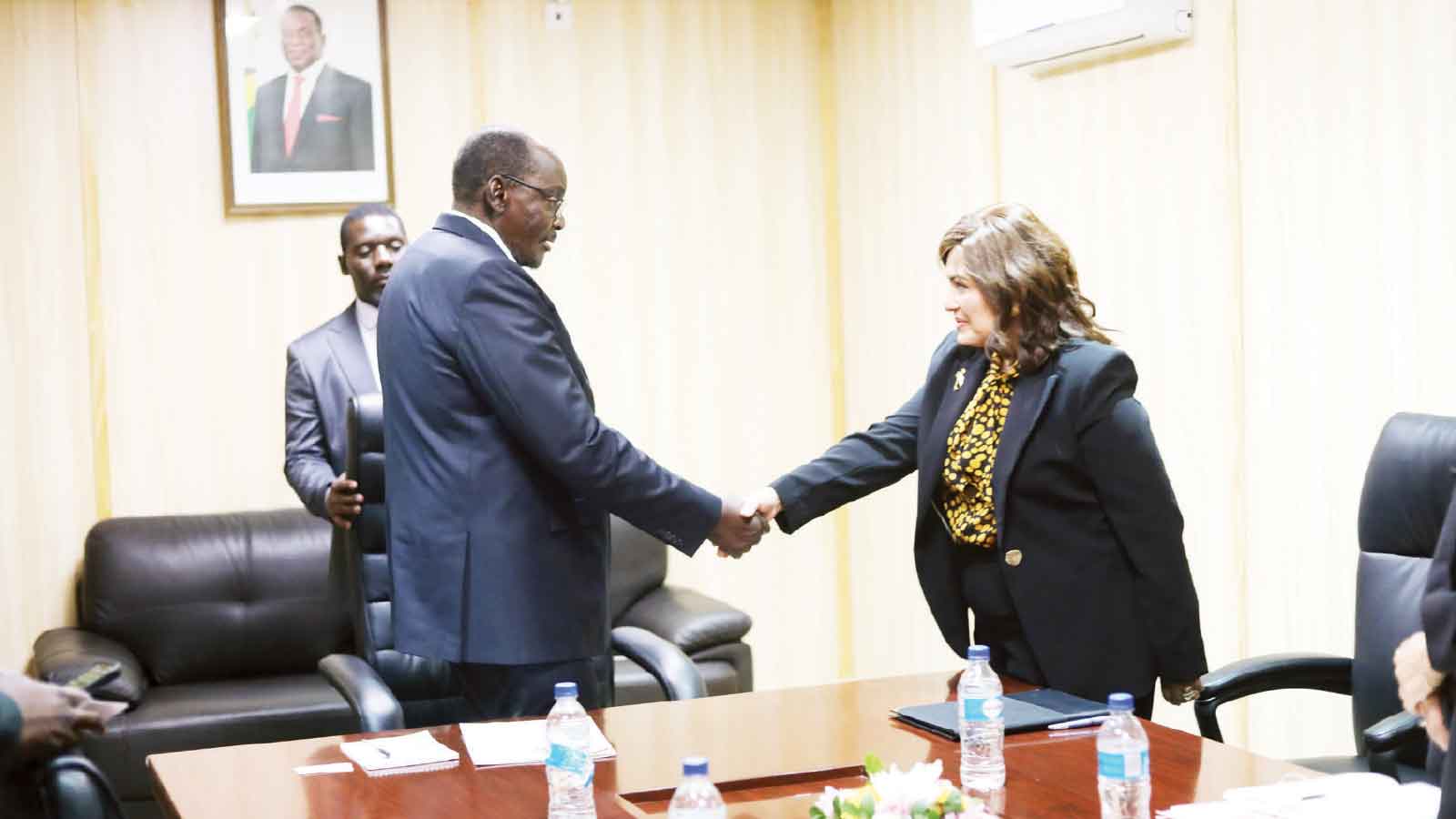
Harare, Zimbabwe – Envoys from Italy, Japan, and Egypt have reiterated their commitment to supporting Zimbabwe’s national development agenda, which aims to achieve an upper-middle-income society by 2030.
These affirmations were made during separate courtesy calls paid by the respective Ambassadors to Vice President Dr. Kembo Mohadi at his offices in Harare.
Italian Ambassador to Zimbabwe, Mr. Giuseppe Giacalone, underscored his country’s dedication to strengthening bilateral trade relations with Zimbabwe. Following his meeting with Vice President Mohadi, Ambassador Giacalone stated that discussions focused on enhancing cooperation across various sectors, including investment, infrastructure development, trade, and cultural exchanges.
Ambassador Giacalone also provided an update on Zimbabwe’s participation in the ongoing Venice Biennale Arts Festival, where five local artists are showcasing their work. Furthermore, he highlighted discussions regarding Zimbabwe’s preparations to host the 58th CIMAM Annual Conference, scheduled for November at the National Gallery of Zimbabwe.
“The discussion with Vice President Mohadi was indeed engaging and productive,” Ambassador Giacalone remarked. “We reflected on the historical friendship and close ties between Italy and Zimbabwe, acknowledging the strong existing relations and the imperative to further fortify them. Our commercial ties are robust and dynamic, yet there is significant potential for growth. My primary objective will be to enhance the bilateral trade relationship between our two nations.”
He further noted that current Italian investments in dam construction, particularly the Tokwe-Mukosi project under the We Build Group, were also part of the comprehensive discussions.
Egyptian Ambassador to Zimbabwe, Dr. Maha Serag Eldin Kamel, also paid a courtesy call on Vice President Mohadi. Ambassador Kamel emphasized that the forthcoming African Union Mid-Year Summit would present a crucial opportunity for Zimbabwe to expand its investment portfolio, as the event is designed to convene African nations to deliberate on business and economic matters. The summit is slated for next month.
Dr. Kamel conveyed Egypt’s renewed commitment to supporting Zimbabwe in its developmental endeavors. Discussions between the Ambassador and the Vice President encompassed cooperation in the health, construction, political, and economic sectors. She highlighted that the bilateral relations between Zimbabwe and Egypt have deep historical roots, tracing back to Egypt’s support for Zimbabwe’s liberation struggle. The two countries continue to enjoy excellent relations, and the meeting served as a platform to explore additional avenues for cooperation.
Ambassador Kamel announced that Egypt would host the African Union Mid-Year Summit in June, in the coastal city of El Alamein on the Mediterranean Sea. This summit will coincide with the inaugural El Alamein Africa Forum, a business-focused event expected to attract participation from African countries and private sector stakeholders across the continent.
Japanese Ambassador to Zimbabwe, Mr. Nobutaka Maekawa, similarly paid a courtesy call on Vice President Mohadi. Ambassador Maekawa reaffirmed Japan’s ongoing cooperation with Zimbabwe in critical sectors such as agriculture, health, tourism, and mining.
He reported that both nations had agreed to further solidify their relations through the promotion of business cooperation in these key areas. “This was a very constructive discussion,” Mr. Maekawa stated, “Our dialogue centered on the extensive and consistent cooperation we have fostered over the years, as well as exploring further possibilities for collaboration in diverse sectors including agriculture, healthcare, tourism, and mining.”
“Crucially, we concurred on the intensified promotion of business-driven cooperation in major sectors,” he added. “Japan is keen to tangibly and cooperatively strengthen this partnership, optimally combining it with the conventional development assistance that the Japanese government has historically provided.”
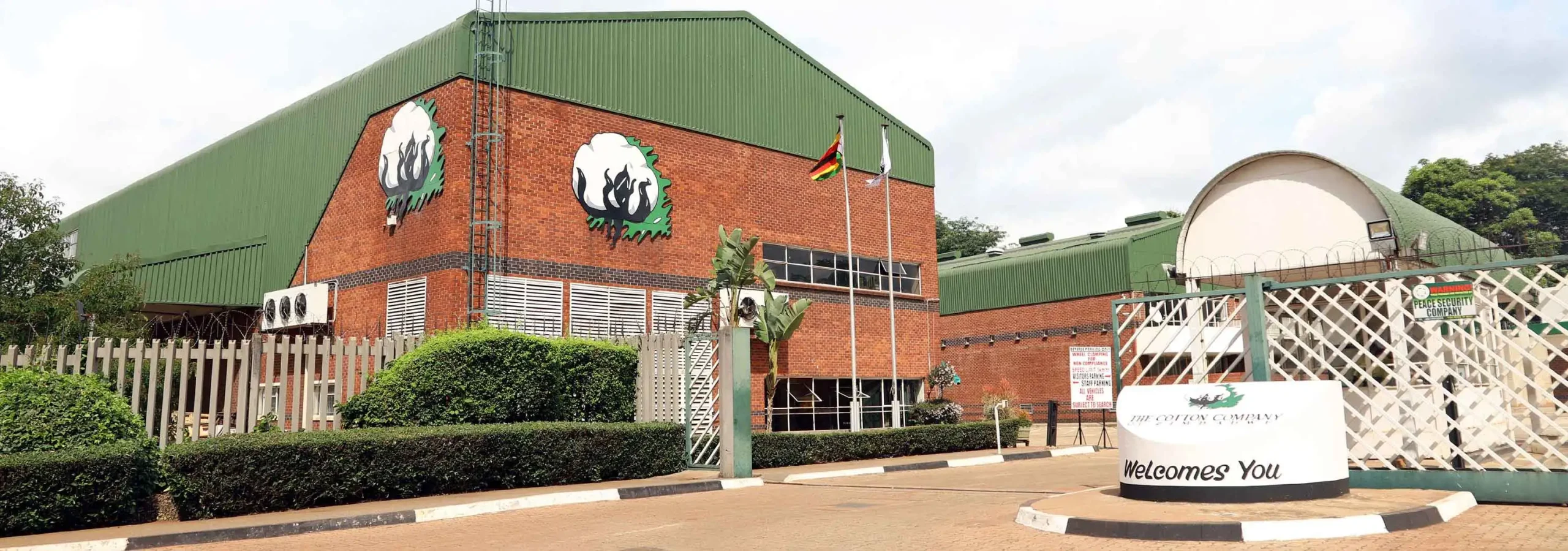
Harare, Zimbabwe – A shocking exposé has rocked the Cotton Company of Zimbabwe Limited (COTTCO), revealing that over US$70 million in crucial funding has allegedly been mismanaged within a single year. This staggering revelation comes as COTTCO continues to fail in its fundamental duty to pay thousands of struggling cotton farmers, sparking outrage and raising serious questions about corporate governance and accountability within state-linked entities.
The bombshell dropped during a Parliamentary Portfolio Committee hearing on Lands, Agriculture, Fisheries, Water and Rural Development. John Mangudya, the Chief Executive of the Mutapa Investment Fund, laid bare the grim reality: despite receiving massive financial injections, COTTCO remains a financial black hole, unable to meet its obligations to the very people who sustain the cotton industry.
Mangudya’s testimony painted a damning picture. He disclosed that COTTCO benefits from approximately US$60 million annually in government-backed input support. On top of this, the Mutapa Investment Fund injected an additional US$11 million last year, specifically intended to help clear COTTCO’s mounting debts. Yet, despite this colossal sum – a total exceeding US$70 million – the company still failed to settle an estimated US$25 million in debts.
“This points to serious financial mismanagement,” Mangudya asserted, directly implicating COTTCO’s board and executive for their glaring failures in oversight. He highlighted a disturbing pattern of corporate governance lapses and strong indications of financial irregularities that demand immediate and thorough investigation. In a particularly egregious revelation, Mangudya confirmed that a significant portion of the US$11 million from Mutapa – approximately US$6.6 million – which was explicitly allocated for farmer payments, was instead diverted to service bank debts. This desperate move was reportedly made under duress, as lenders threatened to seize company assets, leaving farmers in the lurch.
In a move that smacks of crisis management, COTTCO’s board resolved on April 28, 2026, to place the company under voluntary corporate rescue. This decision, made under Section 122 of the Insolvency Act (Chapter 6:07), acknowledges the company’s dire financial state, characterized by crippling liquidity constraints, astronomical debt levels, and an ever-growing pile of arrears. While Mangudya attempted to spin this as a “strength” – a necessary intervention to protect COTTCO and facilitate investigation – the reality is that it exposes a profound systemic failure.
“The process that we have taken is a good one because the corporate rescue practitioner will investigate what was happening,” Mangudya stated, attempting to reassure a skeptical public. He insisted that the appointment of corporate rescue practitioners, Farai Chibisa and Ian Mtetwa of Grant Thornton Zimbabwe, would not halt any ongoing investigations or forensic audits. Their mandate is to oversee the restructuring and implement a turnaround strategy, with COTTCO optimistically claiming viability due to its asset base and market presence.
However, this optimism rings hollow for the thousands of cotton farmers who remain unpaid, their livelihoods jeopardized by what appears to be gross negligence and potential corruption. The scale of this alleged financial mismanagement is set to ignite a firestorm of demands for accountability. The corporate rescue process, while perhaps a legal necessity, must not become a shield for those responsible. It must serve as a conduit for a comprehensive, transparent review of COTTCO’s financial affairs, with a clear commitment from Mangudya that any evidence of wrongdoing will be met with decisive action. The Zimbabwean public, and especially its hardworking farmers, deserve nothing less than full transparency and justice for this egregious misuse of public and farmer funds.

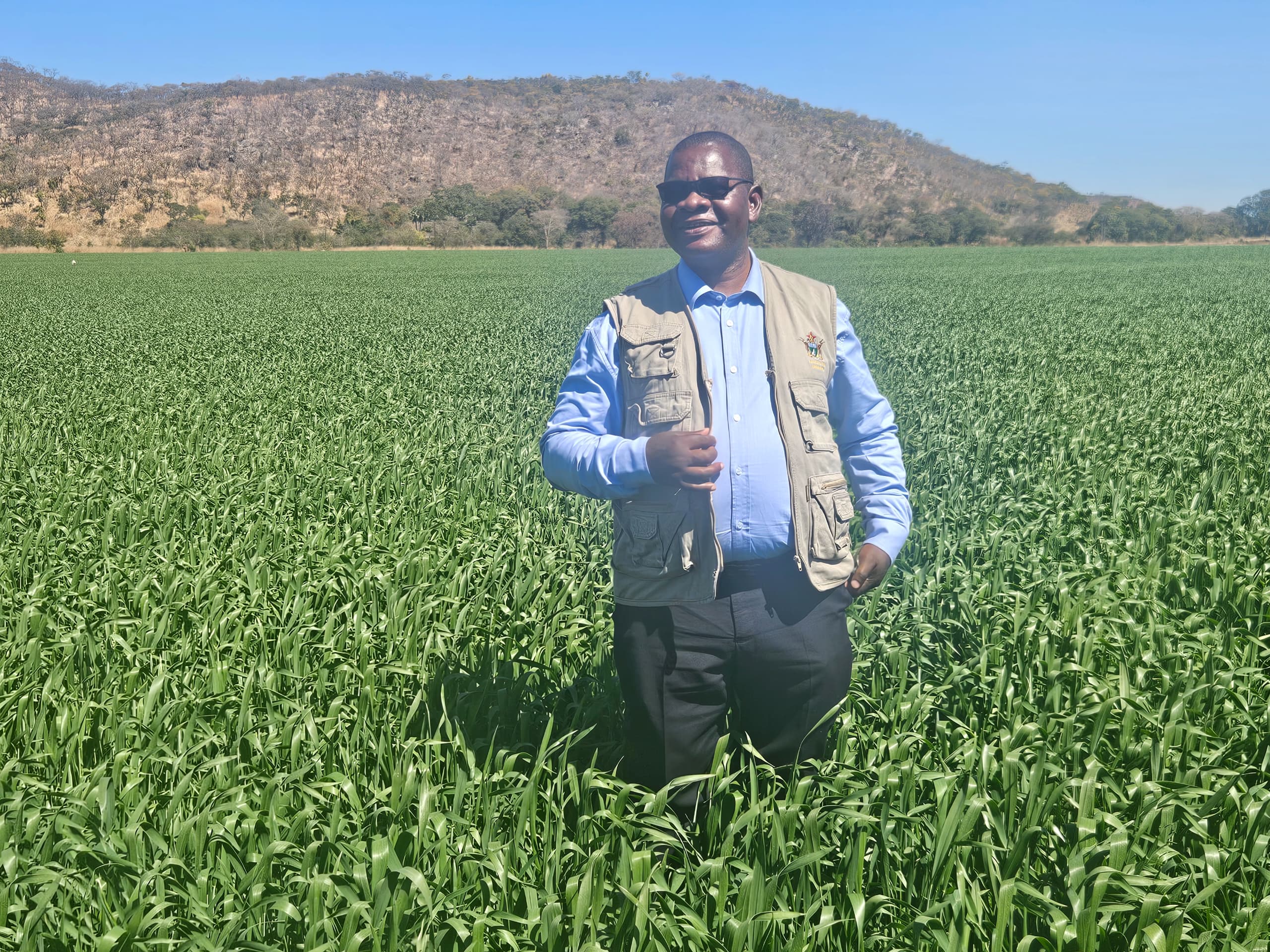
Kutsaga Research Station, once synonymous with Zimbabwe’s tobacco industry, is now spearheading a transformative agricultural revolution, pivoting its scientific prowess towards rural industrialisation and national food security.
This monumental shift, lauded by Agriculture Permanent Secretary Prof. Dr. Obert Jiri at the recent ZITF 2026, marks a critical stride in aligning research with commercial viability and the nation’s ambitious Vision 2030 agricultural agenda.
Prof. Dr. Jiri said Kutsaga’s innovative expansion beyond its traditional mandate.
He specifically praised the station’s success in developing tissue-cultured virus-free sweet potatoes and pioneering industrial hemp cultivation.
These initiatives exemplify how institutional expertise can be leveraged to create commercially viable products, underscoring the imperative that research must be commercialised to ensure its long-term sustainability.
“Kutsaga’s transformation is not just about diversifying crops, it is about building resilient value chains that directly benefit our rural communities,” said Prof. Dr. Jiri.
ALSO READ: Global seed giants eye Zimbabwe as strategic hub
This strategic redirection aims to reduce the nation’s reliance on single commodities, thereby shielding farmers from the volatile impacts of market fluctuations and climate change.
The move is a direct response to Zimbabwe’s Vision 2030, which prioritises agricultural transformation as a cornerstone for economic growth and stability.

Malaba Urges Proper Governance in Farewell Address

International Envoys Reaffirm Support for Zimbabwe’s Development Agenda

Historic Moment As Justice Gwaunza Breaks Gender Barrier In Judiciary

Operation restore order

Masasi High School Abuse Scandal Sparks Public Outcry

Kuwadzana Man Jailed for Reckless Driving and Driving Without a Licence
-
 Current Affairs6 months ago
Operation restore order
-
 Crime and Courts8 months ago
Masasi High School Abuse Scandal Sparks Public Outcry
-
 Crime and Courts8 months ago
Kuwadzana Man Jailed for Reckless Driving and Driving Without a Licence
-

 Current Affairs10 months ago
Breaking: ZIMSEC June 2025 Exam Results Now Available Online
-

 Current Affairs9 months ago
Munhumutapa Day: Zimbabwe’s Newest Public Holiday Set for Annual Observance
-

 Current Affairs7 months ago
BREAKING NEWS: ZANU PF Director General Ezekiel Zabanyana Fired
-

 Business6 months ago
Tino Tungwarara Launches Prevail Mart, Becoming One of Zimbabwe’s Youngest Retail Entrepreneurs
-

 Current Affairs9 months ago
No Racism in Our Cricket: Government