Presidential Affairs
President Mnangagwa Meets UNESCO Director- General to Deepen Ties in Education and Culture
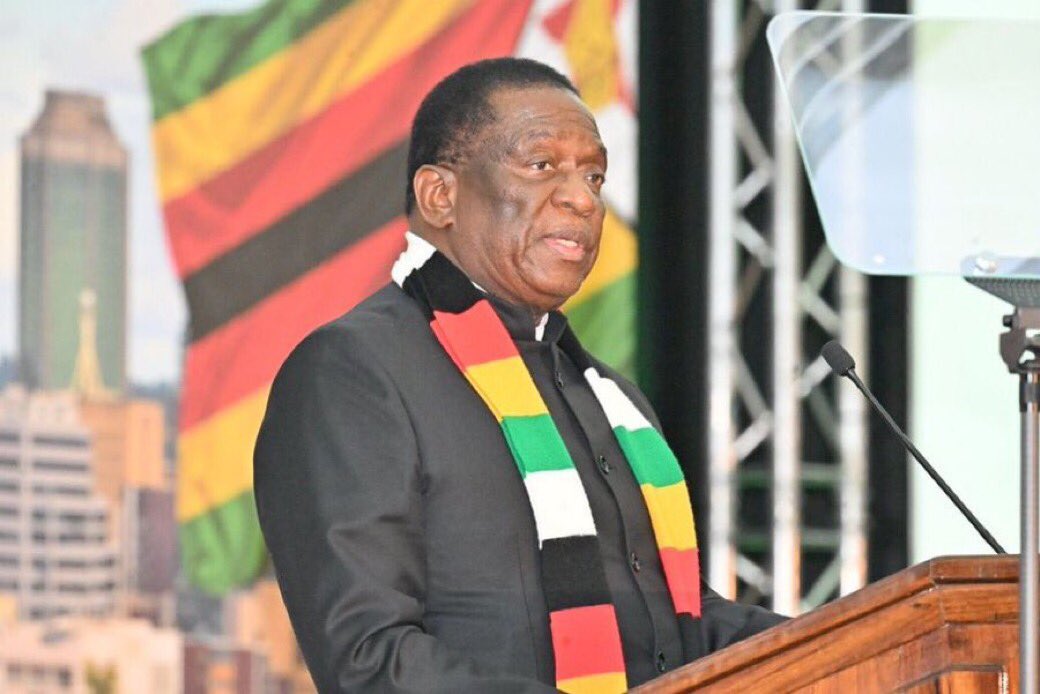
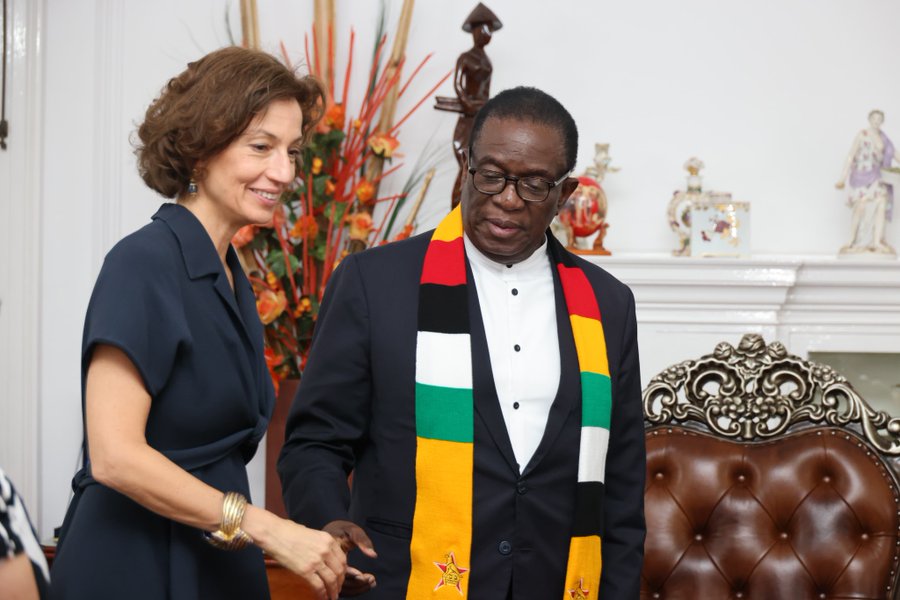
UNESCO Director-General Audrey Azoulay’s meeting with President Emmerson Mnangagwa at State House today has brought to the forefront an unprecedented emphasis on the ethics of artificial intelligence (AI) in African education systems.
This angle, rarely explored in previous diplomatic engagements, positions Zimbabwe as a potential pioneer in integrating ethical AI frameworks into its educational curriculum, a move that could reshape the continent’s approach to technology-driven learning.
Azoulay, during her first official visit to Zimbabwe, discussed with Mnangagwa the integration of AI ethics into the national education strategy, a topic that has gained traction globally but remains underexplored in the African context.
“AI holds transformative potential for education, but without a robust ethical framework, we risk exacerbating inequalities rather than addressing them,” Azoulay said.
This focus on AI ethics is particularly significant given Zimbabwe’s historical challenges with educational access and quality, compounded by economic constraints.
The discussions also touched upon UNESCO’s broader commitments to Zimbabwe, including poverty reduction, HIV/AIDS prevention, and expanding access to information and communication technologies.
However, the AI ethics angle represents a novel departure, aligning with Azoulay’s vision articulated in 2019 when she initiated a global framework on AI ethics.
“It’s not just about technology; it’s about ensuring that technology serves humanity, especially in regions where educational resources are scarce,” President Mnangagwa said.
This meeting also coincides with Azoulay’s itinerary to visit heritage sites like Victoria Falls and Great Zimbabwe, and her attendance at the Cop 15 meeting on wetlands, indicating a holistic approach to Zimbabwe’s developmental challenges.
.
Presidential Affairs
Zimbabwe Strengthens Global Tourism Ties Following High-Level UN Visit
President Emmerson Mnangagwa has reaffirmed Zimbabwe’s commitment to growing its tourism sector after hosting Shaikha Al Nowais, the newly appointed Secretary-General of UN Tourism, in Harare.
Speaking after the meeting, President Mnangagwa described the visit as a great honour, highlighting its significance for both Zimbabwe and the global tourism community.
Ms. Al Nowais’ appointment marks a historic moment, as she becomes the first woman to lead the organisation in its 50-year history.
The discussions focused on strengthening Zimbabwe’s position as a leading global tourism destination. President Mnangagwa emphasized the country’s vast potential, from its natural attractions to its rich cultural heritage, noting that tourism remains a key pillar for economic growth.
“We discussed enhancing Zimbabwe’s standing as a premier global destination and harnessing sustainable tourism as a catalyst for economic growth and job creation,” said the President.
Zimbabwe has in recent years intensified efforts to promote sustainable tourism, ensuring that growth in the sector benefits local communities while preserving the environment.
Collaboration with UN Tourism is expected to play a critical role in achieving these goals through international partnerships, investment opportunities, and global marketing initiatives.
President Mnangagwa also reaffirmed the country’s commitment to working closely with international stakeholders to showcase Zimbabwe’s unique appeal.
“Zimbabwe remains committed to collaborating closely with UN Tourism to showcase the beauty and hospitality of our nation to the world,” he added.
The visit by Ms. Al Nowais is seen as a strategic step toward strengthening Zimbabwe’s visibility on the global tourism map, while also aligning the country with international best practices in sustainable tourism development.
Presidential Affairs
Zim, Botswana Push Economic Agenda
Zimbabwe and Botswana have reaffirmed their long-standing diplomatic and economic relations following the Fifth Session of the Zimbabwe-Botswana Bi-National Commission (BNC), hosted by President Emmerson Mnangagwa in Harare.
President Mnangagwa said the high-level meeting with Botswana President Advocate Duma Boko marks a shift toward stronger economic cooperation between the two neighbouring countries.

“The outcomes of this Session are both instructive and forward-looking. They demonstrate our shared resolve to transform our longstanding political relations into a more dynamic, results-driven economic partnership,” he said.
The Zimbabwean leader emphasized that agreements signed at the BNC must now deliver tangible results, particularly in trade, investment and infrastructure development.
“The agreements… must now serve as instruments for accelerated trade, enhanced investment flows, industrial collaboration and sustainable development,” he added.
Key priorities include the operationalisation of the Plumtree/Ramokgwebana One-Stop Border Post, removal of non-tariff barriers and expansion of cross-border infrastructure to improve trade efficiency.
Earlier, President Boko highlighted the deep historical ties between Zimbabwe and Botswana, describing the relationship as a foundation for shared prosperity.
“These ties continue to provide a firm foundation upon which we advance our common aspirations for prosperity, stability and sustainable development,” he said.
He noted that the Bi-National Commission remains a critical platform for cooperation in sectors such as trade, agriculture, energy, health and security.
The two leaders agreed that regional cooperation within SADC is essential in addressing global economic challenges, improving trade flows and boosting investment.
With increased focus on implementation, private sector participation and infrastructure development, the Zimbabwe-Botswana partnership is expected to play a key role in advancing regional integration and economic growth in Southern Africa.
Presidential Affairs
Precision Meets Pride: President’s Cup Day 2 Delivers High Stakes Action
Day 2 of the President’s Cup delivered exactly what golf fans had hoped for , high-quality competition, emotional swings, and a few talking points that extended beyond the fairways.

After a tense opening day, both teams returned with renewed intensity, fully aware that Day 2 often shapes the trajectory of the entire tournament.
The format brought out aggressive play, with captains opting for bold pairings in both foursomes and fourballs, a move that paid off in some matches but backfired in others.
On the course, the level of golf remained exceptional.

Several matches went down to the final holes, with clutch putting and precise approach shots proving decisive.
The greens, however, became a central issue. Players from both sides were seen struggling with pace and reading subtle breaks, sparking quiet complaints about consistency.
A few missed short putts in key moments highlighted just how tricky conditions had become.
Weather also played its part. Changing wind conditions throughout the day made club selection unpredictable, forcing players to constantly adjust strategies.
While some adapted brilliantly, others faltered under pressure, leading to costly mistakes that shifted momentum between the teams.
Beyond the play itself, officiating decisions and rules interpretations began to draw attention.
There were moments of uncertainty regarding drop procedures and relief situations, leading to brief delays and visible frustration among players.
Though none escalated into major disputes, they added an extra layer of tension to an already competitive environment.
Team dynamics were another key storyline.
Certain pairings showed clear chemistry, feeding off each other’s energy and lifting their performances when it mattered most.
In contrast, a few partnerships appeared out of sync, struggling to find rhythm and ultimately dropping valuable points.
As the day progressed, momentum swung back and forth, keeping spectators on edge.
Every hole seemed to carry increased significance, and the pressure was evident in both the body language and decision-making of the players.
By the end of Day 2, the scoreboard reflected just how closely contested the competition remains.
Neither side has managed to establish a decisive lead, setting up what promises to be a thrilling continuation.
However, alongside the excitement, questions linger. Course conditions, officiating clarity, and player fatigue are all emerging as factors that could influence the outcome moving forward.
With everything still to play for, Day 3 now looms large.
If the intensity and drama of the first two days are anything to go by, the President’s Cup is far from decided , and the best may still be yet to come.
ALSO READ: President’s Cup Golf Tournament: A Beacon of Unity and Progress in Zimbabwean Sport
-
Current Affairs6 months agoOperation restore order
-
Crime and Courts7 months agoMasasi High School Abuse Scandal Sparks Public Outcry
-
Crime and Courts8 months agoKuwadzana Man Jailed for Reckless Driving and Driving Without a Licence
-
Current Affairs9 months agoBreaking: ZIMSEC June 2025 Exam Results Now Available Online
-
Current Affairs8 months agoMunhumutapa Day: Zimbabwe’s Newest Public Holiday Set for Annual Observance
-
Current Affairs7 months agoBREAKING NEWS: ZANU PF Director General Ezekiel Zabanyana Fired
-
Current Affairs9 months agoNo Racism in Our Cricket: Government
-
Business6 months agoTino Tungwarara Launches Prevail Mart, Becoming One of Zimbabwe’s Youngest Retail Entrepreneurs