
Current Affairs
Mnangagwa Urges Japanese Investors to Tap Into Zimbabwe’s Economic Potential

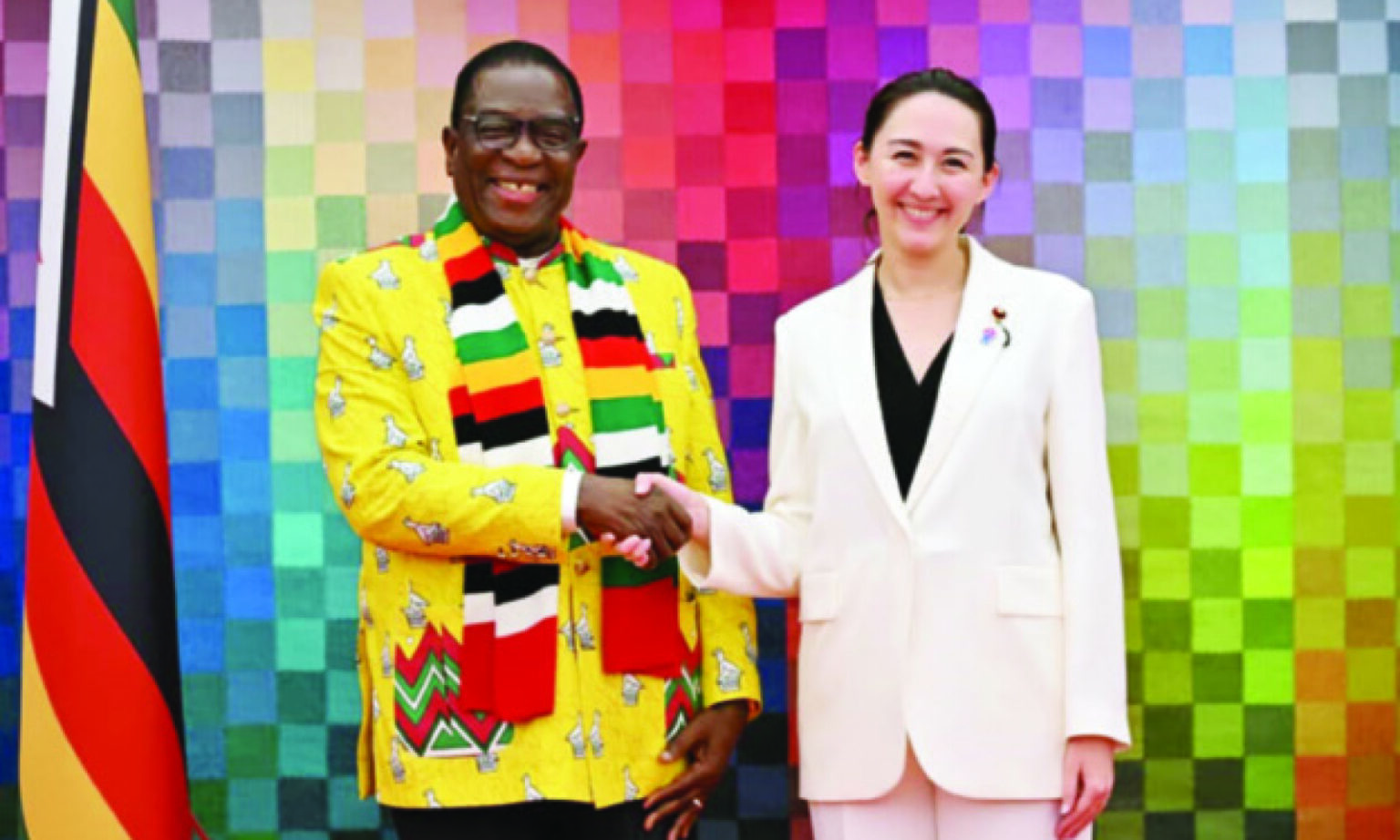
President Emmerson Mnangagwa has called on international investors—particularly those from Japan—to take advantage of the vast economic opportunities in Zimbabwe. Speaking at the official Zimbabwe National Day event at Expo 2025 in Osaka, Japan, the President described Zimbabwe as a land of “unmatched possibilities,” and emphasized that the nation is open for investment, trade, tourism, and innovation.
Highlighting the country’s promising sectors—including mining, agriculture, energy, infrastructure, manufacturing, ICT, and tourism—Mnangagwa said Zimbabwe is undergoing a transformation towards becoming a modern and industrialised economy within the next five years.

“We are inviting our friends from Japan and around the world to work with us in shaping a future of shared prosperity,” said President Mnangagwa. “Zimbabwe welcomes investment, partnerships, trade, innovation, and tourism that go beyond limits.”
He noted that the country’s economic growth, expected to reach 6% this year, is being driven by structural reforms, infrastructure development, and increased focus on processing raw materials locally, especially in mining and agriculture.
“Our national development strategy is forward-looking and centred on the needs of our people,” he added. “The policy reforms we’ve undertaken have positioned Zimbabwe among the fastest-growing economies in Southern Africa.”
Mnangagwa identified infrastructure rehabilitation, particularly transport networks, energy, ICT, and water systems, as areas with immense potential for foreign investment. He noted that Japanese expertise and experience could play a vital role in these areas.

The President also spotlighted Zimbabwe’s mining sector as a key investment draw, with rich deposits of precious metals, stones, hydrocarbons, and other industrial minerals. He stressed the government’s push for value addition and beneficiation as part of a broader industrialisation drive.
During the Expo, Zimbabwe signed a Memorandum of Understanding with Japanese firms in the motor industry—a deal Mnangagwa said could significantly boost the country’s public transport system and create regional economic benefits.
“Japan’s strength in innovation, science, and technology aligns well with Zimbabwe’s goals,” he said. “We are eager to partner with Japanese investors to fast-track our industrial and technological advancement.”
He also emphasized agriculture as a major sector for partnership, particularly in climate-resilient farming, irrigation, and mechanisation. The President commended Japan’s support for projects like the Nyakomba Irrigation Scheme, which has strengthened food security and rural livelihoods.
“We’re constructing more dams and need investment in irrigation infrastructure and agricultural machinery,” said Mnangagwa. “Such developments will help us expand the land under irrigation and improve productivity.”
Turning to tourism, the President promoted Zimbabwe’s world-renowned attractions such as Victoria Falls and its abundant wildlife. He expressed optimism that post-Expo engagements would help boost Japanese tourist arrivals.
“Victoria Falls—also known as Mosi oa Tunya, or ‘The smoke that thunders’—is one of the Seven Natural Wonders of the World,” he said. “Zimbabwe is home to vast wildlife diversity and expansive national parks that cover about 70% of the country’s land.”
He pointed out that Zimbabwe has the world’s second-largest elephant population and a growing rhino population, making the country a premier destination for safari tourism.
On the sidelines of the Expo, Zimbabwe hosted its first-ever Zimbabwe–Japan Business Forum, which the President described as a meaningful platform for business leaders from both nations to explore mutually beneficial partnerships.
He also advocated for deeper collaboration in education and innovation, particularly in fields like artificial intelligence, fintech, robotics, and data science. With over 60% of Zimbabwe’s population under 30, he said the country is poised to benefit greatly from investments in human capital.
President Mnangagwa was joined by several senior officials, including Foreign Affairs and International Trade Minister Professor Amon Murwira and Chief Secretary to the President and Cabinet Dr Martin Rushwaya. Japanese government representatives were also in attendance.
Expo 2025, which runs until October 13, has drawn participation from 158 countries and seven international organizations. Zimbabwe’s pavilion has been among the most popular, offering immersive experiences that showcase the country’s investment prospects and technological vision.











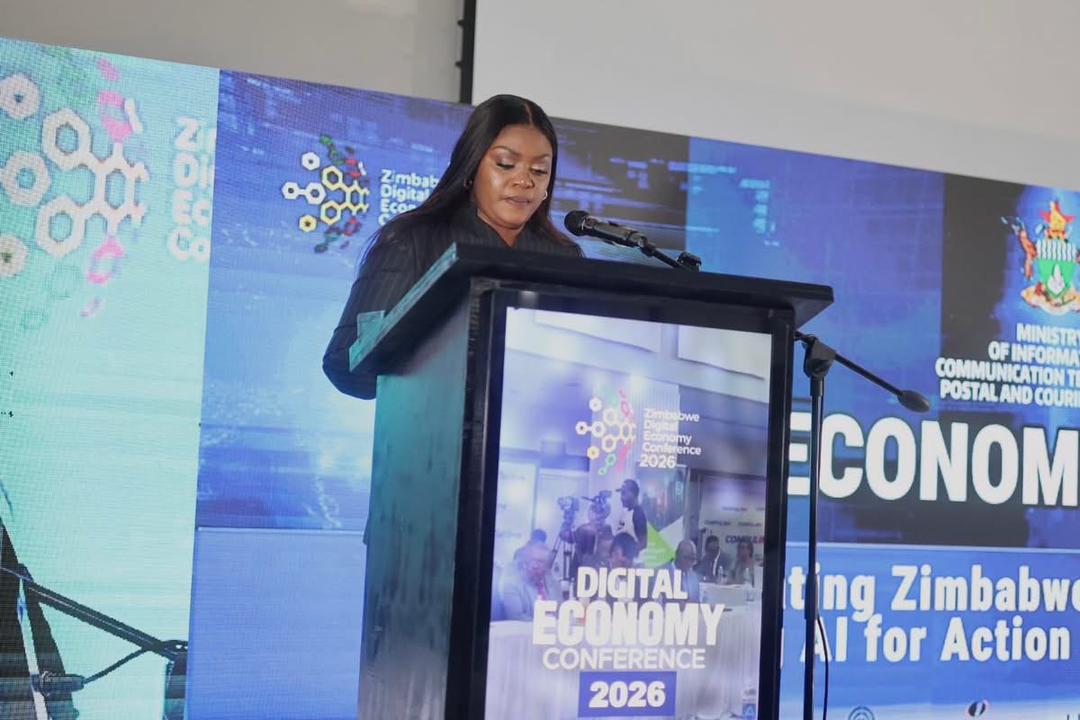
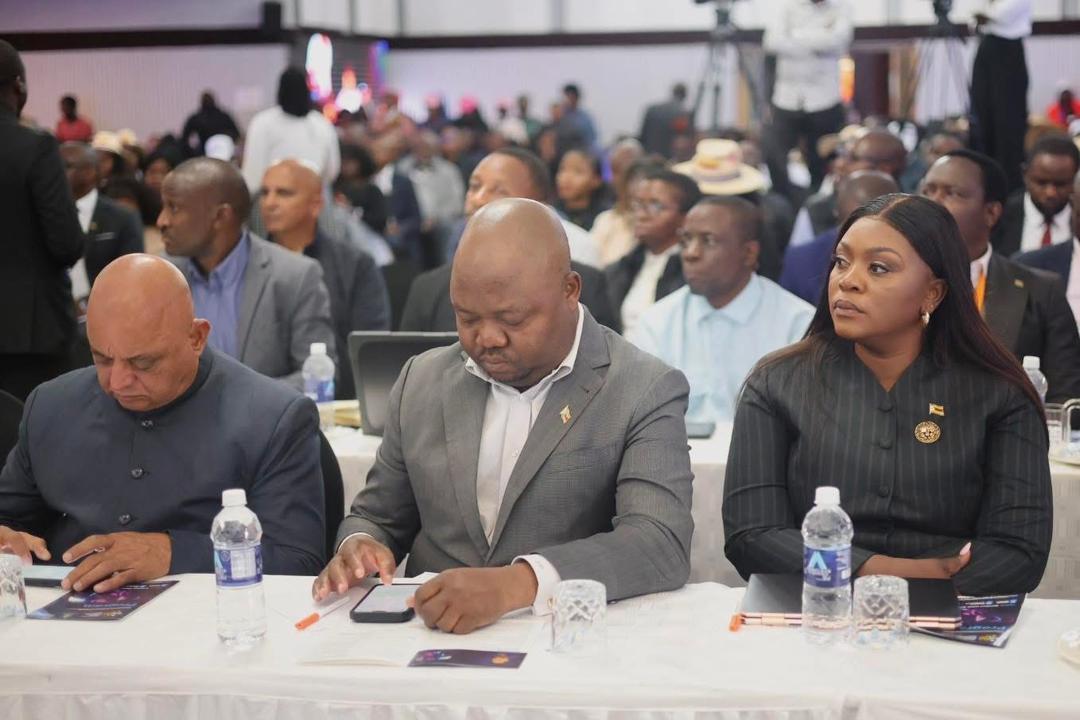
The Minister of ICT, Postal and Courier Services of the Republic of Zimbabwe, Hon. Tatenda Mavetera, officially opened the Digital Economy Conference 2026 at the Zimbabwe International Trade Fair 2026 in Bulawayo, urging Zimbabwe to embrace digital transformation and artificial intelligence (AI) as key drivers of economic growth under Vision 2030.
Speaking at the conference, Minister Mavetera highlighted the urgency of adopting new technologies, quoting Klaus Schwab, who said, “In the new world, it is not the big fish that eats the small fish but the fast fish that eats the slow fish.”
She emphasised that Zimbabwe must act quickly, adding, “Zimbabwe must be fast. We must not be spectators in this revolution. We must be active participants, deliberate builders, and confident leaders.”
The minister also reflected on the launch of the Zimbabwe National Artificial Intelligence Strategy (2026–2030) by President Emmerson Mnangagwa on March 13, 2026.

“The strategy is meant to drive transformation across key sectors such as agriculture, mining, healthcare, education, and finance,” she said.
The President stressed that the country’s approach must focus on local ownership, saying Zimbabwe’s AI journey “must not be defined by dependency but by ownership… building systems that understand our values, speak our languages, and solve our unique national challenges”.
Minister Mavetera underscored that the strategy is guided by the principle “Nyika inovakwa nevene vayo / a nation is built by its own people”, reinforcing the need for homegrown innovation.
She also pointed to progress in other African countries. Rwanda, under ICT Minister Paula Ingabire, has made significant strides in digital transformation, while Kenya and Ghana are also advancing AI adoption.
Quoting Kofi Annan, she said, “Knowledge is power.” Information is liberating. Education is the premise of progress, in every society, in every family.” She added that Africa must take control of its digital future.
“The launch of the Zimbabwe National Innovation Acceleration Centre (NIAC) will help turn ideas into businesses and support young innovators. Practical action and innovation must lead to real results, jobs, and economic growth,” Minister Mavetera added.
Quoting Satya Nadella, she said, “Ultimately, progress is measured by the impact of technology on people,” emphasising that AI must improve lives.
“Technology should reach all citizens, from farmers to students and entrepreneurs, ensuring inclusive development,” she said.

Minister Mavetera also referenced Andrew Ng, who said, “Artificial intelligence is the new electricity”, highlighting how AI is transforming industries worldwide.
“Zimbabwe must use AI not just for basic applications but for real solutions such as improving agriculture, mining efficiency, and financial services,” Hon. Mavetera stated.
In closing, the minister called for action and collaboration, urging stakeholders to move beyond discussion to implementation.
She welcomed Minister Paula Ingabire as Guest of Honour, describing her as a key figure in Africa’s digital transformation, and encouraged stronger partnerships across the continent to build a competitive and inclusive digital economy.

JOHANNESBURG, South Africa – Prosecutors in South Africa have called for a custodial sentence for Bellarmine Chatunga Mugabe, son of the late former Zimbabwean president Robert Mugabe, as sentencing was postponed to April 29.
The State is requesting a total of two years in prison for Mugabe 12 months for unlawfully pointing a firearm and another 12 months for violating immigration laws.
His co-accused, Tobias Matonhodze, faces significantly heavier penalties after admitting to more serious offences.
Prosecutors are seeking five years for attempted murder, 12 years for illegal possession of a firearm, another 12 years for obstructing justice, a fine for unlawful possession of ammunition, and an additional 12 months for immigration-related violations.
If granted, the combined sentences for the firearm and obstruction charges alone could amount to 24 years behind bars for Matonhodze.
Mugabe admitted to being in South Africa illegally and to pointing a firearm in an earlier, unrelated incident that occurred shortly before the shooting of his security guard, Sipho Mahlangu, at his Hyde Park residence on February 19.
The investigating officer told the Alexandra Magistrates’ Court that Mahlangu has so far received R250,000 in compensation, with an additional R150,000 still unpaid.
The officer urged the court to impose a strict sentence, highlighting that neither accused has revealed the location of the firearm used in the shooting, which remains missing.
“Both accused have not shown remorse,” the officer said, adding that their failure to produce the weapon reflects a lack of cooperation.
However, the defence argued for leniency, suggesting that other individuals present at the property could have removed the firearm. They also pointed to the partial compensation paid as a sign of responsibility, though prosecutors noted the full amount has yet to be settled.
The case has been adjourned to April 29, when sentencing is expected.

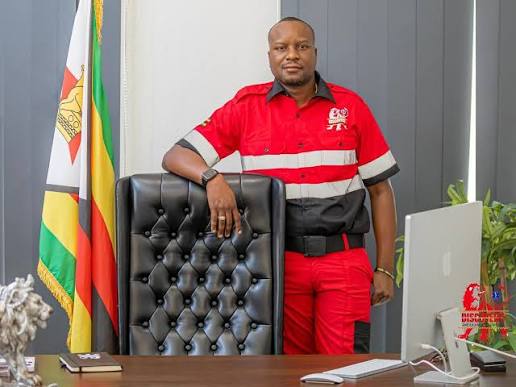
A groundbreaking initiative, U CAN GROW ZIMBABWE, is poised to revolutionise the nation’s agricultural landscape and economic future, moving beyond traditional farming to foster a new generation of successful agri-preneurs.
Spearheaded by Chairman Dr. David Munowenyu who is also the Chief Executive Officer for Discovery Ambulances, this visionary movement promises to transform lives and uplift communities across Zimbabwe.
Dr. Munowenyu said the profound scope of this endeavor is about building sustainable livelihoods.
“If you thought Discovery Ambulance Services was a game changer, then brace yourself for what U CAN GROW ZIMBABWE is about to become.
“This is not just another initiative it is a bold, visionary movement designed to transform lives, uplift communities and redefine the future of agriculture and economic empowerment,” said Dr Munowenyu.
He said the initiative is designed as a comprehensive value chain solution.
“U CAN GROW ZIMBABWE goes beyond farming. It is about building sustainable livelihoods, turning struggling farmers into successful agri-preneurs and creating a powerful ecosystem where innovation, technology, and opportunity meet.
From establishing agriculture hubs and seed banks to securing reliable markets for every product, this is a complete value chain solution that leaves no one and no place behind,” said Dr. Munowenyu.
He further indicated the far-reaching impact, saying it aims to achieve empowering communities.
“It strengthens food security, creating jobs, and contributing meaningfully to national development goals.
“This is about rewriting the narrative, proving that with the right support, structure and vision, anyone can grow, succeed, and thrive.”
Dr Munowenyu said the future of the country needs a morden drive and backed up with a sustainable financial system for all.
“The journey ahead is bold, the mission is clear and the impact will be undeniable. Watch closely because what’s coming is not just impressive… it is going to be truly mind-blowing.”
Dr. David Munowenyu, through his Discovery Ambulance Services, has a notable history of philanthropic contributions to Zimbabwe’s healthcare sector.
His efforts have included donating state-of-the-art ICU mobile ambulances and strengthening emergency medical response capabilities across the nation.
These initiatives have significantly improved healthcare access and outcomes for countless Zimbabweans, demonstrating a consistent commitment to community welfare and national development.
His work with Discovery Ambulance Services has been recognized for its systemic impact in reducing healthcare inequalities.

Minister Mavetera Urges Zimbabwe to Embrace AI for Economic Growth

SA Prosecutors Push for Jail Time for Bellarmine Mugabe

A New Era of Agri-preneurship and Economic Empowerment Dawns

Operation restore order

Masasi High School Abuse Scandal Sparks Public Outcry

Kuwadzana Man Jailed for Reckless Driving and Driving Without a Licence
-
 Current Affairs5 months ago
Operation restore order
-
 Crime and Courts7 months ago
Masasi High School Abuse Scandal Sparks Public Outcry
-
 Crime and Courts7 months ago
Kuwadzana Man Jailed for Reckless Driving and Driving Without a Licence
-

 Current Affairs9 months ago
Breaking: ZIMSEC June 2025 Exam Results Now Available Online
-

 Current Affairs8 months ago
Munhumutapa Day: Zimbabwe’s Newest Public Holiday Set for Annual Observance
-

 Current Affairs7 months ago
BREAKING NEWS: ZANU PF Director General Ezekiel Zabanyana Fired
-

 Current Affairs8 months ago
No Racism in Our Cricket: Government
-

 World News6 months ago
Burkina Faso Reaps $18 Billion in Gold Revenue Under Ibrahim Traoré’s Leadership