
World News
SADC Scales up €10 Million Drive to Boost Regional Food Security

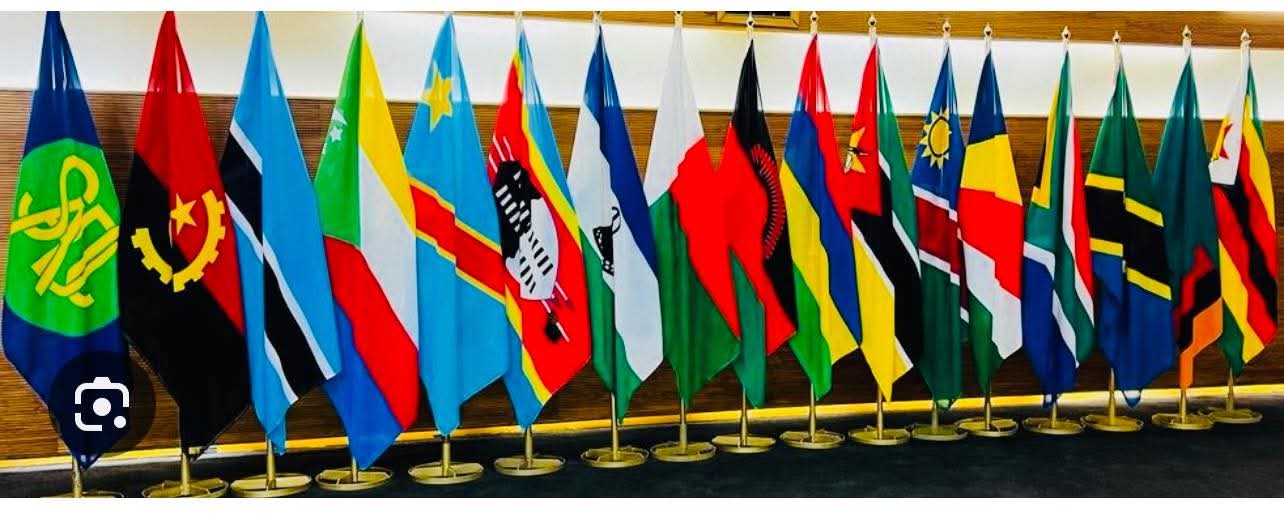
The Southern African Development Community (SADC) has intensified efforts to tackle food insecurity and build long term agricultural resilience across the region through the €10 million “Support Towards the Operationalisation of the SADC Regional Agricultural Policy” (STOSAR II) project.
The initiative, funded by the European Union and implemented in partnership with the Food and Agriculture Organisation (FAO), seeks to address what SADC describes as “unacceptably high” levels of food and nutrition insecurity affecting about 67.7 million people across its 16 member states.
Speaking as the region joined the global community in marking World Food Day 2025, SADC Executive Secretary Elias Magosi said the bloc remains focused on transforming agrifood systems and supporting policies that promote equitable access to land, water, livestock, and other agricultural inputs.
“Food and nutrition security remain central to SADC’s regional integration agenda. We continue to support Member States in building resilient agrifood systems and promoting nutrition sensitive approaches that address the needs of women, children, youth, smallholders, and vulnerable populations,” Magosi said.
He added that through collaboration with FAO under the Hand in Hand (HiHi) framework, SADC is implementing data-driven and country led programmes to accelerate agrifood transformation. This includes the use of geospatial and analytical tools to guide investments in irrigation, mechanisation, agro-processing, and trade integration.
“These efforts are designed to shift the region from crisis response to long term transformation, raising incomes, improving dietary diversity, and enhancing resilience to climate change,” Magosi said.
SADC has identified climate change, conflict, and economic shocks as major challenges undermining regional food systems. To address these, the organisation is promoting disaster risk reduction, early warning systems, land restoration, and climate adapted agricultural innovations.
This year’s World Food Day is being commemorated under the theme “Hand in Hand for Better Foods and a Better Future”, highlighting the importance of collective action and partnerships in achieving food and nutrition security across the region.



South Africa has denounced recent actions by the United States in Venezuela, describing them as unlawful and calling for the unconditional release of Venezuelan President Nicolás Maduro and his wife.
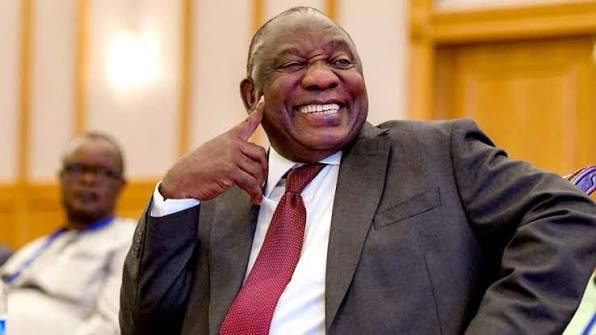
President Cyril Ramaphosa said South Africa’s position is firmly rooted in respect for international law and the principles of the United Nations, arguing that Washington’s conduct threatens the sovereignty and territorial integrity of a UN member state.
Ramaphosa said Pretoria cannot support actions that undermine global legal norms, stressing that South Africa aligns itself with the Venezuelan people rather than external interference.
By taking this stance, South Africa has joined a number of countries openly questioning US policy toward Caracas, presenting the issue as one of legality and international order rather than power politics.
The President warned that ignoring sovereignty weakens the credibility of the international system and sets a dangerous precedent for global relations.
Pretoria has further urged the United Nations Security Council to act decisively within its mandate to preserve peace, protect international law and prevent escalation.
South Africa’s call reinforces its long-standing view that the Venezuelan situation should be resolved through multilateral engagement and dialogue, not unilateral measures a position likely to deepen diplomatic divisions between Washington and several nations in the Global South.

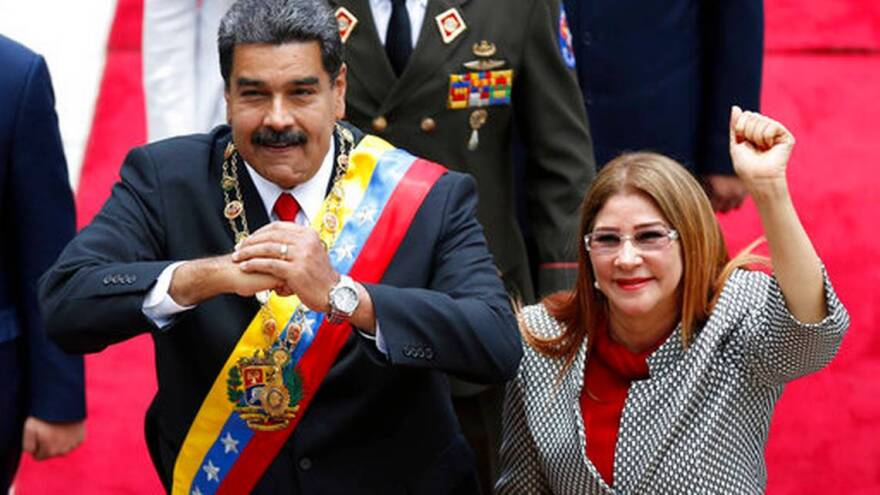
- Maduro and Wife Plead Not Guilty in New York Court to Narco-Terrorism Charges
- Trump Says US Will ‘Run’ Venezuela Temporarily; Allies Criticise Action at UN
- Operation Involved Pre-Dawn Strikes on Caracas, Dozens Reported Killed
Venezuelan President Nicolás Maduro and his wife, Cilia Flores, pleaded not guilty Monday to U.S. charges of narco-terrorism, drug trafficking and related crimes, two days after U.S. special forces captured them in a controversial military raid on Caracas that has drawn widespread global criticism.
Maduro, appearing handcuffed in a Manhattan federal courtroom, declared himself a “prisoner of war” and insisted, “I am innocent. I am a decent man, the president of my country.”
His wife also entered a not guilty plea.
The couple faces potential life sentences if convicted on allegations of flooding the U.S. with cocaine through ties to drug cartels.
The operation, confirmed by President Donald Trump as a “large-scale strike,” involved elite U.S. units, including Delta Force, and airstrikes that reportedly killed dozens, including civilians and security personnel.
Trump praised the mission as a “brilliant operation” and stated the U.S. would temporarily “run” Venezuela to oversee its vast oil reserves and facilitate a transition.pbs.org
International reaction was swift and largely negative. At an emergency UN Security Council meeting, even U.S. allies condemned the action as a violation of sovereignty and international law.
Venezuela’s UN ambassador accused Washington of an “illegal armed attack,” while protesters rallied in cities worldwide against the raid.
In Caracas, Vice President Delcy Rodríguez was sworn in as interim leader, denouncing the “kidnapping” but signalling openness to dialogue.
Maduro’s defence team vowed to challenge the legality of his capture, citing head-of-state immunity.
The indictment, unsealed after the raid, accuses Maduro of leading a corrupt regime tied to massive cocaine trafficking since 1999.
U.S. officials justified the operation by deeming Maduro illegitimate following the disputed 2024 elections.
Legal experts questioned the raid’s compliance with international norms, comparing it to past U.S. actions but noting the unprecedented abduction of a sitting president without extradition.
The incident has heightened tensions in Latin America, with fears of broader implications for regional sovereignty and U.S. foreign policy under Trump.
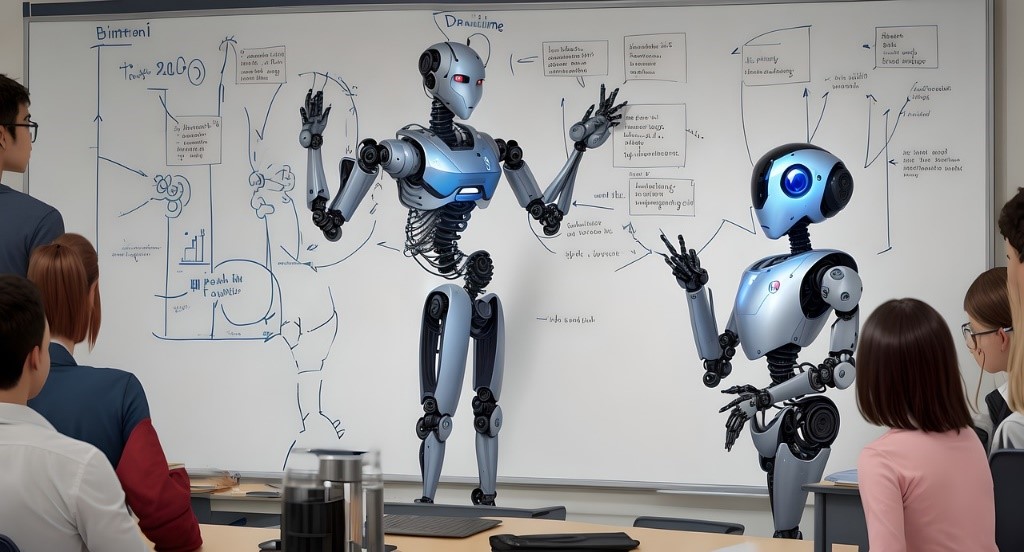
- China Produces 3.57 Million STEM Graduates Annually, Dwarfing U.S. Output
- Beijing Leads World in AI Patents and Research, Backed by Massive Talent Pipeline
- Experts Urge Open-Source AI to Prevent Dominance, Offer Lessons for Africa
China continues to solidify its position as a powerhouse in artificial intelligence, fueled by an unparalleled pipeline of STEM talent that far outpaces global rivals, according to recent data and expert analysis.
At the heart of this surge is China’s massive annual output of STEM graduates.
Latest figures indicate the country produces approximately 3.57 million science, technology, engineering and mathematics graduates each year, representing about 40-45% of all university degrees.
This vast talent pool – roughly four times that of the United States’ 800,000 annual STEM graduates – provides the human capital driving breakthroughs in AI research, patents and applications.
Experts highlight that China’s STEM dominance extends to advanced degrees.
Projections indicate that Chinese universities will award over 77,000 STEM PhDs annually by 2025-2026, nearly double the U.S. figure of approximately 40,000. Within this, AI-specific expertise is growing rapidly, with China producing almost half of the world’s top AI researchers and leading in AI publications.
This talent advantage translates into tangible outputs. China now accounts for more than 70% of global AI patents, including a commanding share in generative AI, underscoring its strategic focus on open-source development and inclusive innovation.
Victor Gao, a prominent Chinese scholar interviewed at the Doha Forum, emphasised this approach in discussions on the AI revolution.
He warned against any single nation’s dominance, advocating for open-source AI to ensure global participation and prevent existential risks, such as AI surpassing human control.
“China’s model lowers barriers, allowing broader access and collaboration,” Gao said.
Despite challenges, including a projected shortage of millions of AI professionals by 2030 amid soaring demand, Beijing’s investments in education and research – including billions in semiconductor and AI funds – are bridging gaps and attracting global talent.
What Africa Can Learn from China’s AI Talent Strategy
As African nations seek to harness AI for development, China’s experience offers valuable insights for building sovereign capabilities in the technology.
With a youthful population of over 1.4 billion and emerging tech hubs in cities like Nairobi and Lagos, Africa has immense potential.
However, the continent produces an estimated 675,000 STEM graduates annually, a fraction of China’s output relative to population needs.
Experts recommend the following steps:
- Massive Investment in STEM Education — Emulate China’s focus by expanding universities, vocational programs and scholarships to target 1 million annual STEM graduates by 2030, prioritising software engineering and AI.
- Develop Specialised AI Pipelines — Establish centres of excellence and partnerships with Chinese institutions for knowledge transfer, aiming for tens of thousands of AI specialists.
- Promote Open-Source Adoption — Leverage affordable Chinese AI frameworks to address local issues like agriculture and healthcare, fostering innovation without dependency.
- Strengthen Ethical Governance — Create national AI strategies emphasising privacy and fairness to protect sovereignty amid global competition.
- Build Strategic Partnerships — Use forums like the Forum on China-Africa Cooperation to secure infrastructure investments while prioritising local capacity-building.
- By adapting these lessons, Africa can transition from AI consumer to contributor, driving equitable growth in the intelligence age.
- China’s AI ascent demonstrates that strategic talent development can reshape global dynamics. For emerging regions like Africa, the path forward lies in proactive investment and collaboration to ensure technology serves inclusive progress.

23-Year-Old Jailed for Stealing Police Vehicle

ZANU PF PC Accused of Looting Food, Fuel Meant for Dr Tungwarara Rally

Harare City Nears PSL Return in “Swap and Top” Franchise Deal with Hunters FC

Operation restore order

Masasi High School Abuse Scandal Sparks Public Outcry

Kuwadzana Man Jailed for Reckless Driving and Driving Without a Licence
-
 Current Affairs2 months ago
Operation restore order
-
 Crime and Courts3 months ago
Masasi High School Abuse Scandal Sparks Public Outcry
-
 Crime and Courts4 months ago
Kuwadzana Man Jailed for Reckless Driving and Driving Without a Licence
-
 Current Affairs5 months ago
Breaking: ZIMSEC June 2025 Exam Results Now Available Online
-
 Current Affairs4 months ago
Munhumutapa Day: Zimbabwe’s Newest Public Holiday Set for Annual Observance
-
 Current Affairs3 months ago
BREAKING NEWS: ZANU PF Director General Ezekiel Zabanyana Fired
-
 Current Affairs5 months ago
No Racism in Our Cricket: Government
-
 Current Affairs4 months ago
Government Bans Tinted Car Windows in Nationwide Crime Crackdown