
Business
US$30 Million Fruit Juice Plant Boosts Jobs and Rural Industrialisation in Beitbridge

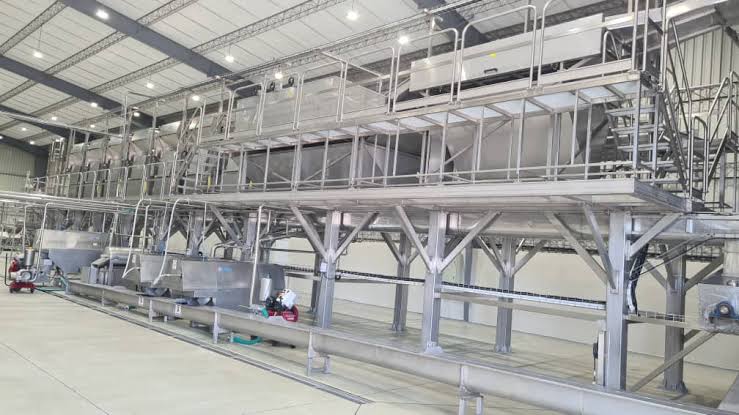
A newly established US$30 million fruit juice processing plant in Beitbridge has officially begun operations, creating over 300 jobs and marking a major step forward in Zimbabwe’s rural industrialisation and value-addition drive.
The Orange Ville Fruit Processing Plant, which became operational in July 2025, currently operates at partial capacity but is already handling 500 to 600 tonnes of citrus fruit daily, according to Brandon Park, a representative of Orange Ville Trading (Pvt) Ltd.
“Our operations started in early July, and so far, we’ve processed around 25,000 tonnes of oranges and 5,000 tonnes of grapefruit. The plant’s full capacity is 1,400 tonnes per day, which we expect to reach within the next decade as our orchards mature,” said Park.
Once operating at full scale, the plant is projected to employ more than 3,000 people, providing significant economic benefits to Matabeleland South Province and surrounding rural communities.
Minister of State for Provincial Affairs and Devolution, Hon. Albert Nguluvhe, praised the investment, saying it aligns with the Second Republic’s vision of empowering rural communities through industrial growth.
“This development demonstrates the government’s commitment to rural industrialisation and job creation. It has opened new opportunities for our people here in Beitbridge,” said Nguluvhe.
Nearby Nottingham Estates, which supplies fruit to the plant, has also become a model for integrated rural development — combining commercial agriculture, eco-tourism, and renewable energy projects.
Managing Director Andrew Nott revealed that the estate currently farms 960 hectares, with 650 hectares already bearing fruit, and plans to expand to 1,500 hectares next year.
During a tour of the facility, Vice President (Rtd) Dr. Constantino Chiwenga commended the progress and pledged government support for the Zhovhe–Beitbridge canal project, which will enhance irrigation and sustain citrus farming in the region.
“This is exactly the kind of rural industrialisation we envision. The government will move swiftly to complete the 63-kilometre Zhovhe–Beitbridge canal to ensure water security for these projects,” said the Vice President.
With around 70% of the processed juice destined for export markets, the Beitbridge plant is expected to boost foreign currency earnings and contribute to Zimbabwe’s Vision 2030 transforming the country into an upper-middle-income economy through agro-based value addition and employment creation.





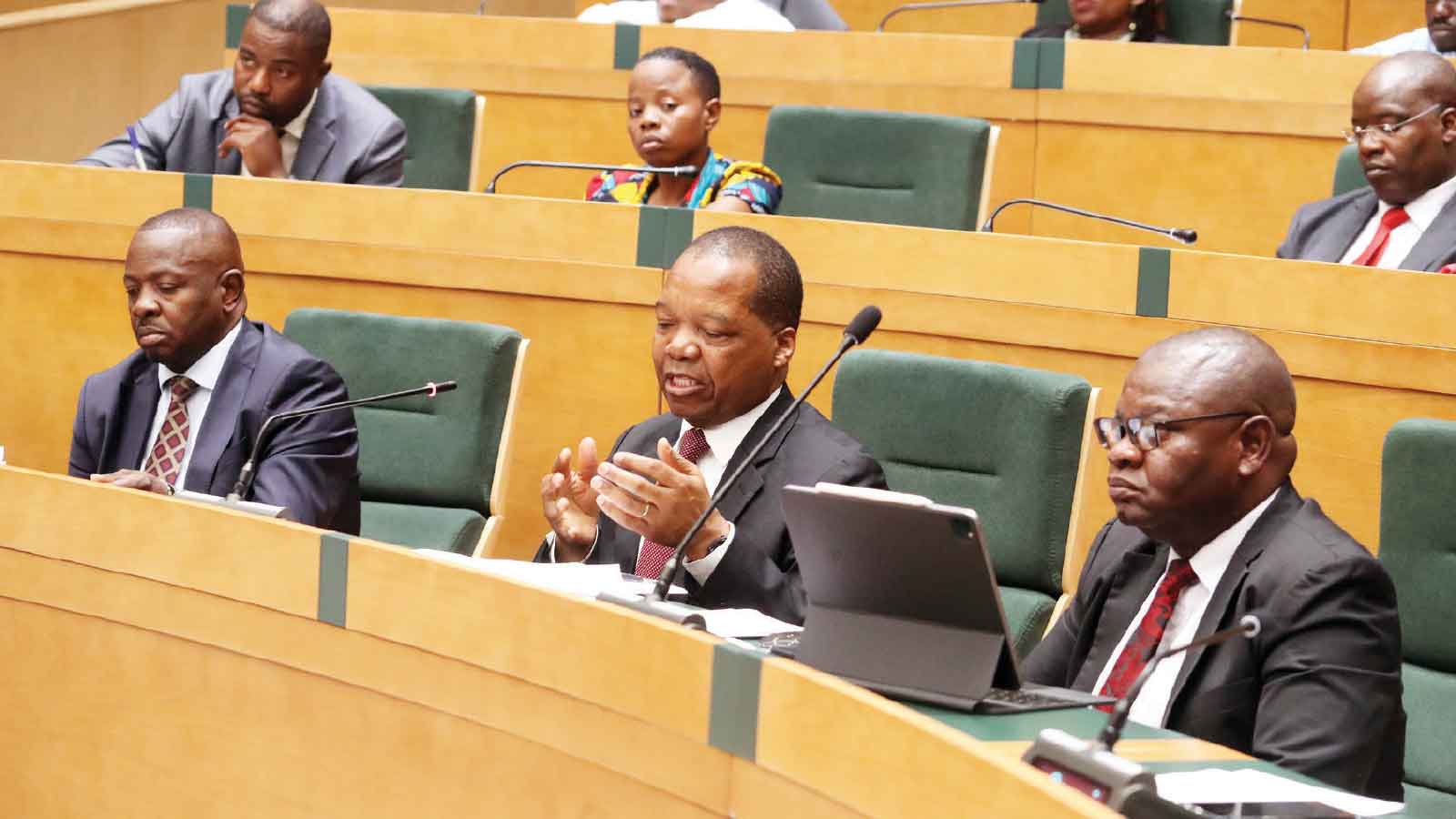
The Mutapa Investment Fund (MIF), has grown its asset base to USD 16.5 billion, consolidating its position as one of Africa’s largest sovereign wealth funds and signalling a major step in the country’s efforts to build and preserve national wealth.
Presenting the Fund’s audited financial results for the year ended 31 December 2025, Chief Executive officer Dr John Mangudya said the milestone reflects the rapid consolidation of Government-owned commercial assets under a single investment vehicle and the strengthening of valuation and governance frameworks since the Fund’s operationalisation.
The growth shows the increasing strategic importance of MIF as a central pillar in Zimbabwe’s economic transformation agenda, with the Fund now playing a key role in managing State assets, attracting investment and driving long-term value creation.
“We have seen significant value growth in our mining portfolio as a result of the increased commodity prices.
“Another driver for the valuation gains was the value of land and buildings.
“The valuation of assets is central to our mandate as a custodian of national wealth, and this outcome reflects the maturation of the comprehensive valuation framework established by the Fund following its establishment in September 2023.
“Total assets closed the year at a value of US$16.5 billion from the US$14.9 billion position in 2024, strengthened by our core investment in subsidiaries amounting to US$16.2 billion and supported by an expanded loan book and growing marketable securities portfolio,” said Dr Mangudya.
During the year under review, the Fund focused on consolidating its operations and strengthening institutional systems under its FIRE (Fix, Invigorate, Reinforce and Extract) strategy, which is aligned with the National Development Strategy 2 and Vision 2030.
At a financial level, MIF recorded a surplus after tax of USD 21.7 million, a significant improvement from USD 3.6 million in 2024, supported by dividend income of USD 23.3 million and management and advisory fees of US$26. 6 million from investee companies.
Total comprehensive income rose sharply to USD 1. 4 billion, largely driven by fair value gains across the Fund’s asset portfolio.
The gains were mainly attributed to stronger global commodity prices, which boosted the valuation of mining assets, as well as increased valuations of land and buildings within the portfolio.
Funds and reserves increased to USD 15. 2 billion, reflecting a stronger capital base that enhances the Fund’s capacity to finance future investments and absorb potential shocks.
Dr Mangudya said 2025 marked a transition from initial diagnostic assessments to structured interventions across the Fund’s portfolio, with emphasis placed on improving governance, stabilising operations and preserving asset value.
MIF’s portfolio spans key sectors of the economy, including mining, energy, infrastructure, telecommunications, agriculture, logistics, financial services and real estate, many of which require restructuring and long-term capital support.
During the year, the Fund prioritised strengthening oversight of portfolio companies, enhancing accountability frameworks and facilitating recapitalisation and strategic partnerships where necessary.
A major development was the restructuring of the Fund’s mining assets into commodity-focused subsidiaries covering gold, platinum group metals, base metals, energy, agro-minerals, frontier resources and technology metals.
The move is expected to improve operational efficiency, transparency and investor appeal, aligning Zimbabwe’s mineral asset management with international best practice.

LESEDI (not her real name), a promising entrepreneur in Gaborone, the capital city of Botswana, sounds very dejected as she reflects on her garment manufacturing business.
“We haven’t had any orders since October last year, I think. They were going through a transition, trying to cut down costs,” she says.
There have been indications that this could change for the better in the near future, but expectations are not high.
“They had a meeting with us that they are done with the transition and promised that orders should start coming through. But I don’t think it will be like before, as you know the diamond sales have gone down,” she added.
Botswana has long been regarded as one of the world’s most stable democracies, and Lesedi’s story is one of the reasons the sparsely populated country is often celebrated as one of Africa’s greatest success stories in natural resource management.
She had managed to build a thriving business supplying personal protective equipment to the diamond mines under an agreement brokered by the government for local suppliers.
Yet this strong reputation has tended to obscure deeper concerns about how much of the country’s natural resource wealth truly benefits its people.
Botswana has not sold any diamonds for months, and the ensuing economic fallout has begun to strip away the veneer of stability, revealing deep-seated structural cracks.
Lab-grown gems are now more sought after, and Anglo American is offloading De Beers.
The decision follows a series of value hits triggered by Anglo American itself: a US$2.3 billion write-down, coming on the heels of a US$3 billion reduction reported the previous year, both of which significantly impacted the company’s valuation.
The country had been locked in negotiations spanning different administrations with Anglo American’s majority-owned miner, De Beers, for a greater share of the diamonds.
Negotiations over the deal started in 2018, but an agreement announced in 2023 under former President Mokgweetsi Masisi was never formally signed.
Only after the appointment of Masisi’s successor, Duma Boko, was the agreement sealed.
Among the provisions of the deal, during the first five years, the state-owned Okavango Diamond Company (ODC) will sell 30% of Debswana’s output, up from 25% previously, with the remainder going to Anglo American.
The provisional agreement reached with Botswana’s previous government had ODC’s allocation from Debswana Botswana’s joint venture with De Beers reaching 50% at the end of the 10-year pact.
The allocation will now reach 40% after the same period.
The deal was seen as critical for the southern African country since its economy is largely dependent on the export of diamonds.
As of early 2026, the Botswana government, under President Duma Boko, is actively working to take advantage of Anglo American’s disinvestment and increase its 15% stake in De Beers to a controlling share of over 50%.
This move aims to secure economic sovereignty and greater control over the diamond value chain, with potential financing secured from partners like the Oman sovereign wealth fund.
However, with the write-downs, the economic viability of any potential deal is still in question.
Context: Botswana supplies roughly 70% of De Beers’ rough diamond production, making the company a strategic asset.
Timeline & Status: Following announcements in late 2025, the government is proceeding with acquisition steps despite a challenging, low-demand diamond market.
Botswana’s move is driven by the need to have a stronger voice in the diamond industry as Anglo American divests its stake.
Diversification Efforts: The government is urgently seeking to diversify by exploring for other critical minerals, such as copper and cobalt, and investing in renewable energy, technology, and agriculture.
Exploration Push: Roughly 70% of unexplored territory is being targeted for new mineral development to replace lost diamond revenue.
Slow Recovery: Projections suggest only a modest economic recovery, with growth potentially returning to around 1.9% in 2026, assuming successful structural reforms.
As a result, Botswana is at a critical juncture, needing to swiftly pivot away from its 50-year reliance on diamonds to avoid deeper economic hardship.
The falling diamond revenues have already begun to reshape national economic policy. Botswana’s economy contracted by 1% in 2025, prompting intensified efforts to diversify the mining sector and support the government’s target of 3.1% GDP growth in 2026.
According to the country’s statistics agency, gross domestic product decreased by 5.3% on a year-on-year basis, the steepest quarterly contraction since the COVID-19 pandemic.
Botswana’s economy is forecast to rebound in 2026 after two years of decline, although increasing fiscal deficits are likely to drive public debt above the government’s legal ceiling, Finance Minister Ndaba Gaolathe has also said.
Speaking during the national budget presentation on Monday, Gaolathe projected 3.1% economic growth for 2026, following estimated contractions of 0.4% in 2025 and 2.8% in 2024.
Diamonds continue to underpin the economy, accounting for roughly one-third of government revenue and about three-quarters of foreign exchange earnings, official figures show.
Even with a projected economic rebound, public finances remain strained. The budget deficit for the fiscal year beginning in April is expected to reach 26.35 billion pula (US$1.91 billion), or 8.9% of GDP, up from a projected 25.48 billion pula (US$1.9 billion) deficit in the current fiscal year.
Gaolathe noted that the growing deficit stems from a persistent gap between spending obligations and realistically available resources.
Consequently, the debt load is set to climb. The debt-to-GDP ratio was projected to reach 38.7% by March 2026 and rise further to 44.6% by March 2027, surpassing the current statutory limit of 40%.
The minister recognised that breaching the debt ceiling could raise short-term concerns among investors and markets. However, he argued that the economic harm from drastic spending cuts needed to stay within the limit would be even greater.
Botswana’s challenge in achieving economic balance from its natural resources reflects a common pattern across much of Africa, where economies continue to rely heavily on primary resource-based industries.
This pattern is evident throughout the continent, and as global powers once again scramble for access to Africa’s critical mineral resources, concerns are growing that Africans could be left empty-handed once the minerals are depleted.
This article is taken from Finance Africa quarterlyFinance Africa quarterly, a Bard Global Finance Institute, a newly-formed local research organisation.

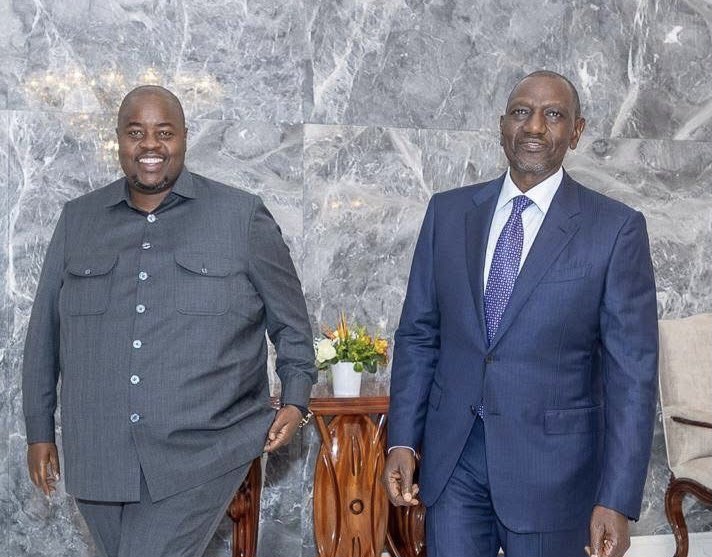
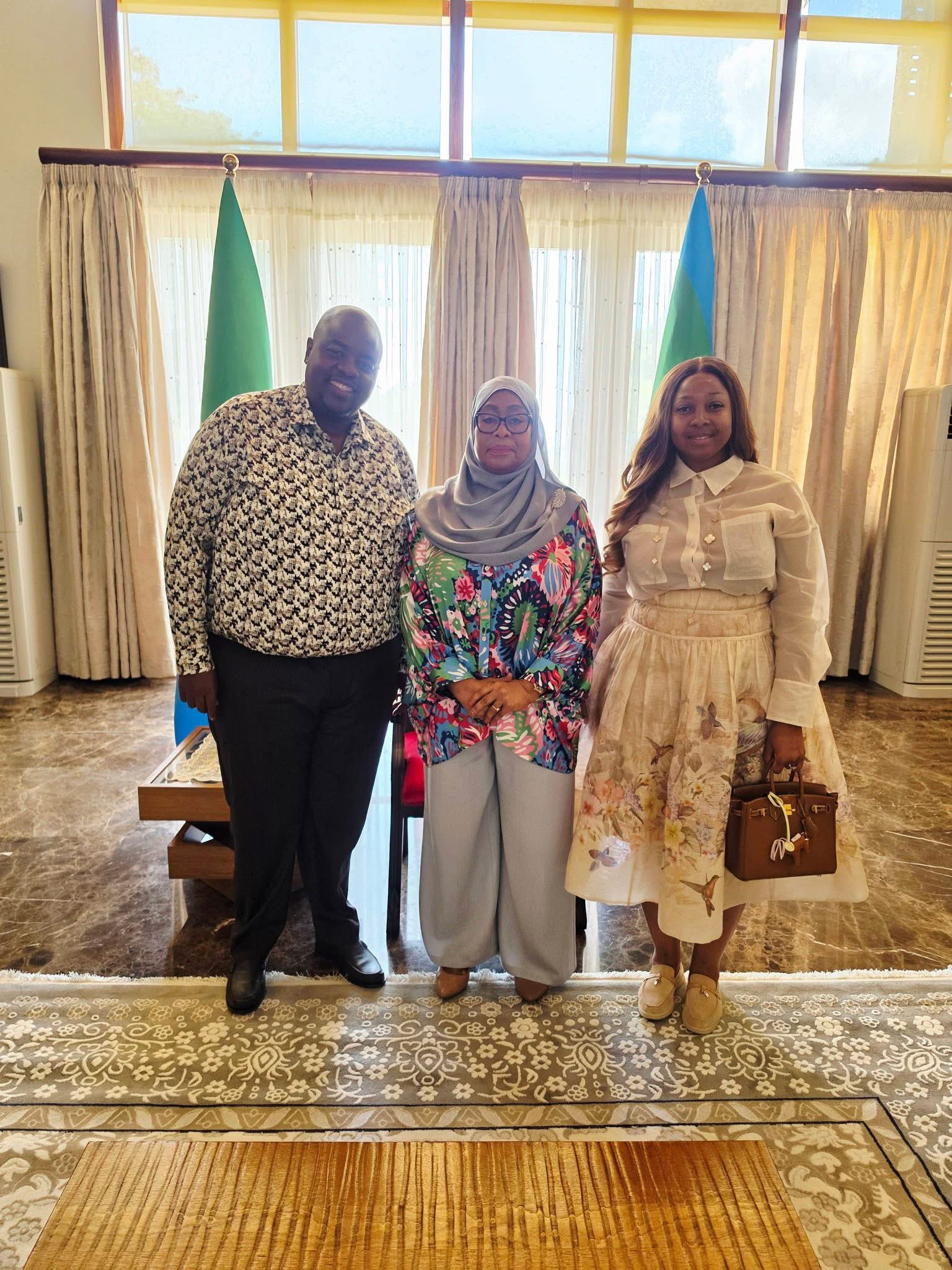
Businessman Sir Wicknell Chivayo has stepped up his regional engagement efforts, holding high-level meetings with Kenyan President William Samoei Ruto and Tanzanian President Samia Suluhu Hassan during recent visits to Nairobi and Dar es Salaam.
The engagements, described as part of a broader strategy to expand his footprint across East Africa, saw Chivayo applauding the pace of development in both nations while signalling a major financial commitment to the region.
Speaking after the meetings, Chivayo expressed admiration for Kenya’s ongoing rural transformation programmes.
“I am impressed by the scale and impact of Kenya’s rural electrification and water supply initiatives. These are not just development projects, but life-changing interventions that are uplifting communities and driving inclusive growth,” Chivayo said.
He added that such initiatives present viable opportunities for private sector collaboration.
“There is a clear alignment between government priorities and investment opportunities, which creates an enabling environment for long-term partnerships,” Chivayo noted.
In Tanzania, the businessman highlighted large-scale infrastructure projects as key drivers of economic growth, particularly the Standard Gauge Railway (SGR) and the expansion of energy networks.
“Tanzania’s strategic focus on infrastructure development, including the SGR and energy expansion, is positioning the country as a regional economic hub,” he said.
Chivayo used the visits to announce an ambitious investment plan targeting both countries.
“We are looking at deploying at least US$100 million into each of these markets within the year, focusing on tourism, infrastructure development, and renewable energy,” he revealed.
He emphasised that the planned investments are not only commercially driven but also aligned with broader African development goals.
“Our vision is to contribute meaningfully to Africa’s growth story by investing in sectors that have a direct impact on economic development and job creation,” he said.
According to Chivayo, East Africa’s economic trajectory continues to inspire confidence among investors, citing policy stability and infrastructure expansion as key attractions.
“The region is demonstrating resilience and forward-thinking leadership, which is critical in attracting sustainable investment,” Chivayo added.
The visits highlight a growing trend of intra-African investment, as business leaders increasingly look beyond their home countries to tap into emerging opportunities across the continent.

ZLGCA Drives Girl Child Empowerment as Zimbabwe Celebrates 46 Years of Freedom

Van Choga: Controversy Outpaces Quality in Music Sales

USD 2.18 Billion Rail Deal To Unlock Africa Trade Corridors

Operation restore order

Masasi High School Abuse Scandal Sparks Public Outcry

Kuwadzana Man Jailed for Reckless Driving and Driving Without a Licence
-
 Current Affairs5 months ago
Operation restore order
-
 Crime and Courts7 months ago
Masasi High School Abuse Scandal Sparks Public Outcry
-
 Crime and Courts7 months ago
Kuwadzana Man Jailed for Reckless Driving and Driving Without a Licence
-

 Current Affairs9 months ago
Breaking: ZIMSEC June 2025 Exam Results Now Available Online
-

 Current Affairs8 months ago
Munhumutapa Day: Zimbabwe’s Newest Public Holiday Set for Annual Observance
-

 Current Affairs6 months ago
BREAKING NEWS: ZANU PF Director General Ezekiel Zabanyana Fired
-

 Current Affairs8 months ago
No Racism in Our Cricket: Government
-

 World News6 months ago
Burkina Faso Reaps $18 Billion in Gold Revenue Under Ibrahim Traoré’s Leadership