
Crime and Courts
Justice Delayed: The Long-Overdue Arrest of Prophet Walter Magaya – A Trail of Allegations from Rape to Fraud
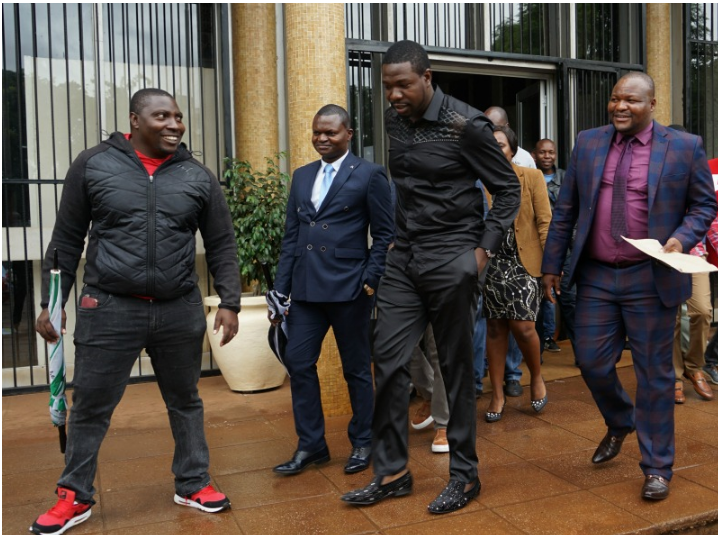
As the sun rose over Harare’s bustling streets, a fleet of unmarked police vehicles descended on the opulent offices of Prophetic Healing and Deliverance (PHD) Ministries. Their target: Walter Magaya, the self-proclaimed prophet whose sermons have drawn thousands seeking miracles, but whose shadow has long been darkened by whispers of abuse, deceit, and death.

By Abel Karowangoro
As the sun rose over Harare’s bustling streets, a fleet of unmarked police vehicles descended on the opulent offices of Prophetic Healing and Deliverance (PHD) Ministries. Their target: Walter Magaya, the self-proclaimed prophet whose sermons have drawn thousands seeking miracles, but whose shadow has long been darkened by whispers of abuse, deceit, and death.
The 41-year-old cleric, founder of one of Zimbabwe’s largest Pentecostal empires, was arrested on multiple counts of rape and fraud, charges that echo a decade of unresolved accusations.
For victims, survivors, and observers alike, this moment feels not like a bolt from the blue, but a reckoning long overdue.
Zimbabwe Republic Police spokesperson Commissioner Paul Nyathi confirmed the dawn raid in a terse statement:
“ZRP confirms the arrest of PHD Church leader Walter Magaya in connection with several reports of rape and fraud. The suspect was arrested early today by a police crack team.”
Details remain sparse, but sources close to the investigation suggest the charges stem from fresh complaints lodged in recent months, building on a litany of prior allegations that have dogged Magaya since his meteoric rise in 2012. What began as claims of divine healing has devolved into a sordid saga of exploitation, with critics arguing that Magaya’s influence, bolstered by political ties and a vast media machine, shielded him from accountability until now.
The Rape Allegations: A Pattern of Power and Predation
Magaya’s troubles with sexual misconduct allegations date back nearly a decade, painting a picture of a leader who allegedly weaponised his spiritual authority against vulnerable congregants.
The first major storm broke In August 2016, when a 25-year-old Midlands State University student accused him of rape.
According to court records, Magaya allegedly invited the woman to his Mount Pleasant home under the guise of a private counselling session.
He reportedly left her alone in a room, only to return nude and assault her, later offering US$200 as hush money.
The case thrust Magaya into the spotlight, with leaked audio recordings purportedly capturing discussions of financial settlements to silence the accuser.
The complainant, known only as Mandi (not real name) in court documents, withdrew her charges two months later amid claims of death threats from unknown assailants pressuring her to proceed.
Affidavits slipped under the door of the Harare Magistrates Court detailed her fear, yet failed to explain the reversal despite the alleged intimidation.
Magaya, granted bail and ordered to surrender his passport, maintained his innocence, framing the ordeal as a divine test that only strengthened his resolve.
But this was no isolated incident. In June 2019, a couple from Chitungwiza, Godfrey and Molly Maenzanise, went public with explosive claims that Magaya had impregnated their 17-year-old daughter, whom he had “adopted” after they couldn’t afford her school fees.
The family alleged he abused her repeatedly, shattering her confidence and leaving her pregnant.
The daughter, in a video response, denied the assault and stood by Magaya, a retraction that fueled suspicions of coercion.
Days later, The Sunday Mail reported two more women – Sarah Maruta and Charity Dhlodhlo, accusing him of rape and serial abuse of young female congregants.
Maruta later recanted via video, claiming extortion attempts by the media, but critics pointed to a pattern: accusers retracting under pressure, often after promises of financial aid or threats
The Zimbabwe Gender Commission (ZGC) launched a probe in 2019, only for Magaya to challenge it in court.
In October 2021, the Supreme Court dismissed his appeal, affirming the ZGC’s right to investigate. Yet, no charges stuck – until now. Today’s arrest revives these ghosts, with insiders suggesting the “several reports” include revived 2019 cases, as public pressure mounted via social media and protests.
“It’s poetic justice,” one anonymous former congregant told this outlet. “He preyed on our faith; now the law has to step in.”
The Murder Case: Shadows of Death in the Sanctuary
If the rape allegations exposed Magaya’s alleged personal predations, darker clouds gathered around claims of negligence and cover-ups leading to death.
In July 2014, a Dotito woman accused the prophet of manslaughter after her seven-week-old baby boy died mysteriously during a PHD healing service in Harare.
Police investigated Magaya directly, probing whether “exorcism” rituals or unqualified interventions contributed to the infant’s demise.
The case, which coincided with government plans to brand Magaya a “tourist attraction” for religious tourism, quietly fizzled – a harbinger of leniency to come.
More recently, the 2019 medical fraud conviction was intertwined with fatalities.
Magaya was fined US$700 for peddling an unapproved herbal “cure” for HIV/AIDS, a potion he claimed could eradicate the virus. The World Health Organisation and Zimbabwean authorities condemned it as dangerous quackery.
During a police raid, Magaya’s team allegedly flushed sachets down toilets and burned containers to destroy evidence.
At least four congregants reportedly died after ingesting the substance, their families alleging Magaya’s false promises hastened fatal outcomes.
The plot thickened In March 2024, when six women stormed a PHD service, confronting Magaya on stage over “Chipo’s murder” alongside rape and fraud claims. Chipo, a congregant, allegedly died under suspicious circumstances linked to church activities, with protesters demanding justice for her and others. That September, reports surfaced of Magaya fleeing Zimbabwe after his bodyguard, Liberty Chinembiri, was gruesomely murdered at the Yadah Hotel – a property tied to the prophet’s business empire. Whispers of internal foul play swirled, but no charges followed.
Even as recently as December 2024, the dismembered body of Lindi Chamunorwa – described as Magaya’s “girlfriend” – was discovered in Kwekwe, initially ruled a car accident but later revealed via X-rays to bear machete wounds, suggesting murder.
Sources close to the probe hinted at ties to Magaya’s circle, though he denied involvement.
These threads – negligence, cover-ups, and outright violence – weave a narrative of a ministry where miracles masked mortal risks.
Fraud Allegations: From Fake Cures to Forged Futures
Magaya’s financial improprieties form the third pillar of his downfall, a web of deceit that enriched him while impoverishing followers.
Beyond the HIV scam, he faced a US$23 million debt lawsuit in 2019 from Homelink over a failed Yadah Connect housing scheme, where congregants lost life savings on promised stands that never materialised.
In March 2024, protesters again stormed his service, one woman demanding US$500,000 her family allegedly lost to Magaya’s schemes – part of claims from nearly 100 victims, including Israeli investors.
The latest fraud bombshell exploded in January 2025, when Magaya’s bid for Zimbabwe Football Association (ZIFA) presidency crumbled over fake O-Level certificates.
Disqualified for lacking qualifications, he escalated to the High Court with a forged University of South Africa (UNISA) marketing diploma and honorary PhD – documents UNISA swiftly disavowed.
The university confirmed: “UNISA has no record of Walter Magaya as a student or graduate. Any certificate he produces… is fraudulent.”
The Zimbabwe Anti-Corruption Commission (ZACC) launched a probe on January 31, 2025, potentially facing 20 years under fraud statutes.
Additional woes include a February 2025 High Court interdict halting his unauthorized Chitungwiza developments and a Bulawayo stands scam defrauding congregants. In August 2025, U.S. authorities raised airport alerts over his unlicensed medical practices during a planned Dallas visit.
Why Now? A Prophet Unmasked
Magaya’s arrest caps a year of unravelling: from UNISA’s fraud exposure to mounting protests and ZACC scrutiny. Supporters decry it as “persecution,” timed suspiciously before his “Night of Turn Around” event. For the aggrieved, the assaulted, the bereaved, the swindled – it’s vindication.
“He built an empire on our pain,” one victim shared anonymously. As Magaya awaits court, questions linger: Will justice prevail, or will influence intervene again?
This is a developing story. PHD Ministries has yet to comment. Stay tuned for updates.








Businessman Patterson Timba has been acquitted of rape charges by the Kadoma Magistrates’ Court, bringing a dramatic turn to a case that documents and sources claim was part of a broader campaign linked to a long-standing dispute over Tolrose Mine.
The ruling, delivered on 30 March 2026, clears Timba of the allegations. However, material reviewed suggests the case may have been orchestrated to tarnish his reputation amid a 15-year battle over control of Tolrose Investments, the company associated with GlenCairn Mine, commonly known as Tolrose Mine.
According to the documents, the complainant described as an unemployed woman was allegedly sponsored to pursue the case. Sources claim businessman Jameson Rushwaya facilitated payments for legal representation through a “watching brief” lawyer. It is further alleged that the complainant received financial incentives as part of efforts tied to an attempted hostile takeover of the mine.
Additional claims suggest that after her dismissal from Tolrose, the woman survived through informal trading, selling second-hand shoes in Rio. Sources also allege that disputes over outstanding payments between the complainant and individuals linked to Rushwaya were witnessed during the proceedings.
The acquittal forms part of what documents describe as a recurring pattern in which criminal complaints against Timba emerged shortly after key civil rulings on the mine’s ownership. The material alleges that Rushwaya leveraged influence from close associates, including his brother Martin Rushwaya and Henrietta Rushwaya, during various stages of the dispute.
Court records cited in the documents indicate that a High Court consent order granted Timba a 67 percent controlling stake in Tolrose Investments, while Rushwaya held 23 percent. That stake was later reportedly extinguished through judicial execution proceedings involving Tetrad Investment Bank.
Further determinations by the Ministry of Mines in 2016, 2018, and 2025 are said to have reaffirmed Tolrose Investments as the legitimate holder of mining rights, with no legal entitlement attributed to Rushwaya or his company. Authorities reportedly invoked Section 348 of the Mines and Minerals Act to seek police assistance in removing illegal miners from the site.
Despite these rulings, the dispute allegedly escalated into repeated criminal proceedings. On 8 July 2010, Timba was arrested by Detective Assistant Inspector Chikupo on fraud-related allegations just days after an urgent High Court application filed by the Rushwayas had been dismissed on 29 June 2010 by Justice Bharat Patel. The material claims the arrest proceeded despite the Attorney-General declining to prosecute.
Violence has also marked the conflict. On 4 August 2012, a fatal shooting occurred during an attempted takeover of Tolrose Mine, resulting in the death of Shepherd Mpofu. Sixty security personnel were initially charged with murder, with six later indicted. All were acquitted in October 2015. A ballistics report from 2012 reportedly found that firearms belonging to the security company engaged by Timba were not responsible for the fatal shot, while weapons linked to opposing security personnel were allegedly not subjected to similar examination.
Tensions remained high in subsequent years. A complaint filed on 9 January 2018 alleged that Rushwaya and a group forcibly entered the mine on 7 January 2018 at around 21:00 hours, displacing management and taking control of key operational areas.
Crucially, the alleged invasion occurred after Timba had already been arrested and remanded in custody, a detail that sources say raises further questions about the sequence of events and control of the mine at the time.
The complaint further claims police response was delayed by several hours and that some individuals involved had prior records of violence, including assault and armed robbery at the mine.
Investigative material also points to irregularities in police handling of related cases, alleging that complaints initially recorded by the Criminal Investigation Department (CID) were duplicated at Kadoma Central Police Station, resulting in parallel dockets based on the same facts. Arrests were reportedly carried out across different provinces, raising further questions about procedure.
Sources claim that following the dismissal of a High Court application by Timba in late 2025 seeking to regain access to the mine, arrests targeting him intensified.
Overall, the documents characterise the prolonged conflict as a coordinated effort to shift a civil commercial dispute into the criminal justice arena what they describe as a “prosecutorial architecture” designed to exert pressure despite court and regulatory determinations on ownership.
Efforts to obtain comment from Jameson Rushwaya, Martin Rushwaya, Henrietta Rushwaya, the Zimbabwe Republic Police (ZRP), and Patterson Timba were unsuccessful at the time of publication.
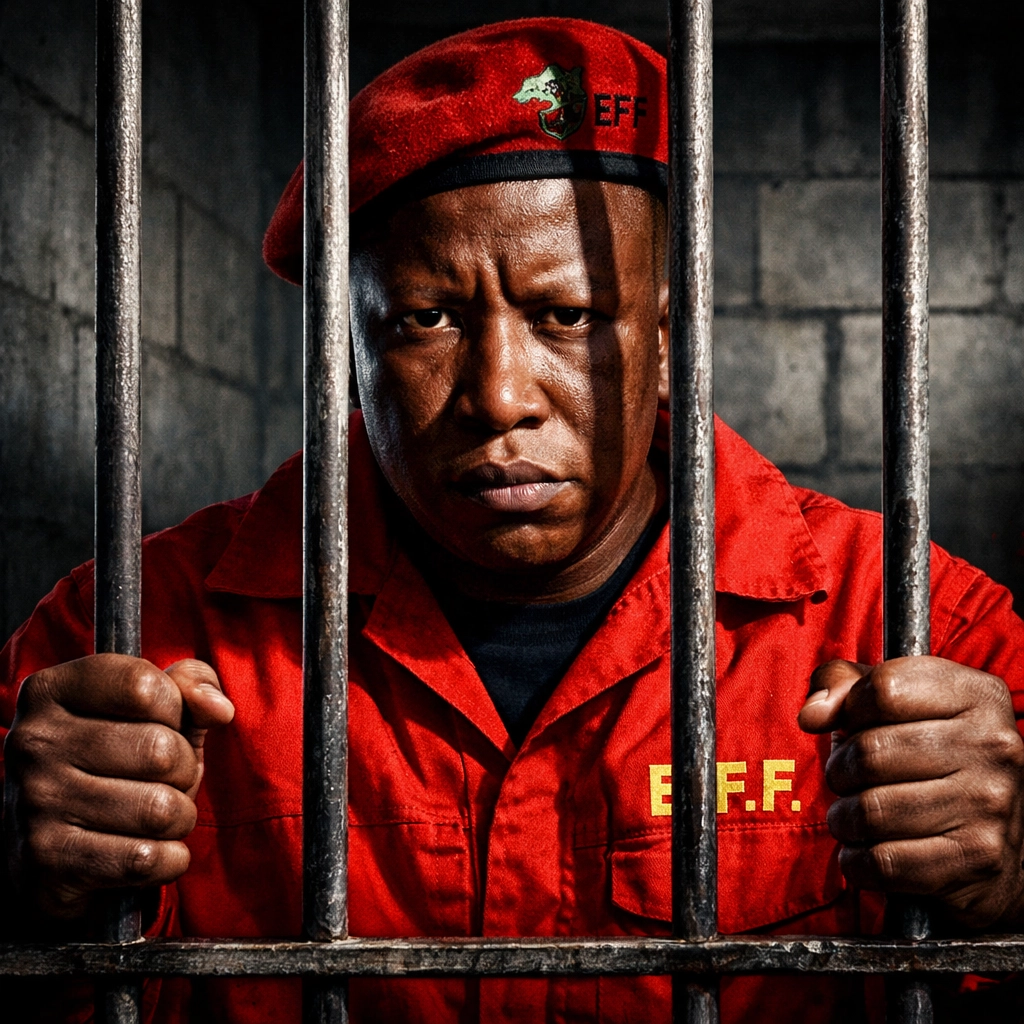
By Kelvin Matore, Hurumende Correspondent
KuGompo City, South Africa – The political landscape of South Africa was irrevocably altered today as opposition firebrand Julius Malema received a five-year prison sentence for discharging a firearm in the air at a 2018 rally. The magistrate’s court in KuGompo City, formerly East London, delivered the verdict, a decision that could effectively sideline one of the nation’s most dynamic and polarizing political figures.
Malema, 45, the charismatic leader of the Economic Freedom Fighters (EFF), was convicted last year on multiple charges, including unlawful possession of a firearm and discharging a weapon in a public place. The incident, which occurred at a stadium in the Eastern Cape province, saw Malema firing what he controversially claimed was a ‘toy gun’ during a party celebration. This assertion was, however, decisively refuted by the court, which found overwhelming evidence to the contrary.
Immediately following the sentencing, Malema’s legal team initiated an appeal, a move that underscores the high stakes involved. Should this sentence be upheld through all avenues of appeal, it would carry profound consequences, notably barring Malema from holding public office. For a politician of his stature, this would be nothing short of a political death knell.
This development is a significant blow to the EFF, a party that has skillfully tapped into the frustrations of young South Africans grappling with persistent racial inequality decades after the end of apartheid in 1994. As the fourth-largest party in parliament, the EFF has been a vocal critic of the ruling African National Congress (ANC), advocating for radical economic transformation. Malema’s absence from the political arena could create a leadership vacuum and potentially diminish the party’s momentum and influence.
Throughout the protracted legal battle, Malema maintained his innocence, portraying the charges as politically motivated. However, the prosecution, led by Cesar, was unsparing in its assessment, arguing for a maximum 15-year sentence. Cesar’s remarks, “The accused has treated these proceedings with contempt… He blamed VIP protectors, the Holy Spirit, and everyone except himself. The show is over,” highlight the contentious nature of the trial and the perceived defiance of the accused.
The EFF has consistently framed this prosecution as a “witch hunt,” strategically timed ahead of the crucial 2026 municipal elections
. Indeed, the timing of this verdict, coupled with its severe implications, will undoubtedly reverberate across South Africa’s political landscape. The coming months will reveal whether Malema’s legal challenges can overturn this conviction or if this marks a definitive turning point in his controversial, yet impactful, political career.


The Bindura Magistrates’ Court has sentenced a 25-year-old man to an effective seven years in prison following a violent robbery at a local bus stop.
According to a statement issued yesterday by the National Prosecuting Authority, Nation Siyatukwe was convicted after he and an accomplice attacked two women during the early hours of last month.
“The incident occurred around 0400 hours on March 3, 2026, at the Chiwaridzo Clinic bus stop in Bindura. A 32-year-old woman was waiting for transport to work with her mother when Siyatukwe and his accomplice approached them. The two men initially demanded US$20 from the victims,” the NPA statement said.
The court heard that when the complainant told them she had no money, the situation turned violent. The offenders forced both women to sit on the ground before launching an assault.
Siyatukwe repeatedly struck the complainant in the face and restrained her while his accomplice took her Itel A70 mobile phone, valued at US$70.
“The victim managed to raise the alarm, prompting the two assailants to flee the scene. Police responded swiftly to the distress call and successfully tracked down and arrested Siyatukwe. His accomplice escaped and remains at large, with authorities continuing their search,” the statement added.
During the trial, the court noted that although the victim did not sustain visible permanent injuries, the use of force was evident. The magistrate found that violence was clearly used to facilitate the theft, meeting the legal requirements for a robbery conviction.

ZLGCA Drives Girl Child Empowerment as Zimbabwe Celebrates 46 Years of Freedom

Van Choga: Controversy Outpaces Quality in Music Sales

USD 2.18 Billion Rail Deal To Unlock Africa Trade Corridors

Operation restore order

Masasi High School Abuse Scandal Sparks Public Outcry

Kuwadzana Man Jailed for Reckless Driving and Driving Without a Licence
-
 Current Affairs5 months ago
Operation restore order
-
 Crime and Courts7 months ago
Masasi High School Abuse Scandal Sparks Public Outcry
-
 Crime and Courts7 months ago
Kuwadzana Man Jailed for Reckless Driving and Driving Without a Licence
-
 Current Affairs9 months ago
Breaking: ZIMSEC June 2025 Exam Results Now Available Online
-
 Current Affairs8 months ago
Munhumutapa Day: Zimbabwe’s Newest Public Holiday Set for Annual Observance
-
 Current Affairs6 months ago
BREAKING NEWS: ZANU PF Director General Ezekiel Zabanyana Fired
-

 Current Affairs8 months ago
No Racism in Our Cricket: Government
-
 World News6 months ago
Burkina Faso Reaps $18 Billion in Gold Revenue Under Ibrahim Traoré’s Leadership