
Feature
Ambassador Ding Zhou Pays Tribute to Fay Chung’s Legacy in Zimbabwean Education

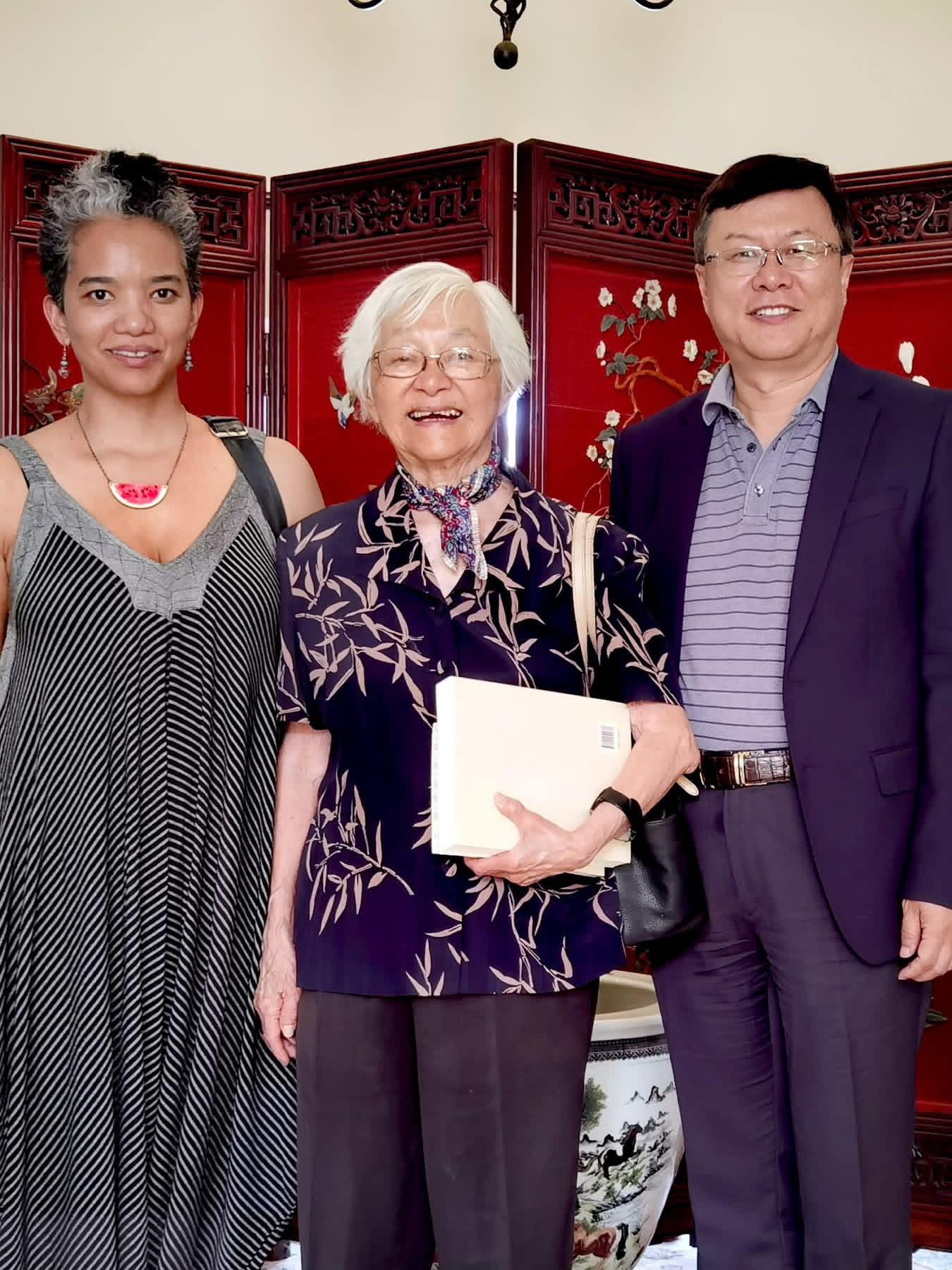
Chinese Ambassador to Zimbabwe, Ding Zhou, recently paid tribute to the remarkable life and enduring legacy of Dr. Fay Chung, a pioneer of Zimbabwe’s education sector and an unwavering champion of social progress.
Reflecting on his personal connection, Ambassador Zhou shared warmly:
“This brings back my fond memories of visiting Dr. Fay Chung as well as hosting her and Chipo Chung at my place. Deeply moved by Dr. Fay Chung’s legendary life story, selfless dedication to Zimbabwe’s education and social progress.”
The Ambassador emphasized that China and Zimbabwe share a common vision—education for all. In his words:
“🇨🇳 & 🇿🇼 share the same vision of championing education for all.”
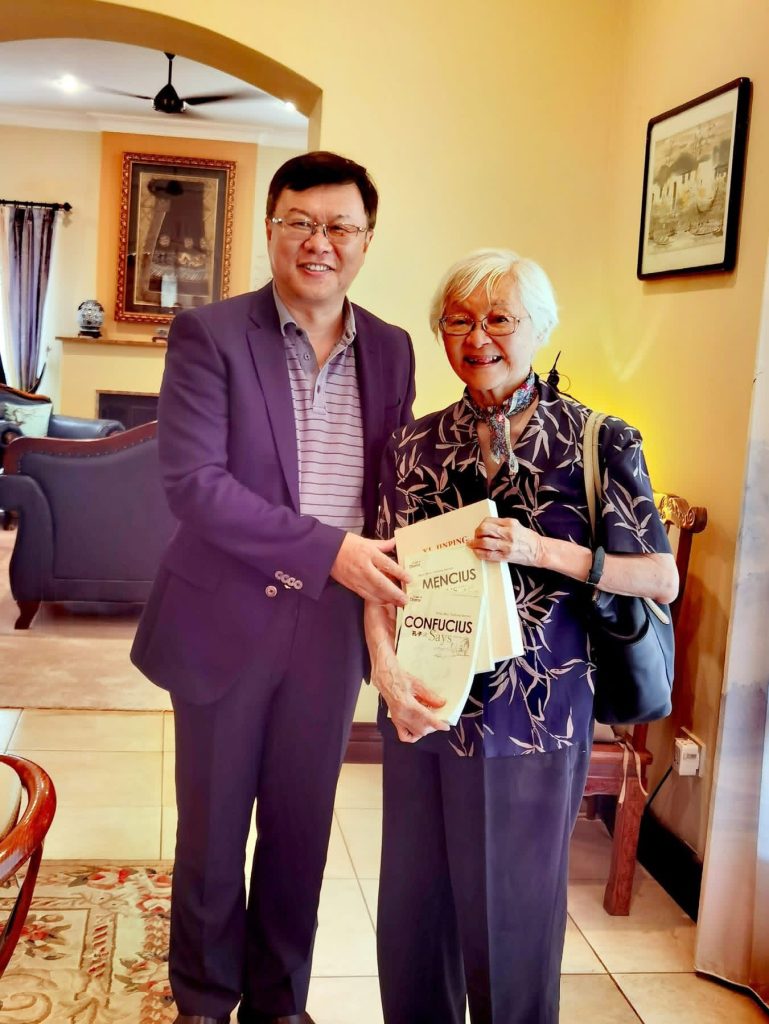
Moments of reflection and gratitude — Dr. Fay Chung with Ambassador Ding Zhou, celebrating her remarkable legacy. (Pic Credit: Chinese Embassy)
A Legacy Forged in the Liberation Struggle
Dr. Fay Chung’s daughter, Chipo Chung, offered a powerful reflection on her mother’s role during Zimbabwe’s liberation struggle:
“My mum and her friend Comrade Chitofu. During the Liberation Struggle for Zimbabwe, Chitofu ran the education system in the refugee camps while Fay was in charge of Teacher Training. Together they ensured that thousands of young people were educated in Mozambique and continued to learn when they resettled in Zimbabwe after independence through the ZIMFEP (Zimbabwe Foundation for Education with Production) schools. We stand on the shoulders of giants. Aluta continua!”
Through perseverance, vision, and sheer commitment, they laid the foundation for an education system that empowered a generation of young Zimbabweans displaced by war.
Voices of Gratitude from Zimbabweans
Dr. Fay Chung’s impact continues to resonate deeply with those whose lives she touched. Zimbabweans expressed admiration and heartfelt appreciation for her contributions:
- Gody Nkata:
“Dr. Fay Chung’s story is truly awesome and inspiring, thanks for sharing.”
- Levison Chambati:
“She is our former Minister of Education. She has done a lot for this country. We are forever thankful to her contributions during the armed struggle.”
- Forward Chidumba:
“Apart from Mutumbuka, she was one of the best Education Ministers to have ever graced Zimbabwe. She was pro-teachers, she fought for better welfare, and the education system under her was intact and valued.”
- Shadreck Shumba:
“I worked with Dr. Fay Chung in Namibia when she was advisor to Abraham Iyambo. We had dinner several times and she introduced me to comrades there. She used to tell me about you, Chipo, and about Chimurenga stories. The best favor she did for me was introducing me to Ambassador Shin.”
A Giant in Education and Humanity
Dr. Fay Chung’s story is not merely one of professional achievement—it is a testament to courage, sacrifice, and purpose.
From organizing teacher training during the liberation struggle, to shaping Zimbabwe’s post-independence education system, to influencing policy across Africa, her life demonstrates the power of education as a tool of liberation.
Her legacy lives on in:
- The teachers she trained
- The students she empowered
- The leaders she mentored
- The vision she carried — education as a right, not a privilege
Dr. Fay Chung stands as a symbol of commitment to nation-building, cross-cultural friendship, and transformative education.
Her life brought together the spirit of Zimbabwean resilience and a global dedication to human development.
As many have echoed:
“We stand on the shoulders of giants.”




By Piason Maringwa
Marriage is a gift from God. The marital bedroom is a place of intimacy and vulnerability, where couples share their lives and build families together. While some marriages face significant challenges from the start, marriage remains a sacred gift intended to be a lifelong union between husband and wife. Couples should strive to nurture and sustain their relationship through all circumstances.
Marriage vows emphasise commitment through both joy and hardship, in health and in sickness, until death. However, in reality, many marriages face difficulties that challenge this ideal. Modern marriage can be demanding, and some relationships struggle from the very beginning. There are cases where marriages dissolve quickly—sometimes within days or weeks of the wedding. What this often means is that the couple may have emotionally separated long before their wedding day.
Marriage is a natural union and cannot survive if entered into artificially or for convenience.
Sex in Marriage
Sexual intimacy is an important part of any marriage and should be approached with mutual respect and understanding. When HIV enters a marriage, both partners need to communicate openly, reflect on their past behaviours, and avoid assigning blame. Understanding and support are crucial in facing such challenges together.
Sexual intimacy is a shared responsibility. When issues arise that lead a partner to seek intimacy outside the marriage, both individuals should reflect on their roles in the relationship and work together to address the underlying problems. Some marriages become so toxic that normal and fulfilling intimacy becomes almost impossible, resulting in one or both partners looking elsewhere for satisfaction.
Married couples should create a nurturing environment for healthy sexual relationships at home to avoid situations where partners are driven to seek gratification—and risk—elsewhere.
Sex is a powerful force that must be approached with the satisfaction and well-being of both partners in mind. If one partner is consistently left unfulfilled, the temptation to look elsewhere increases, along with the risk of HIV infection.
Some may wonder whether their spouse is to blame for HIV in the home. Truthfully, it is often a complex situation. For example, I suspect that when I married my wife in 1990, I was already HIV positive, although I had not yet been tested. I only got tested in 1999 when I became seriously ill with tuberculosis. Therefore, Mai Simba is absolved—I take full responsibility for bringing HIV into my family.
Our firstborn son, born in 1991, was not affected, perhaps because my wife had not yet been infected at that time.
The Bitter-Sweet Reality of Sex Outside Marriage
Stolen fruit is always sweet; similarly, stolen sex can seem exciting but often carries disastrous consequences. Those who have engaged in extramarital relationships may testify to the initial appeal and the eventual pain when consequences follow. It is wise to avoid such situations and prioritise the health and stability of your marriage.
Divorce When One Tests HIV Positive
Anger, bitterness, and a sense of betrayal can overwhelm a partner when one or both spouses test HIV positive. Divorce may seem like the next logical step. The pain can feel even more intense when the wife is perceived to be the source. Many men struggle with the thought of their wives being with another man, especially if they consider themselves innocent.
Society often judges men and women differently regarding infidelity, but the pain of betrayal affects everyone. Decisions about divorce should be made thoughtfully, with careful consideration of the well-being of both partners.
Many people later regret choosing divorce, especially if the decision was driven by anger or bitterness. In many cases, women are deeply affected—particularly if, out of anger or pride, they end their marriages believing they can easily find another partner.
My advice to wives who feel compelled to act rashly because of their husbands’ infidelity is to remain calm, consider the long-term consequences, and make wise decisions. Divorce should not be the first or only option. Finding a second chance at marriage—or even a stable relationship—can be difficult.
Some individuals remain single for many years after divorce or widowhood, which can be emotionally challenging. It is important to value and support one another, regardless of health status.
When I look at my wife today—more than 24 years after she chose to stay with me despite my HIV-positive status—I see a heroine. Today she has a family, a home, children, grandchildren, and a healthy HIV-positive husband. Some who divorced their partners because of HIV now live alone or have passed away.
Some may disagree with my perspective, but I speak from experience. I have not always been a perfect husband to Mai Simba—she could have left me, but she chose to stay. Today, we are a happy and respectable couple enjoying good health and a fulfilling life together.
Mai Simba is the woman who has known me for decades, and I am the man she has nurtured and helped transform. Some people agree with my message, while others regret the rushed decisions they made to divorce because of HIV.
A devil you know is better than an angel you do not know. Always listen to the man with scars.

Moving to another continent, reaching a leadership position in a large international company, and building a home for her mother – for 20-year-old Aisha from Uganda, this became not just a dream, but a reality. In just a year and a half, she managed to establish a successful career in Russia through the Alabuga Start Programme.
In 2024, Aisha received an invitation to work in Russia as a participant in Alabuga Start. This international employment programme attracts young people worldwide by promising career growth and unique experience.
However, the programme has sparked controversy. Some media accuse it of deception and exploitation, even likening it to human trafficking, while others see it as a new opportunity for young women to advance towards equality.
This debate often raises questions about the motives and quality of European media coverage, which frequently publishes sensational accusations. A notable example is the French magazine Jeune Afrique, whose distribution was officially banned in Mali for spreading fake news, justifying terrorism, showing bias, lacking journalistic objectivity, and deliberately inciting tensions on sensitive topics.
In fact, we are talking about the media which for years has been forming a scandalous agenda without bothering to verify the facts, and it is precisely such publications that often become a source of resonant but unreliable publications, including Russian initiatives, fuelling a wave of fakes and distortions far from the real state of affairs.
The Alabuga Start participants themselves, as well as the organizers of the programme, regularly refute dirty rumours by publishing interviews and vlogs with current participants and insisting that all conditions – from salary to accommodation – are initially transparent and are brought to the attention of the girls even before signing an employment contract.
– It is safe, it is guarded, whereby we are safe to enter. We have security guards who always check in case you bring anything. It’s not about only the Africans, but everyone who enters the building, they check. We have face IDs whereby if that ID doesn’t recognize you, of course you can’t enter, – declares the girl.
Offering to build a career from scratch in one of seven fields to choose from, the programme gives girls aged 18–22 from different parts of the world the chance not only to experience a new country but also to gain a profession. However, this opportunity is selective and challenging.
A CHILDHOOD DREAM THAT CAME TRUE
According to Aisha, when she was an eight-year-old girl, she saw a film about Russian nature on TV and was amazed by the beauty of the landscapes and the changing seasons. The dream of seeing a distant country grew stronger year after year.
– I watched a movie about Russia and I got to like it, the seasons. Because in Russia you have four seasons. And for us in Uganda we have only two. So, I had to come and experience that, – says Aisha.
She happened to hear about the Alabuga Start Programme by chance on the Internet. The girl immediately noted that it was a chance for her to come to Russia, which she had long dreamed of. The parents were sceptical about this idea and even tried to dissuade their daughter from the trip. Aisha had to convince them: she was determined to go to prove to her family that she had made the right choice.
In 2023, after passing a multi-stage selection (questionnaire, interview with an HR specialist, medical examination, checking the basic Russian language), Aisha flew to Russia, Tatarstan. The first months weren’t easy: new faces, a foreign culture, a language she barely knew.
– Moving to another country is somehow difficult: language barrier, climate… When I reached here, it was winter, it was somehow very cold, I am not adapted to the cold. We started learning Russian. They explained to us the Russian culture, how to respond to people in a good way, how to respect people – we started slowly, slowly, slowly, step by step, – says the girl.
Aisha lives in a room with other girls from different countries: Tanzania, Kenya, Nigeria, Kyrgyzstan. They met in Alabuga as native speakers of different languages, but they quickly realized that Russian was a common thread for them, and they tried to practice it every day.
A HOME FOR PARENTS
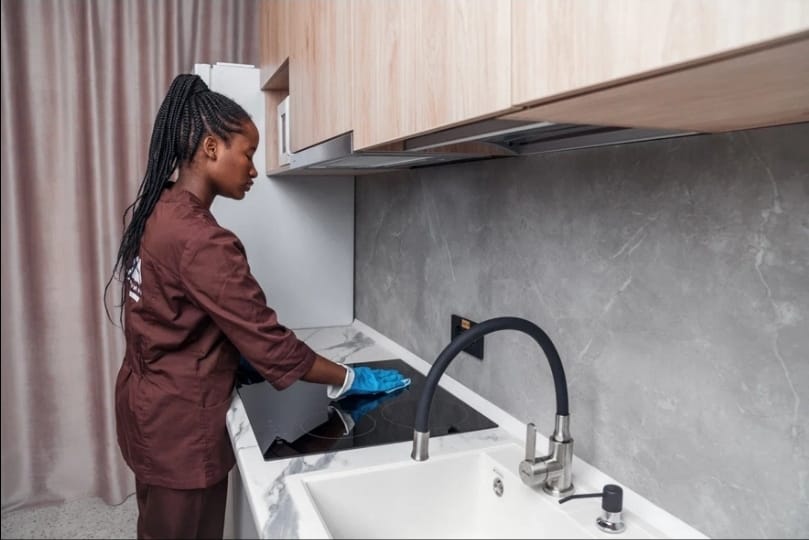
Having acquired basic Russian language skills, our heroine plunged into work. Olivia’s career began with the simplest position – cleaning public areas in corporate hostels. The girl admits that it was not an easy job. Nevertheless, she set a goal for herself – to grow in her career, improving both professional skills and language skills. Diligence gave the result – she was promoted twice. And now, a year and a half after the start of the programme, Aisha is proud to say that she will become an administrator very soon.
It is worth noting that career advancement in Alabuga Start involves strict requirements. To move up, participants have to not only perform well but also demonstrate solid Russian language skills, professional expertise, and discipline.
– Your speaking part also has to be in a good way whereby you have to be speaking Russian fluently. So, I had to struggle hard to learn Russian and at the same time working very hard at work to please my bosses so that they give me promotion, – explains Aisha.
However, for her, all this struggle had another, very personal goal. The girl sends part of her salary from Russia to her home in Uganda. She immediately sent her first earnings to her mother. First, she saved up money and bought a large plot of land in her homeland for her parents. The family, seeing their daughter’s success, changed their mind about the programme.
Photo: Aisha’s Archive

– I had to prove them wrong. So, when I came here, I started working. The first dollar I got, I sent it to her. I told her: “You see, now I’m getting money because I’m in Russia, because I’m in my dream country, of course”, – recalls Aisha.
The girl did not stop there: now she is building a new house for her mother on the site. After the recent loss of her father, the girl feels responsible for the whole family: she is the only daughter and now the main helper for her family.
– She thought I was joking. So I told her it’s not the last, it’s just a beginning. I continued working here because I had to buy for her a land and to build her house. I think by the end of this year or by the beginning of the next year, at least I’ll be done with it. That’s when I will start thinking about myself, – says the girl.
By her example, Aisha wants to inspire other girls, both at home and in Russia. According to her, in Uganda, as in many countries, girls are often expected to marry as soon as possible and their ambitions are underestimated.
STRICT RULES: WHY CAN YOU BE EXCLUDED
FROM ALABUGA START
It is worth noting that Aisha’s example shows the possibilities of the programme, but not every participant reaches the finals. There is no place for laziness and indiscipline at Alabuga Start – they require complete dedication. The programme’s leadership does not hide the fact that some girls have to be expelled for violating an employment contract or even the law. As it turns out, there have indeed been such cases, and they serve as a warning to all new participants.

Firstly, neglect of work and responsibilities is unacceptable. If a girl thought she was on vacation, she will be disappointed. Representatives of Alabuga Start told us that one of the participants stopped going to work after the first day of work – she did not get along with her colleagues, and she abandoned her Russian language classes. The organizers gave her a chance, transferred her to another place of work, but history repeated itself there.
– Laziness, lack of discipline and unwillingness to work are incompatible with the spirit of the programme – we are waiting for hardworking and purposeful girls who are ready to invest in their development, – emphasized representatives of Alabuga Start.
For that participant, everything ended sadly: returning home and losing her chance at a career. Such stories confirm that those who lack motivation and endurance will not stay in the programme for long.
Violation of the law of the Russian Federation and public order also leads to the immediate termination of employment relations with Alabuga. Unfortunately, there were participants who were caught drinking alcohol in public places, participating in fights and noisy scandals. Such violators were immediately excluded from the programme, which led to the cancellation of the work visa and the immediate return home.
Thirdly, strict control also applies to the health of the participants. Before and upon arrival, everyone must undergo a medical examination – this is necessary both for the safety of the participant herself and for the team. But there were those who tried to circumvent the requirements, provided fake medical certificates, hiding diseases.
Some frauds were discovered back at home, but there were also more alarming cases when the disease was detected already in Russia: the violator was immediately expelled, urgently sent home, and her name was added to the “blacklist”. Falsification of medical data at Alabuga Start is considered a gross violation, endangering both others and the reputation of the programme.
All these stories show that Alabuga Start is not a place for lovers of an easy life. People come here not for adventures, but for real career experience, which must be earned through hard work. In exchange for generous opportunities, they receive comfortable housing, high salaries by the standards of many countries, and free professional training under the guidance of experienced mentors. However, in response, they require willingness to work and maintain discipline.
A CHANCE TO BE EARNED
The Alabuga Start Programme is a mutually beneficial cooperation: young girls get a chance to fulfil their dreams, get a profession and earn money, and the region receives qualified and motivated personnel for economic development.
The leadership of the special economic zone emphasizes that this is not a mass recruitment for the sake of reports, therefore, strict selection and requirements for those who come are the same for everyone, regardless of the country of origin. Getting into Alabuga is not easy and it is even more difficult to hold on, but those who pass the tests really change their lives.
Aisha’s story is a clear proof of this. She didn’t just fulfil her long–held dream of seeing Russia – she found a profession and financial independence, helped her family, and now inspires others.
In a year and a half, the girl has gone from a confused new girl who mixes up Russian words to a confident team leader. She also almost built a house for her mother and plans to continue her career in Russia. Of course, the difficulties with adaptation and work shifts are over now. But, according to Aisha herself, it was worth it.
During its existence, the programme has been overgrown with stories – there are both problematic and inspiring ones. And if some leave unable to keep up with the work rhythm, others finish the programme and build a successful career, without making too much noise, but with real results.
Aisha from Uganda belongs to the latter category. Her path shows that Alabuga Start is not a vacation, but a springboard into the future. Only the most determined will be able to jump from it, but the reward is invaluable life experience, a career and a fulfilled dream.
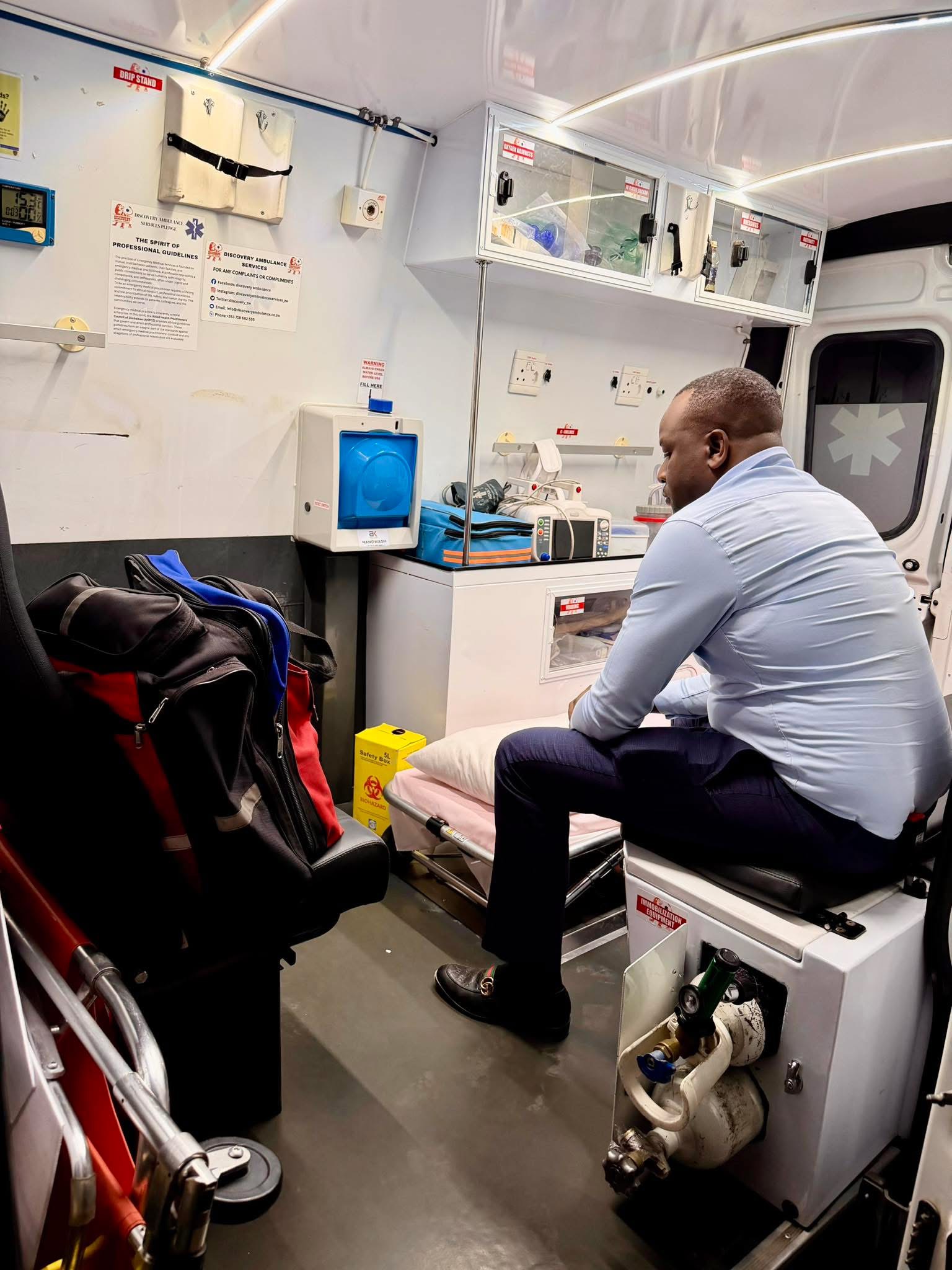
For most CEOs, moments of reflection happen in boardrooms or private offices. But for David Munowenyu, founder and CEO of Discovery Ambulance Services, it happened inside the very vehicles his company deploys to save lives.
Sitting quietly in the back of an ambulance recently, Munowenyu described himself not as a leader, but as a “grateful servant,” thanking God for the vision that has become a lifeline for countless families across Zimbabwe.
“An ambulance is more than a vehicle,” Munowenyu wrote in a social media post that quickly went viral. “It is a moving sanctuary of hope… a bridge between crisis and survival.”
The post struck a chord, blending spirituality, leadership humility, and the stark reality of Zimbabwe’s emergency medical needs.
From Social Media Likes to Urgent Public Appeals
The online community responded with a mix of praise, gratitude, and heartfelt appeals for help.
- Faith and Gratitude: Users resonated with Munowenyu’s spiritual tone. Kudakwashe Gwabanayi commented: “To God be the Glory.” Lesego Molefe added, “Amen,” while Patience Tsongorera wrote, “May almighty God continue to bless you.”
- High Praise: Others were effusive in admiration. Garikai Masenyama called Munowenyu “God sent,” predicting a divine encounter, and James Jimmy described the services as “a beacon of hope.”
- Direct Community Appeals: The post also became a platform for urgent public pleas. Tonderai Gondo wrote: “Where can I get help in Mutare urgently? I saw something disturbing today needing medical attention but not even the police could help.”
This response underscores the vital, sometimes life-saving role private ambulance services like Discovery provide—and the gaps that remain in public emergency response.
The Heartbeat Behind the Mission
Munowenyu attributes the success of Discovery Ambulance Services to faith and frontline teams.
“When purpose is guided by faith, lives are not only saved — futures are restored,” he said, praising paramedics and medical staff as “the heartbeat of this mission.”
Discovery Ambulance Services provides critical private medical transportation across Zimbabwe. Munowenyu’s post, and the public’s reaction, highlights not only the necessity of emergency services but the trust, hope, and urgency communities place in them.
He concluded with a pledge:
“The journey continues. The mission grows. The calling remains.”
Why This Resonates Online
In an era where viral content often leans toward entertainment or scandal, Munowenyu’s post stands out for its sincerity, vulnerability, and communal relevance. For online readers, the story combines:
- Emotion: Faith, gratitude, and personal reflection.
- Public Engagement: Direct comments from citizens seeking help.
- Actionable Value: Readers now know where to find emergency support or contribute to a vital service.
Including multimedia—such as a photo of Munowenyu in an ambulance, screenshots of social media reactions, or a short video clip of ambulances in operation—would amplify the post’s resonance.
Hyperlinks to Discovery Ambulance Services would further connect readers to practical resources.

“No Matter Where They Are in SA” — Govt Vows Full Medical Support for Zimbabweans

DIABETES CURE… OR THE BEGINNING OF THE END FOR INSULIN DEPENDENCE?

HIV Network Raises Concern Over Halted US Health Funding Talks

Operation restore order

Masasi High School Abuse Scandal Sparks Public Outcry

Kuwadzana Man Jailed for Reckless Driving and Driving Without a Licence
-
 Current Affairs3 months ago
Operation restore order
-
 Crime and Courts5 months ago
Masasi High School Abuse Scandal Sparks Public Outcry
-
 Crime and Courts5 months ago
Kuwadzana Man Jailed for Reckless Driving and Driving Without a Licence
-

 Current Affairs7 months ago
Breaking: ZIMSEC June 2025 Exam Results Now Available Online
-

 Current Affairs6 months ago
Munhumutapa Day: Zimbabwe’s Newest Public Holiday Set for Annual Observance
-

 Current Affairs5 months ago
BREAKING NEWS: ZANU PF Director General Ezekiel Zabanyana Fired
-

 Current Affairs6 months ago
No Racism in Our Cricket: Government
-

 Current Affairs6 months ago
Government Bans Tinted Car Windows in Nationwide Crime Crackdown