
World News
China’s AI Talent Engine Drives Global Innovation Edge

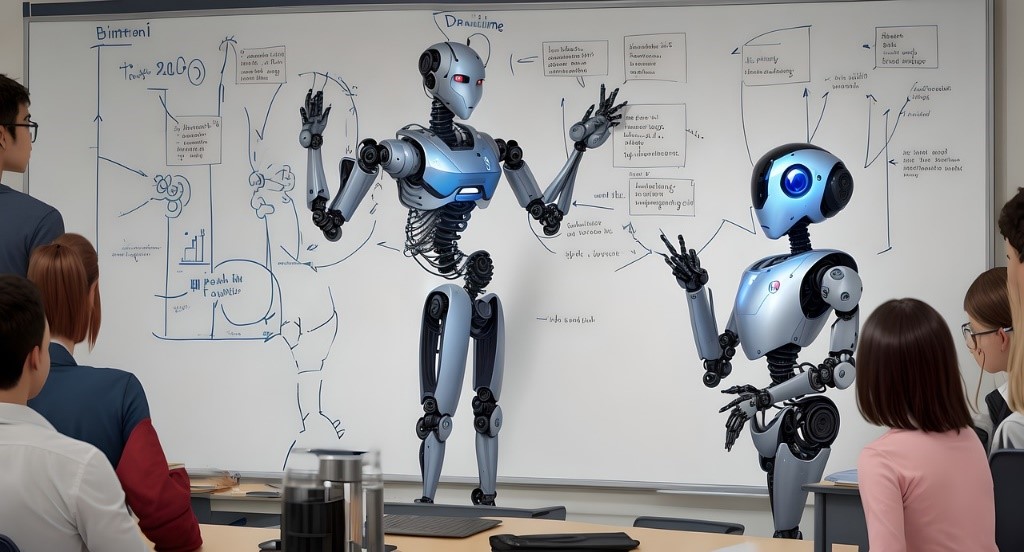
- China Produces 3.57 Million STEM Graduates Annually, Dwarfing U.S. Output
- Beijing Leads World in AI Patents and Research, Backed by Massive Talent Pipeline
- Experts Urge Open-Source AI to Prevent Dominance, Offer Lessons for Africa
China continues to solidify its position as a powerhouse in artificial intelligence, fueled by an unparalleled pipeline of STEM talent that far outpaces global rivals, according to recent data and expert analysis.
At the heart of this surge is China’s massive annual output of STEM graduates.
Latest figures indicate the country produces approximately 3.57 million science, technology, engineering and mathematics graduates each year, representing about 40-45% of all university degrees.
This vast talent pool – roughly four times that of the United States’ 800,000 annual STEM graduates – provides the human capital driving breakthroughs in AI research, patents and applications.
Experts highlight that China’s STEM dominance extends to advanced degrees.
Projections indicate that Chinese universities will award over 77,000 STEM PhDs annually by 2025-2026, nearly double the U.S. figure of approximately 40,000. Within this, AI-specific expertise is growing rapidly, with China producing almost half of the world’s top AI researchers and leading in AI publications.
This talent advantage translates into tangible outputs. China now accounts for more than 70% of global AI patents, including a commanding share in generative AI, underscoring its strategic focus on open-source development and inclusive innovation.
Victor Gao, a prominent Chinese scholar interviewed at the Doha Forum, emphasised this approach in discussions on the AI revolution.
He warned against any single nation’s dominance, advocating for open-source AI to ensure global participation and prevent existential risks, such as AI surpassing human control.
“China’s model lowers barriers, allowing broader access and collaboration,” Gao said.
Despite challenges, including a projected shortage of millions of AI professionals by 2030 amid soaring demand, Beijing’s investments in education and research – including billions in semiconductor and AI funds – are bridging gaps and attracting global talent.
What Africa Can Learn from China’s AI Talent Strategy
As African nations seek to harness AI for development, China’s experience offers valuable insights for building sovereign capabilities in the technology.
With a youthful population of over 1.4 billion and emerging tech hubs in cities like Nairobi and Lagos, Africa has immense potential.
However, the continent produces an estimated 675,000 STEM graduates annually, a fraction of China’s output relative to population needs.
Experts recommend the following steps:
- Massive Investment in STEM Education — Emulate China’s focus by expanding universities, vocational programs and scholarships to target 1 million annual STEM graduates by 2030, prioritising software engineering and AI.
- Develop Specialised AI Pipelines — Establish centres of excellence and partnerships with Chinese institutions for knowledge transfer, aiming for tens of thousands of AI specialists.
- Promote Open-Source Adoption — Leverage affordable Chinese AI frameworks to address local issues like agriculture and healthcare, fostering innovation without dependency.
- Strengthen Ethical Governance — Create national AI strategies emphasising privacy and fairness to protect sovereignty amid global competition.
- Build Strategic Partnerships — Use forums like the Forum on China-Africa Cooperation to secure infrastructure investments while prioritising local capacity-building.
- By adapting these lessons, Africa can transition from AI consumer to contributor, driving equitable growth in the intelligence age.
- China’s AI ascent demonstrates that strategic talent development can reshape global dynamics. For emerging regions like Africa, the path forward lies in proactive investment and collaboration to ensure technology serves inclusive progress.






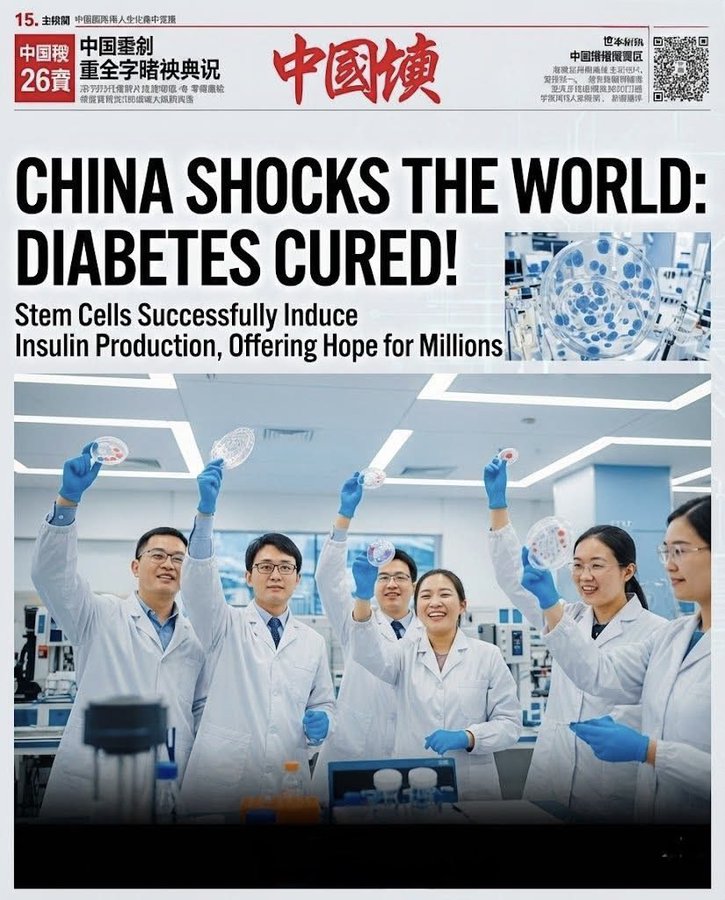
Scientists in China and the United States have successfully used stem cells to create insulin-producing cells that restored the body’s ability to regulate blood sugar in some patients with Type 1 diabetes.
The experimental procedures, conducted by researchers in China and separately by Vertex Pharmaceuticals in the U.S., represent a significant leap beyond traditional disease management.
For over a century, diabetes has required patients to endure daily insulin injections and constant glucose monitoring.
These new cell-based therapies aim to rebuild the biological function that is lost in the disease.
According to details shared online by science commentator SciTech Girl, which have garnered significant attention from the medical community, the approach involves creating new islet cells from stem cells and transplanting them into patients.
In several individuals with Type 1 diabetes, whose pancreases no longer produce insulin, these transplanted cells have begun producing insulin again—eliminating the need for injected insulin.
“No pump. No syringe. Just living cells doing their job,” the report stated, summarising the dramatic outcome for some trial participants.
Medical experts caution that while the results are groundbreaking, they do not yet constitute a widespread, proven cure.
The trials remain small in scale, and the long-term durability and safety of the transplanted cells are still unknown.

Russian authorities have moved to block Meta-owned WhatsApp across the country, citing the company’s failure to meet domestic legal requirements.
Officials say Meta did not establish a local office, declined to cooperate with data-sharing demands, and failed to remove content deemed unlawful.
The government has also linked the messaging platform to cases of fraud and alleged extremist activities.
Following the shutdown, many users in Russia are migrating to alternative platforms such as Telegram, VK Messenger, Yandex Messenger, and the government-supported MAX application.

Dalisto Lungu, the son of Zambia’s late former president Edgar Lungu, has been stripped of assets worth more than US$1.26 million after a ruling by the Economic and Financial Crimes Court.
The court found that the properties were obtained through illicit means and ordered their forfeiture to the state. The seized assets include 79 motor vehicles, over 20 pieces of land located in various parts of Zambia, as well as a fuel service station.
In its judgment, the EFCC stated that Lungu failed to provide credible evidence of a lawful income or business operations that could reasonably explain his accumulation of such wealth.
Lungu disputed the allegations, insisting that the properties were legally acquired. However, the court ruled that his explanation was insufficient to counter the state’s case, paving the way for the assets to be confiscated.

“No Matter Where They Are in SA” — Govt Vows Full Medical Support for Zimbabweans

DIABETES CURE… OR THE BEGINNING OF THE END FOR INSULIN DEPENDENCE?

HIV Network Raises Concern Over Halted US Health Funding Talks

Operation restore order

Masasi High School Abuse Scandal Sparks Public Outcry

Kuwadzana Man Jailed for Reckless Driving and Driving Without a Licence
-
 Current Affairs3 months ago
Operation restore order
-
 Crime and Courts5 months ago
Masasi High School Abuse Scandal Sparks Public Outcry
-
 Crime and Courts5 months ago
Kuwadzana Man Jailed for Reckless Driving and Driving Without a Licence
-
 Current Affairs7 months ago
Breaking: ZIMSEC June 2025 Exam Results Now Available Online
-

 Current Affairs6 months ago
Munhumutapa Day: Zimbabwe’s Newest Public Holiday Set for Annual Observance
-

 Current Affairs5 months ago
BREAKING NEWS: ZANU PF Director General Ezekiel Zabanyana Fired
-

 Current Affairs6 months ago
No Racism in Our Cricket: Government
-
 Current Affairs6 months ago
Government Bans Tinted Car Windows in Nationwide Crime Crackdown