
Business
RioZim’s Dalny Mine Tribute Scheme Breathes New Life into Chakari Economy

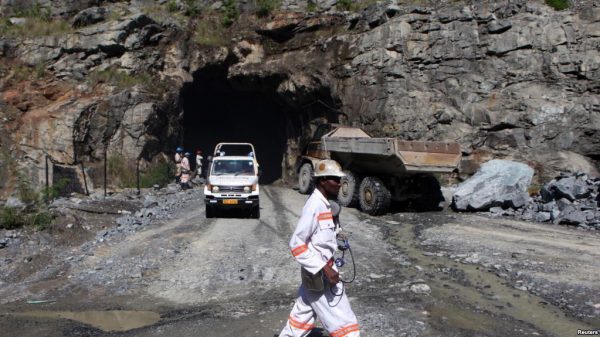
Dalny Mine, operated by Palatial Gold Investments Ltd a subsidiary of RioZim has moved from a period of inactivity into a vibrant, community-driven production hub, thanks to the introduction of an extensive tribute mining programme that is transforming livelihoods in Chakari.
The initiative has brought renewed economic activity to the area, which had suffered significant hardship after the mine was placed under care and maintenance.
With multiple tribute operations now active, the programme has restored income-generating opportunities for local residents.
Each tribute operation employs an average of 60 small-scale miners from the surrounding community, collectively providing jobs for thousands who were previously without work. This has created a grassroots-driven economic revival in the area.
During a recent tour of the mine, Head of Operations Mr Nirav Kumbhar explained that the tribute system was designed to create mutual benefits for both the company and the local community by ensuring steady income streams.
“When operations were halted, the Chakari community was left without viable livelihoods, and economic activity came to a standstill,” said Mr Kumbhar.
“Through the tribute arrangements, community members are now able to mine independently while the company supports them by providing milling facilities and free transport for their ore.”
He added that the company channels its share of proceeds into community development, including improvements to the local clinic, maternity services, and a water supply system that serves residents.
Beyond economic gains, the programme is also helping to address social challenges such as substance abuse. Dawn Mine General Manager Mr Mukudzei Nyevedzanai, who is also a beneficiary of the initiative, said the scheme has significantly reduced unemployment in the area.
He noted that nearly 90 percent of previously unemployed locals have been absorbed into the mining activities. Strict workplace policies, including alcohol and drug testing, have also helped discourage substance abuse.
“Keeping people engaged in productive work has reduced cases of drug abuse. We conduct regular tests, and anyone found under the influence risks losing their job,” he said.
Production levels have also improved steadily. Mr Nyevedzanai revealed that output at his site has increased from 40 tonnes to 60 tonnes per shift, with plans to reach 78 tonnes.
Despite the growth in production, safety remains a top priority. The operation follows strict standard operating procedures and uses modern ventilation systems to ensure a safe working environment.
“Our priority is safety. We strictly adhere to procedures, and incidents have been minimal,” he said.
Another participant in the programme, Mr Brandon Dube, highlighted the employment impact, noting that over 120 small-scale miners have been engaged under tribute agreements at his site.
He added that the initiative focuses on hiring young people from the local community, helping to provide them with stable employment and reduce involvement in harmful activities.
For workers like Mr Patson Watson, the programme has been transformative.
“Since joining last year, I’ve been able to support my family and improve my life,” he said. “I would encourage others to take advantage of this opportunity.”
Everisto Zhuwao
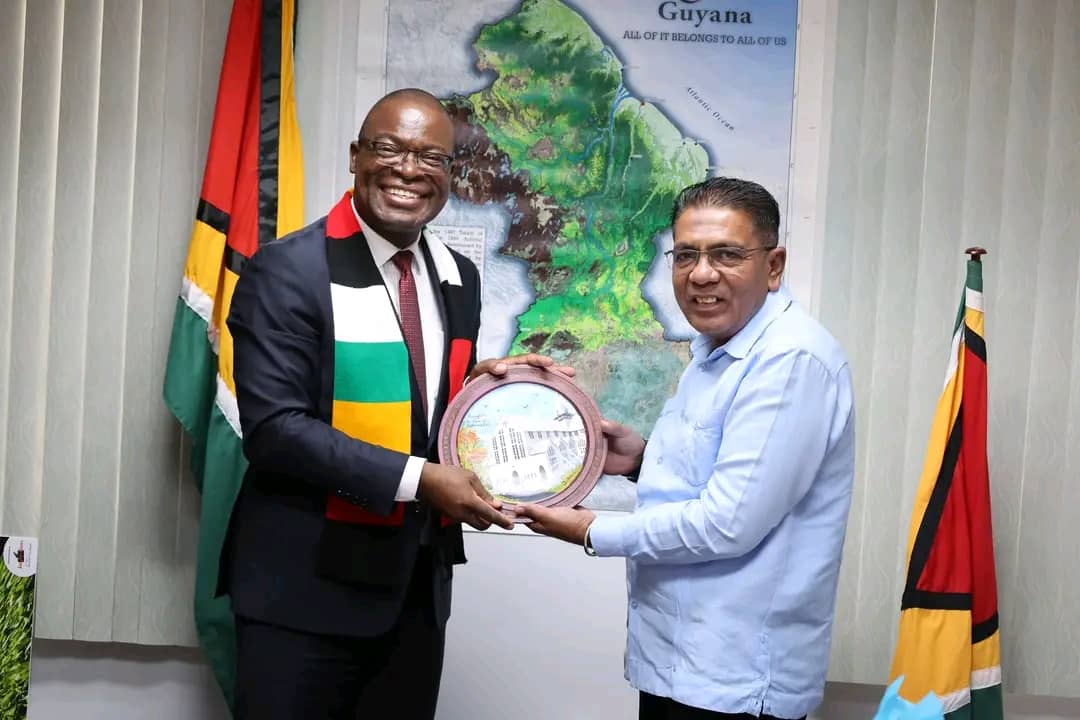
Zimbabwe and Guyana have committed to a new era of economic cooperation centered on food security following a high-level diplomatic meeting in the Guyanese capital this Thursday.
Zimbabwe’s Special Envoy, Honourable Minister of Foreign Affairs and International Trade, Professor Amon Murwira, said the meeting with Guyana’s Minister of Agriculture was a strategic move to establish concrete partnerships in crop production and water management.
Professor Murwira went on to allude that the Caribbean tour was also meant to gather support for Zimbabwe’s bid for a non-permanent seat on the United Nations Security Council.
Speaking exclusively to Hurumende News Hub, the Minister said discussions focused on how both nations could leverage their recent agricultural successes to benefit one another.
Zimbabwe has recently achieved wheat self-sufficiency and has seen a massive rise in milk production, which grew from 80 million litres in 2017 to over 130 million litres today.
Meanwhile, Guyana has emerged as a regional powerhouse in rice production, currently yielding approximately one million tonnes annually.
”Agriculture and its value chains form the foundation of industry as we know it,” Professor Murwira said.
During the meeting, Honourable Murwira explained that a nation’s ability to feed itself is the essential foundation for industrial growth.
“Zimbabwe is ready to share its advanced seed production systems to support Guyana’s budding wheat industry,” he said.
The two nations also explored joint ventures in agro-processing, aquaculture, and the management of dam infrastructure for irrigation and energy.
”A food-secure country can involve itself in many other developmental trajectories,” said Minister Murwira.
The collaboration draws on a long history of solidarity dating back to Zimbabwe’s liberation struggle. Professor Murwira emphasized that the goal is now to translate this historical political friendship into modern economic productivity.
He described the Caribbean region as a vital partner for Africa, often referred to as the continent’s “sixth region” due to deep-rooted diaspora ties.
”Our relationship goes beyond diplomacy; it is rooted in solidarity,” said Honourable Murwira.
Moving forward, the respective ministries of both countries will begin implementing specific projects designed to create sustainable value chains.
The envoy concluded that effective diplomacy must result in tangible prosperity for the citizens of both nations rather than remaining merely a matter of discussion.


Midlands Province manufacturing firms must immediately pivot towards establishing their own renewable energy plants to align with the Second Republic’s developmental goals, Minister of State for Provincial Affairs and Devolution, Hon. Owen Ncube, has said.
Officiating during a tour of the Clover New Energy (Pvt) Ltd 20-megawatt solar power plant construction site in Gweru, Minister Ncube challenged industrialists to follow the example set by the Chinese-invested project, emphasising that self-sufficiency in power generation is no longer optional but a strategic necessity enshrined in the National Development Strategy (NDS) 2.
“I therefore urge other manufacturing companies in the province to establish similar renewable energy plants in line with the Second Republic’s NDS 2 Pillar on Infrastructure Development and Housing, which entrenches expansion of the nation’s renewable energy capacity,” said Minister Ncube.
He commended the USD 20 million project, a subsidiary of Jin An Chrome Smelting Company, as a benchmark in public-private partnership, highlighting its role in reducing electricity imports and operational costs.
“Ladies and Gentlemen, since the inception of the Second Republic under the astute leadership of His Excellency the President of the Republic of Zimbabwe, Cde Dr Emmerson Mnangagwa, bold and strategic policy decisions were adopted to improve energy sufficiency, efficiency and security through incentives, duty-free solar imports and the requirement for heavy industries to develop their own power supply by 2026,” he said.

Minister Ncube described the plant as a tangible outcome of the comprehensive strategic partnership between Zimbabwe and the People’s Republic of China, a relationship he said is critical for technology transfer and job creation.
“I therefore commend Clover New Energy Private Limited, a subsidiary of Jin An Chrome Smelting Company, for implementing this climate-smart, energy-efficient solar project critical in reducing electricity imports, energy bills and carbon emissions,” he said.
The tour also served as a platform to show the government’s broader energy milestones, including the Kariba Floating Solar Plant, the Munyati Solar Park, and Hwange Units 7 and 8, as proof that the drive towards an empowered upper middle-income society by 2030 is on course.
“Ladies and Gentlemen, attainment of Vision 2030 under the stewardship of His Excellency, the President of the Republic of Zimbabwe, Cde Dr Mnangagwa, is achievable and unstoppable,” said Minister Ncube.
He also called for robust public support for the Constitutional Amendment No. 3 of 2026 currently at the consultation stage.
By Everisto Zhuwao
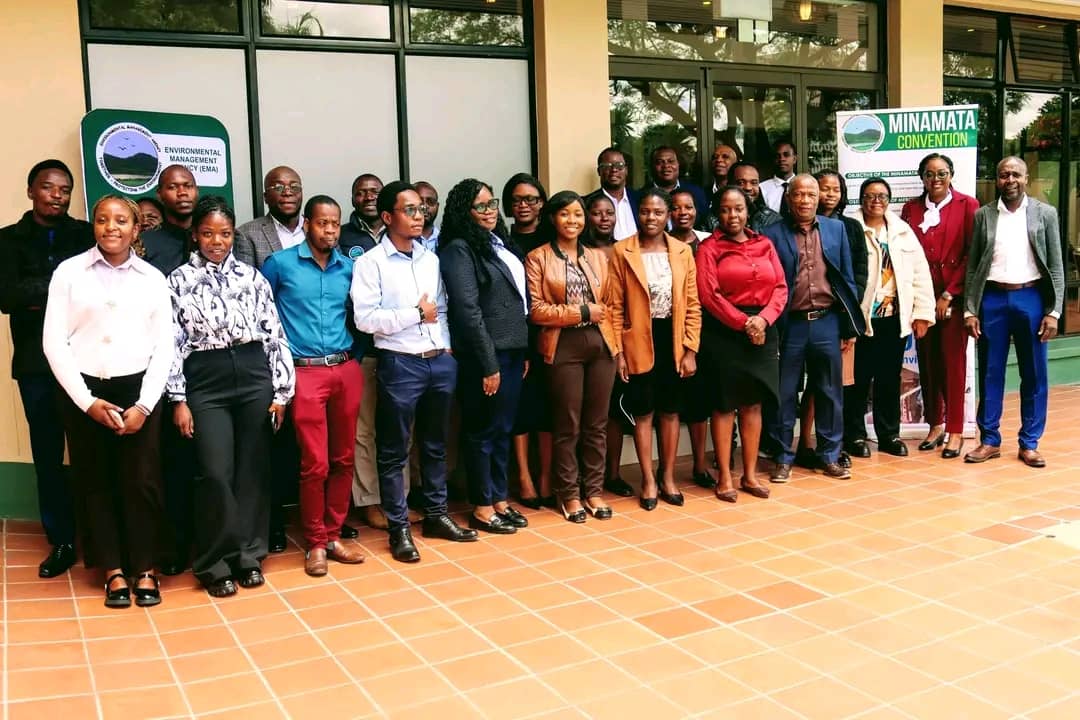
The Environmental Management Agency (EMA) on Thursday launched a major initiative to combat mercury pollution during an inception workshop held at the Holiday Inn Harare. The project specifically targets the mitigation of mercury emissions and releases from coal combustion power plants across Zimbabwe.
The workshop brought together a diverse group of experts and government officials to coordinate a national response to toxic emissions. Mr. A. Matiza, the Deputy Director for Environment in the Ministry of Environment, Climate and Wildlife, officially opened the session. In his remarks, he stressed that collaborative efforts are essential to safeguard both the environment and public health from the dangers of mercury pollution.
Mercury is a significant concern in energy production because it is released into the atmosphere when coal is burned to generate electricity.
The project falls under the Minamata Convention on Mercury, an international treaty designed to protect people and the environment from the harmful effects of mercury.
By focusing on power plants, the government aims to introduce cleaner technologies that reduce these hazardous emissions while maintaining efficient energy production.
Several key organisations participated in the roadmap development, including the Zimbabwe Power Company, Hwange Colliery Company, and the Ministry of Health and Child Care.
Legal and regulatory bodies such as the Zimbabwe Environmental Law Organization and the Procurement Regulatory Authority of Zimbabwe were also present to ensure the project aligns with national laws and international standards.
The initiative seeks to reform existing environmental policies and build technical capacity within local communities and regulatory institutions. By fostering partnerships between government and industry, the project aims to ensure that Zimbabwe’s energy future is both sustainable and responsible.
This collective commitment lays the foundation for a cleaner environment and a healthier future for all citizens.

Zimbabwe Storm to 4x400m Gold at Maseru Meet

Digital Drive Heads to Mudzi

Hakimi Rejects AFCON Trophy, Stands by Senegal’s Win

Operation restore order

Masasi High School Abuse Scandal Sparks Public Outcry

Kuwadzana Man Jailed for Reckless Driving and Driving Without a Licence
-
 Current Affairs4 months ago
Operation restore order
-
 Crime and Courts6 months ago
Masasi High School Abuse Scandal Sparks Public Outcry
-
 Crime and Courts6 months ago
Kuwadzana Man Jailed for Reckless Driving and Driving Without a Licence
-

 Current Affairs8 months ago
Breaking: ZIMSEC June 2025 Exam Results Now Available Online
-

 Current Affairs7 months ago
Munhumutapa Day: Zimbabwe’s Newest Public Holiday Set for Annual Observance
-

 Current Affairs5 months ago
BREAKING NEWS: ZANU PF Director General Ezekiel Zabanyana Fired
-

 Current Affairs7 months ago
No Racism in Our Cricket: Government
-

 World News5 months ago
Burkina Faso Reaps $18 Billion in Gold Revenue Under Ibrahim Traoré’s Leadership