
Africa News
Just In: Julius Malema Jailed After 2018 Rally Shooting

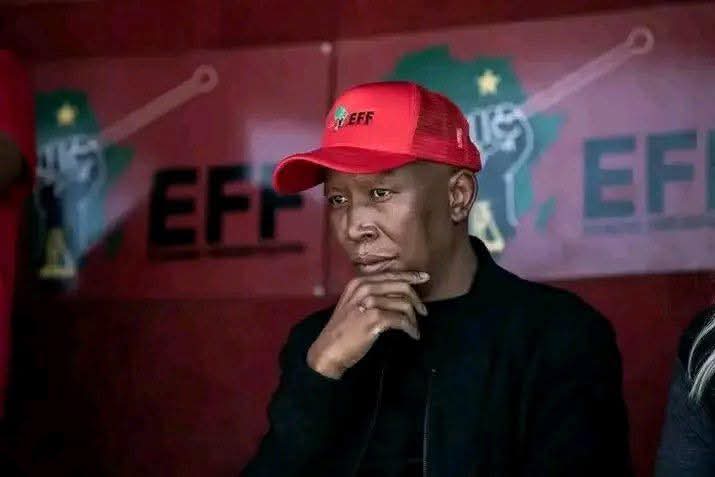
EFF leader Julius Malema has been handed an effective seven-year prison sentence by Magistrate Twanet Olivier in the KuGompo City Regional Court.
The ruling relates to an incident at the party’s 2018 Mdantsane rally, where Malema was found guilty of unlawfully firing a weapon.
He was sentenced to five years for the primary charge and an additional two years for a secondary offence.
He was also fined R20,000 on other charges, with the option of serving six months for each if unpaid.
All sentences will run concurrently, resulting in a total effective jail term of seven years
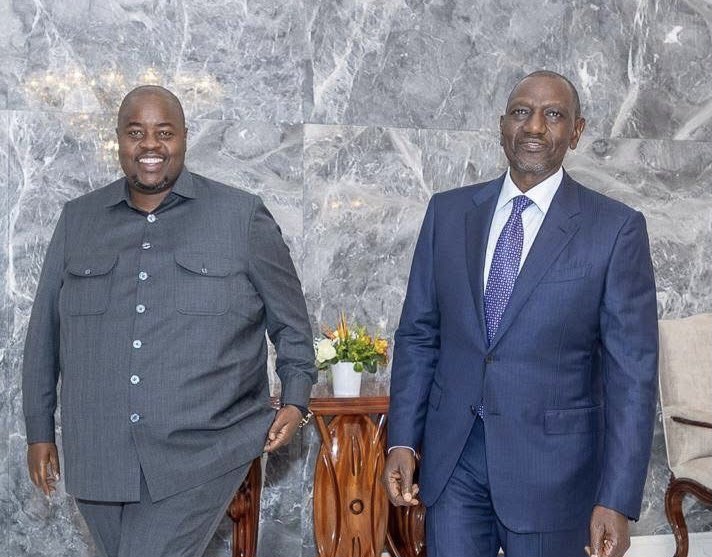
Businessman Sir Wicknell Chivayo has stepped up his regional engagement efforts, holding high-level meetings with Kenyan President William Samoei Ruto and Tanzanian President Samia Suluhu Hassan during recent visits to Nairobi and Dar es Salaam.
The engagements, described as part of a broader strategy to expand his footprint across East Africa, saw Chivayo applauding the pace of development in both nations while signalling a major financial commitment to the region.
Speaking after the meetings, Chivayo expressed admiration for Kenya’s ongoing rural transformation programmes.
“I am impressed by the scale and impact of Kenya’s rural electrification and water supply initiatives. These are not just development projects, but life-changing interventions that are uplifting communities and driving inclusive growth,” Chivayo said.
He added that such initiatives present viable opportunities for private sector collaboration.
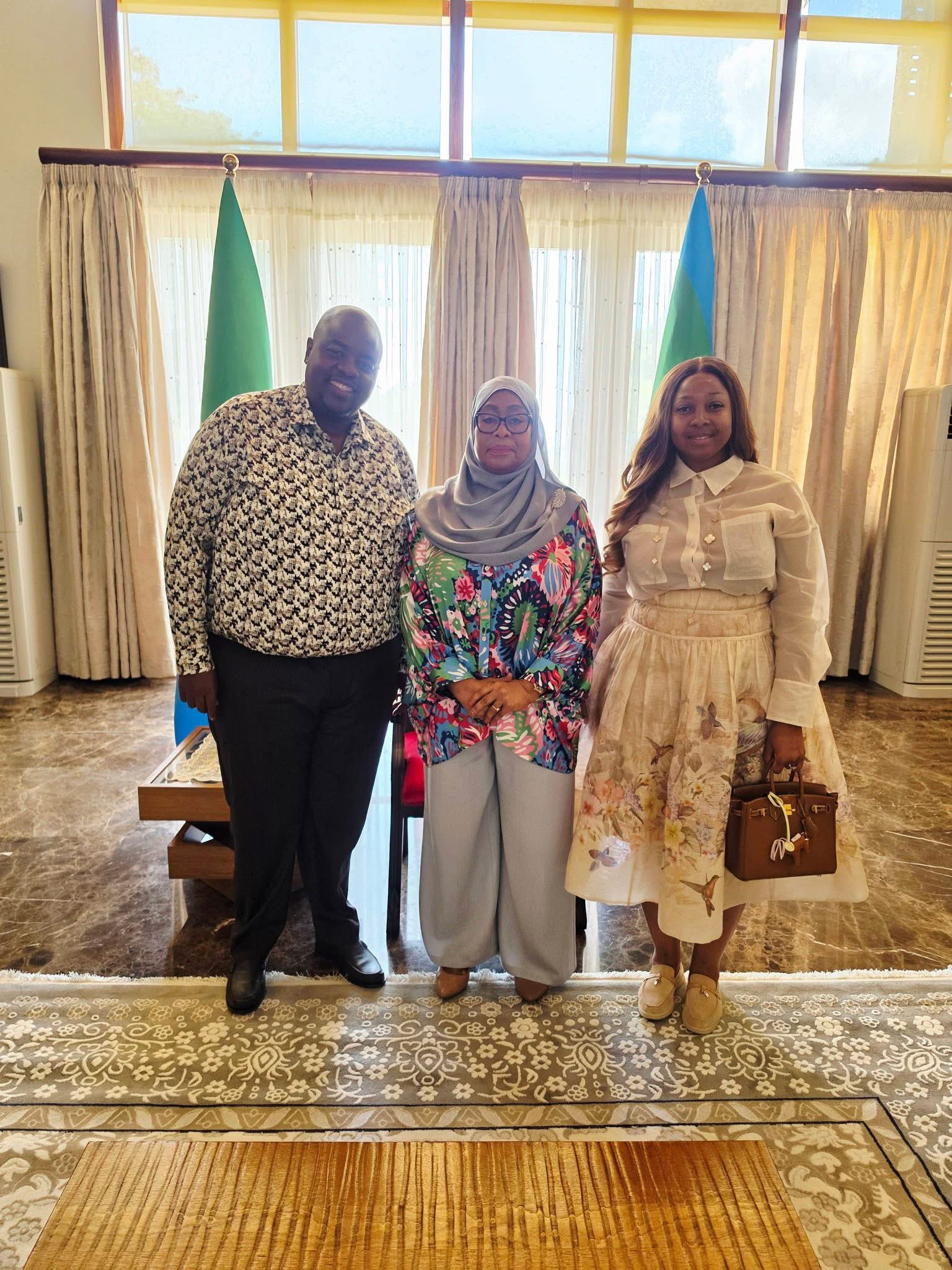
“There is a clear alignment between government priorities and investment opportunities, which creates an enabling environment for long-term partnerships,” Chivayo noted.
In Tanzania, the businessman highlighted large-scale infrastructure projects as key drivers of economic growth, particularly the Standard Gauge Railway (SGR) and the expansion of energy networks.
“Tanzania’s strategic focus on infrastructure development, including the SGR and energy expansion, is positioning the country as a regional economic hub,” he said.
Chivayo used the visits to announce an ambitious investment plan targeting both countries.
“We are looking at deploying at least US$100 million into each of these markets within the year, focusing on tourism, infrastructure development, and renewable energy,” he revealed.
He emphasised that the planned investments are not only commercially driven but also aligned with broader African development goals.
“Our vision is to contribute meaningfully to Africa’s growth story by investing in sectors that have a direct impact on economic development and job creation,” he said.
According to Chivayo, East Africa’s economic trajectory continues to inspire confidence among investors, citing policy stability and infrastructure expansion as key attractions.
“The region is demonstrating resilience and forward-thinking leadership, which is critical in attracting sustainable investment,” Chivayo added.
The visits highlight a growing trend of intra-African investment, as business leaders increasingly look beyond their home countries to tap into emerging opportunities across the continent.

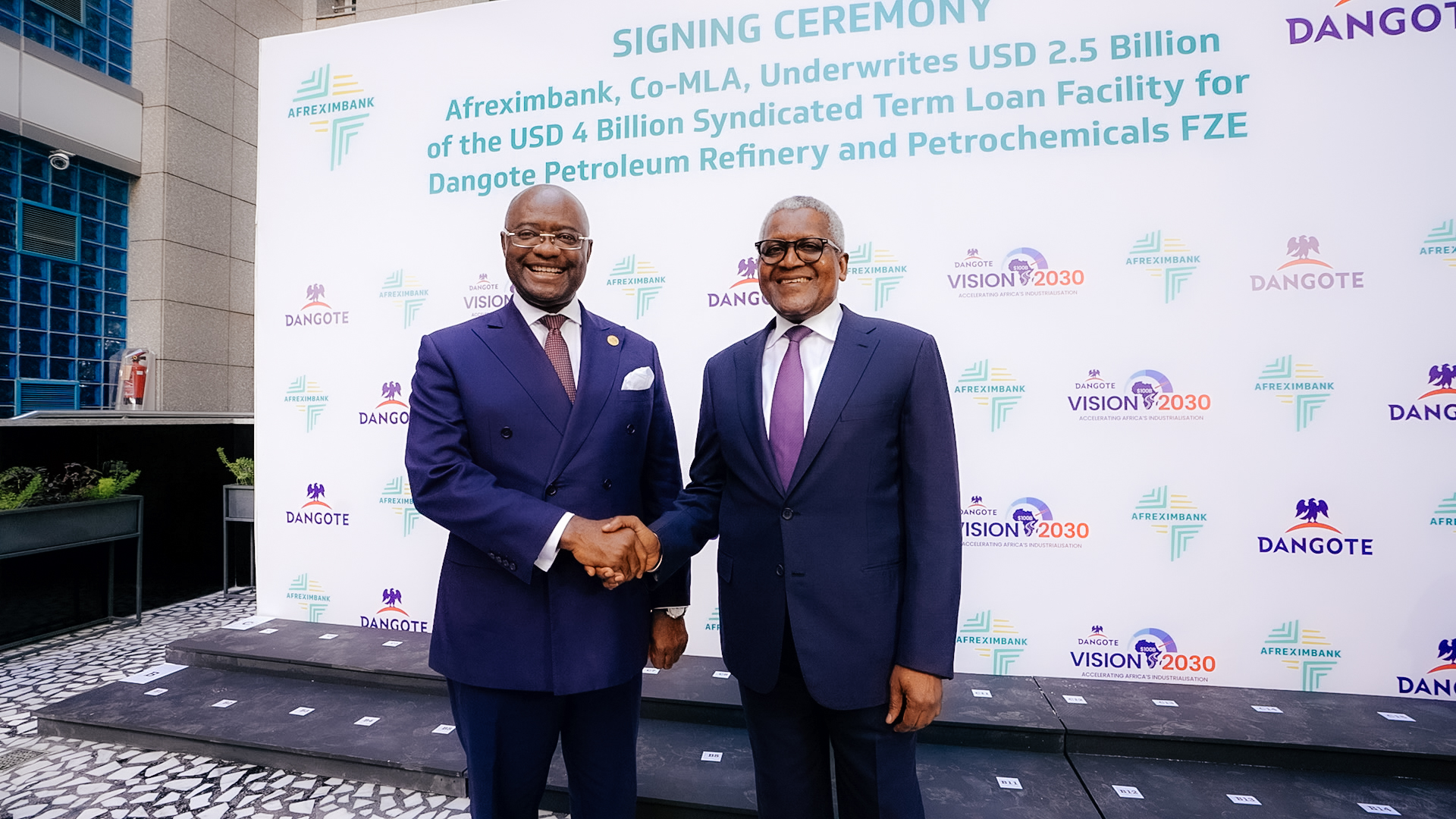
The African Export-Import Bank (Afreximbank) has thrown its weight behind the Dangote Group’s ambitious expansion plans, announcing support for the Nigerian conglomerate as it seeks to grow its turnover to US$100 billion by 2030.
The Group’s leadership presented its long-term growth strategy, “Vision 2030: Supercharging Dangote Group for Long Term Success,” to the Afreximbank Board of Directors and its executive team on Tuesday, 31 March 2026.
The strategy outlines a two-phase expansion programme spanning 2025 to 2028 and 2028 to 2030.
During the presentation, Dangote Group outlined plans to scale and optimise its existing platforms and expand capacity across all active sectors. Key initiatives include increasing the capacity of the Dangote Petroleum Refinery from 650,000 barrels per day (bpd) to 1.4 million bpd.
The Group intends to quadruple its fertiliser production from 3 million tonnes per annum to 12 million tonnes per annum, a move that would position the Group as the world’s largest producer of urea fertiliser.
The expansion strategy encompasses rapid growth across other business lines, including cement, rice, and broader food production.
Beyond its current portfolio, the Group identified new investment opportunities in infrastructure , including ports and pipelines, as well as gas, mining, data centres to support Africa’s digital transformation, and power, described as the engine of Africa’s industrial transformation.
To drive growth over the five years, the Dangote Group predicts it will require at least US$40 billion in new investments to realise its continental ambitions.
Recognising the strategic value of the partnership with Afreximbank, Mr Aliko Dangote, President and Chief Executive of Dangote Industries Limited, said: “Our partnership with Afreximbank is more than financial support; it is about a shared dream for the continent.
When we set out to build a 650,000 barrel-per-day refinery , the largest of its kind in Africa — the Bank believed in our vision when others were sceptical. Without their leadership and trust, the development of the African continent would not be where it is today.
We are joined at the hip with the bank because we share the same mission: to drive local capacity, eliminate our dependence on imports, and ensure Africa’s industrial growth is led by Africans.”
On his part, Dr George Elombi, President and Chairman of the Board of Directors of Afreximbank, noted that the engagements demonstrated a strong convergence of purpose to free Africa from dependency and to ensure the continent’s resources are used to the benefit of its people.
He expressed confidence that the collaboration would lead to “a formidable bond of partnership to make large-scale investments that will accelerate the changes we desire,” changes that have gained urgency amid increasing global fragmentation and protectionism.
Dr Elombi recalled that at the onset of the COVID-19 pandemic in 2020, Africa struggled to secure even basic protective materials due to limited production capacity, adding that “even when financing was available, we could not access these essential items.”
He further pledged the readiness of Afreximbank and its Board of Directors to support the realisation of the Dangote Group’s aspirations.
“This is the very purpose for which our institution was created. As is deeply rooted in our DNA, we do not only listen, we execute and convert aspiration into action.”
The event also featured the signing of an agreement for a US$2.5 billion facility underwritten by Afreximbank as part of a US$4 billion senior syndicated term loan in favour of Dangote Petroleum Refinery and Petrochemicals FZE.
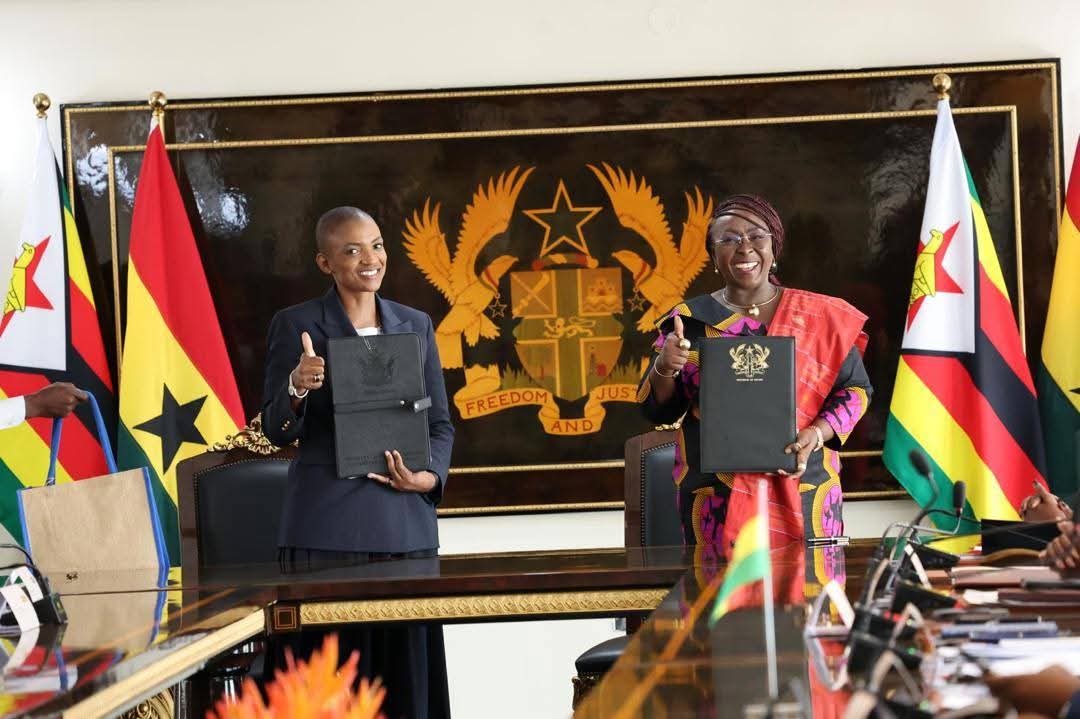
There is a familiar rhythm to African diplomacy-speeches, handshakes, communiqués, but every so often, a moment arrives that transcends protocol.
President Emmerson Mnangagwa’s recent State visit to Ghana was precisely such a moment.
It was not merely a bilateral engagement between two sovereign nations; it was a masterclass in Tourism Diplomacy, a deliberate and visionary demonstration that Africa’s future lies not in competing against one another, but in moving as one united front.
By presiding over the inaugural session of the Zimbabwe-Ghana Joint Permanent Commission on Cooperation in Accra, President Mnangagwa and his Ghanaian counterpart, H.E. John Dramani Mahama, have drawn the contours of a new economic frontier.
The ten Memoranda of Understanding signed, particularly the landmark Tourism MoU championed by Tourism Minister Barbara Rwodzi, are not administrative formalities.
They are the scaffolding for a pan-African tourism ecosystem.
This is the heart of the editorial observation: Africa does not lack magnificent destinations, it lacks connective tissue.
Zimbabwe brings Victoria Falls, the Great Zimbabwe Monuments, and a globally acclaimed Eco-Tourism model. Ghana brings the emotional gravity of the Kwame Nkrumah Memorial Park and the Cape Coast Castle, alongside world-class heritage preservation.
Separately, they are compelling. Together, they become an irresistible corridor of memory, nature, and resilience.
President Mnangagwa’s pilgrimage to the Kwame Nkrumah Memorial Park was laden with symbolism. Here stood a liberation leader paying homage to the founding father of African emancipation-not as a tourist, but as a student of heritage.
Under the newly signed MoU, this synergy will deepen: Zimbabwe learning from Ghana’s meticulous monument stewardship, Ghana drawing from Zimbabwe’s low-impact, high-value eco-tourism philosophy. That is not charity; it is strategic complementarity.
Equally telling was the President’s tour of the Accra Compost and Recycling Plant.
At first glance, waste management seems an unlikely tourism priority. Yet the message was unmistakable, no destination can thrive without sustainability. The partnership with Geo Pomona Waste Management Private Limited, formalised through a dedicated MoU, places clean, green, and resilient infrastructure at the core of destination competitiveness.
A polluted beach or a littered heritage site repels the very visitor numbers both nations seek to grow.
What emerges from Accra is a blueprint for continental unity, not the abstract unity of slogans, but the practical unity of joint marketing programmes, skills training exchanges, tourism research collaboration, and public-private investment facilitation. Zimbabwe and Ghana are positioning themselves as complementary rather than competitive destinations.
A tourist should not have to choose between West Africa’s slave castles and Southern Africa’s savannahs, they should book a single, seamless itinerary that honours both.
This editorial argues that such partnerships hold the key to unlocking Africa’s tourism paradox.
The continent receives barely 5 percent of global tourist arrivals despite hosting 60 percent of the world’s uncultivated arable land, unmatched biodiversity, and a diaspora hungry for reconnection.
The bottleneck has never been beauty, it has been coordination. When two presidents personally oversee tourism MoUs and waste management pacts, they signal that this sector is no longer an afterthought but an instrument of economic transformation.
For too long, African economies have exported raw minerals and imported finished goods. Tourism inverts that logic, it sells an experience that cannot be outsourced, creates jobs that cannot be automated, and fosters people-to-people connections that no trade agreement can replicate.
President Mnangagwa’s Ghana trip reminds us that the most powerful development catalyst is already within our borders, our own story, told on our own terms.
As Zimbabwe and Ghana prepare to increase destination visibility and boost tourist arrivals, the rest of the continent should watch closely.
This is not about one president or one country. It is about a simple, profound truth: Africa will not be transformed by aid, but by arrivals-arrivals of investment, of ideas and of visitors who leave with a changed understanding of who we are.
The Accra Blueprint proves that when two nations move as one, the entire continent advances.
That is diplomacy not as theatre, but as architecture for a shared, prosperous future.

ZLGCA Drives Girl Child Empowerment as Zimbabwe Celebrates 46 Years of Freedom

Van Choga: Controversy Outpaces Quality in Music Sales

USD 2.18 Billion Rail Deal To Unlock Africa Trade Corridors

Operation restore order

Masasi High School Abuse Scandal Sparks Public Outcry

Kuwadzana Man Jailed for Reckless Driving and Driving Without a Licence
-
 Current Affairs5 months ago
Operation restore order
-
 Crime and Courts7 months ago
Masasi High School Abuse Scandal Sparks Public Outcry
-
 Crime and Courts7 months ago
Kuwadzana Man Jailed for Reckless Driving and Driving Without a Licence
-

 Current Affairs9 months ago
Breaking: ZIMSEC June 2025 Exam Results Now Available Online
-
 Current Affairs8 months ago
Munhumutapa Day: Zimbabwe’s Newest Public Holiday Set for Annual Observance
-
 Current Affairs6 months ago
BREAKING NEWS: ZANU PF Director General Ezekiel Zabanyana Fired
-

 Current Affairs8 months ago
No Racism in Our Cricket: Government
-
 World News6 months ago
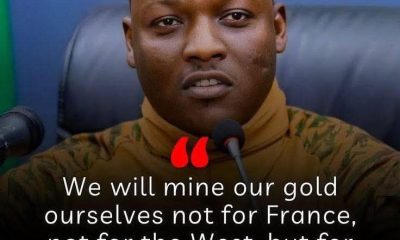
Burkina Faso Reaps $18 Billion in Gold Revenue Under Ibrahim Traoré’s Leadership