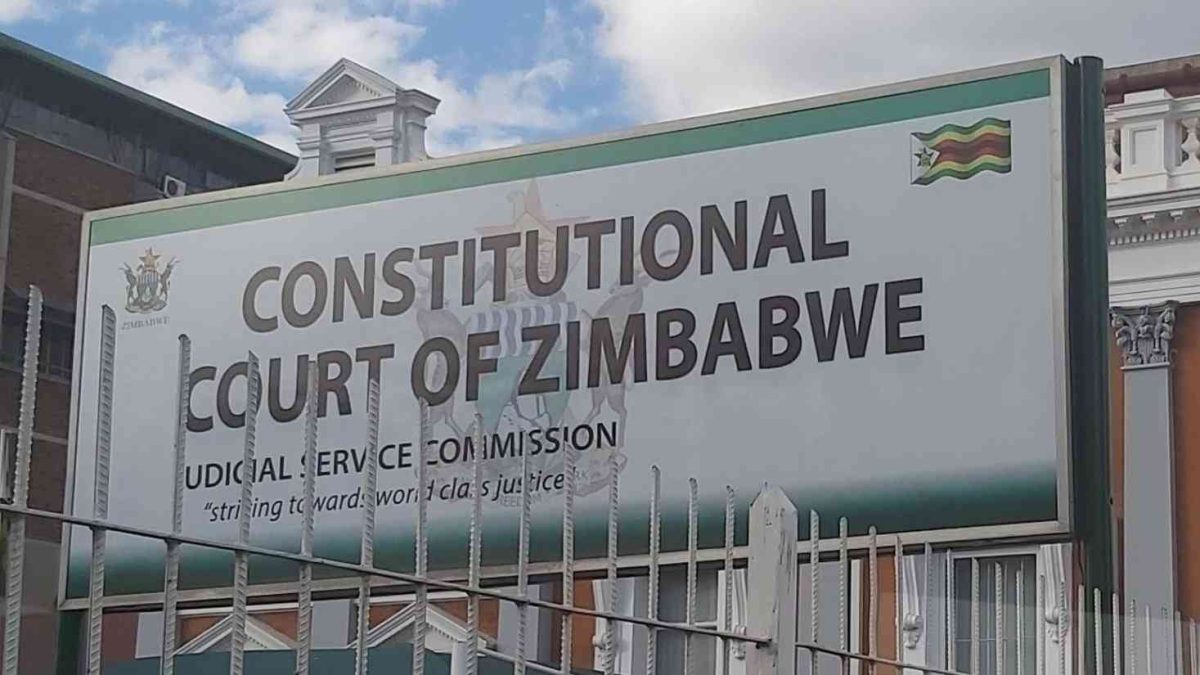
The Constitutional Court of Zimbabwe has dismissed two high-profile applications seeking to block the progression of Constitutional Amendment Bill No. 3 (CAB3) through Parliament. In a unanimous decision delivered on Wednesday by a full bench chaired by Justice Bharat Patel, the court ruled that the challenges brought by six liberation war veterans and former legislator Prince Dubeko Sibanda were either fatally defective or not yet ripe for judicial determination .
📰 For this and more exclusive stories, read our weekly digital print edition.
Read E-PaperThis ruling effectively clears a significant hurdle for CAB3, a controversial piece of legislation proposing extensive constitutional changes, including potential extensions of presidential terms and alterations to the presidential election process .
The application by the six war veterans – Reuben Zulu, Godfrey Gurira, Shoorai Nyamangodo, Joseph Chinyangare, Digmore Knowledge Ndiya, and Joseph Chinguwa – was found to be fatally defective due to critical legal shortcomings. Represented by constitutional lawyer Professor Lovemore Madhuku, the veterans had argued that President Emmerson Mnangagwa acted unlawfully by chairing Cabinet deliberations on the constitutional amendments, given his alleged personal benefit from the proposed changes. They sought an order declaring Cabinet’s approval of the bill invalid and preventing the President from advancing the legislation .
However, Professor Madhuku later clarified that the Constitutional Court declined to hear the matter directly, directing the applicants to first seek recourse in a lower court, specifically the High Court. The court indicated that the duties cited were not sufficiently specific for its direct jurisdiction .
“The Constitutional Court has said it will not entertain the matter on the basis that, although the president has duties we have indicated, those duties are not specific enough to allow the Constitutional Court to exercise its jurisdiction,” Professor Madhuku stated, adding that his clients have instructed him to pursue the matter in the High Court .
Separately, the Constitutional Court also dismissed Prince Dubeko Sibanda’s challenge, which aimed to halt parliamentary proceedings on the constitutional amendment bill. The court ruled that Sibanda’s matter was not yet ripe for determination, implying that it was brought prematurely before the court .
With these legal challenges dismissed, Constitutional Amendment Bill No. 3 is now poised to continue its journey through Parliament. Given Zanu PF’s two-thirds majority, the bill is widely expected to secure its passage .
The Speaker of Parliament, Jacob Mudenda, gazetted the bill in February, initiating the constitutional process that includes public consultations before debate and voting in both Houses of Parliament. The dismissal of these applications underscores the ongoing legal and political landscape surrounding significant constitutional reforms in Zimbabwe .
Lawyer Sylvester Hashiti, representing President Mnangagwa and Attorney-General Virginia Mabhiza, welcomed the ruling, stating, “They failed to establish anything that we have done wrong in terms of the law and therefore there have no cause of action and the matter was struck off the roll on merits” .