Cuba has renewed its call for international solidarity in its decades-long campaign against the United States blockade, describing the sanctions as collective punishment intended to undermine the Cuban people’s right to determine their future.
📰 For this and more exclusive stories, read our weekly digital print edition.
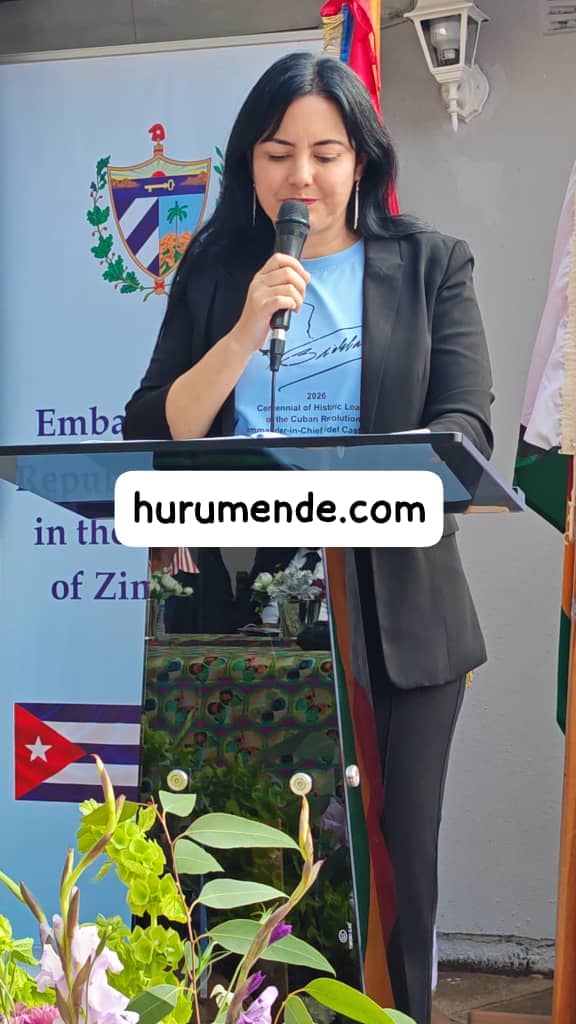
Read E-PaperSpeaking during commemorations marking the centenary of Commander-in-Chief Fidel Castro Ruz, Cuba’s Ambassador to Zimbabwe, H.E. Mrs Susellys Pérez Mesa, delivered a forceful defence of her country’s sovereignty and revolutionary resolve.
The event brought together diplomats, friends of Cuba, Cuban citizens and professionals working in Zimbabwe.
Ambassador Pérez Mesa said the blockade had haunted the Cuban people for almost seven decades, affecting the country’s economy and restricting its access to essential resources.
She accused the United States of imposing fines, exerting pressure and using sanctions to discourage sovereign governments and institutions from engaging with Cuba.
“Like an executioner of Cuba and all who approach it, the United States sanctions, imposes fines, blackmails and shamelessly pressures sovereign governments to try to let the island of freedom die,” she said.
The ambassador pointed to new executive measures, frequent sanctions, restrictions affecting fuel supplies and Cuba’s continued inclusion on the United States list of state sponsors of terrorism as examples of the pressure facing the island.
She described these measures as an unjust form of collective punishment directed at the Cuban population for political purposes.
Despite the pressure, she said Cuba would not surrender its sovereignty or abandon the principles championed by Fidel Castro.
According to Ambassador Pérez Mesa, the attempts to dominate and interfere in Cuba’s affairs would once again be defeated by the unwavering determination of the Cuban people to choose their destiny freely.
“As Fidel taught us, our people will continue to defend their independence and sovereignty,” she said.
Referring to remarks attributed to Cuban Foreign Minister Bruno Rodríguez Parrilla, the ambassador warned that, if forced to defend their homeland, the Cuban people would “fight to the bitter end.”
She compared Cuba’s struggle to the biblical confrontation between David and Goliath—a small nation resisting a vastly more powerful adversary.
However, she emphasised that the campaign against the blockade was not solely a Cuban cause. It was also, she said, a struggle for justice, international law, national sovereignty and the basic principles of peaceful coexistence.
“We count on you in this battle, which is not just about Cuba, but about justice, international law, respect for the essential values of human beings and the minimum rules for peaceful coexistence,” she told those attending.
The ambassador appealed to governments and peoples around the world to reject aggression carried out in the name of democracy and to resist misinformation and economic interests that threaten international peace.
She also highlighted the participation of nearly 1,000 international delegates from 63 countries—including Zimbabwe—in the first international colloquium, Fidel: Legacy and Future, held in Havana. Their presence, she said, demonstrated that Cuba was not isolated.
“Cuba is not alone, and Cuba will prevail,” she declared.
Ambassador Pérez Mesa said Fidel’s legacy continues to inspire Cubans to become more resilient, resist external pressure and strengthen relations with friendly nations.
Zimbabwe’s solidarity, she added, forms part of the deep and historic ties between Cuba and Africa—ties forged during the liberation struggle and sustained through decades of cooperation in healthcare, education and other sectors.
The centenary commemoration was therefore not only a tribute to Fidel’s life, but also a renewed declaration that Cuba would continue defending its sovereignty despite the hardships imposed upon it.