Current Affairs
Get to Know the Reduced Fees for Number Plates and Parking in Zimbabwe: Why Now is the Time to Act
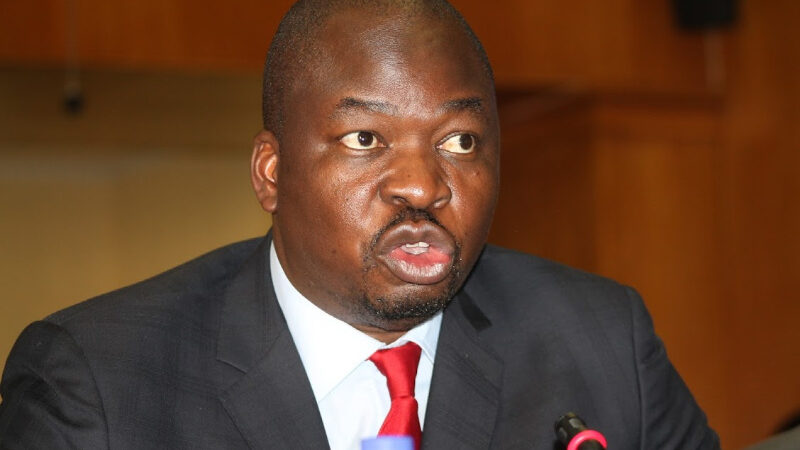
Finance Minister Thuli Ncube unveiled a game-changing policy that slashes parking fees, clamping fines, towing charges, and vehicle number plate costs by up to 50%, effective immediately.
As announced by Minister Ncube this week, these reductions aim to ease the financial strain on motorists grappling with rising living costs in Zimbabwe.
For anyone owning or planning to register a vehicle, this is a golden opportunity to save significantly. Here’s why these changes matter and why you should consider securing a new number plate now.
What’s Changing?
The Zimbabwean government has introduced sweeping reductions across key motoring expenses:
– Parking Fees, Clamping Fines, and Towing Charges: Cut by 50% in all towns and cities, including major hubs like Harare and Bulawayo, as well as smaller urban centres.
– Vehicle Number Plates: Previously priced at a steep US$500, number plates now cost just US$50—a massive 90% reduction.
These measures, announced during a Cabinet briefing, reflect the government’s response to long-standing complaints about the prohibitive costs of vehicle registration and parking. The Ministry of Transport and Infrastructural Development, alongside the Zimbabwe National Road Administration (ZINARA) and local authorities, has been tasked with enforcing these changes immediately.
Why the Reductions Matter
1. Affordability for Motorists:
The drastic cut in number plate costs—from US$500 to US$50—makes vehicle registration accessible to a much wider group of Zimbabweans.
Previously, the high cost was a significant barrier, especially for low- and middle-income drivers.
Now, registering a vehicle is far more affordable, allowing more people to comply with legal requirements without breaking the bank.
2. Relief from Parking Costs:
Parking fees, clamping fines, and towing charges have long been a source of frustration for motorists, often seen as disproportionate to incomes. The 50% reduction across all urban centres provides immediate financial relief, making parking easier in cities like Harare and Bulawayo without fear of punitive costs.
3. Response to Public Outcry:
The policy follows widespread complaints about exorbitant motoring fees. By addressing these concerns, the government is responsive to public needs, aiming to support citizens amid economic challenges.
4. Uniform Application:
Unlike past policies that sometimes favoured certain regions, these reductions apply uniformly across Zimbabwe’s urban centres.
Whether you’re in a bustling city or a smaller town, you’ll benefit from the same cost savings.
Why Buy a Number Plate Now?
If you’ve been putting off vehicle registration due to high costs, now is the time to act. Here are compelling reasons to secure a new number plate at the reduced rate:
-Unprecedented Savings: At US$50, number plates are now 90% cheaper than before. This is a rare opportunity to register your vehicle at a fraction of the previous cost.
– Avoid Future Uncertainty: While the government has committed to immediate implementation, there’s no guarantee that these reduced rates will remain in place indefinitely. Acting now ensures you lock in the savings.
– Compliance Made Easy: Registering your vehicle is a legal requirement, and the lower cost removes a major barrier to compliance. Avoid potential fines or penalties by getting your number plate now.
– Support for Economic Relief: By taking advantage of these reductions, you’re aligning with the government’s efforts to make motoring more affordable, contributing to a broader push for economic relief.
Ensuring Compliance and Transparency
Finance Minister Ncube emphasised that the government is committed to transparency in implementing these changes.
The Ministry of Transport and ZINARA are under strict instructions to enforce the new fee structure immediately.
Motorists are encouraged to report any non-compliance at municipal parking facilities or licensing offices to ensure the policy is rolled out effectively.
Take Action Today
The 50% reduction in parking fees and the 90% cut in number plate costs are transformative steps toward making motoring more affordable in Zimbabwe.
Whether you’re a daily commuter, a small business owner with a delivery vehicle, or someone looking to register a new car, these changes directly benefit you.
Don’t miss out on this opportunity to save hundreds of dollars on number plates and reduce your parking expenses.
Head to your nearest licensing office to secure your new number plate for just US$50, and enjoy the reduced parking fees across Zimbabwe’s towns and cities. As Minister Ncube stated, these measures are designed to support citizens facing economic challenges—take advantage of them now and drive with confidence.
Current Affairs
Prevail donates 60 tonnes of food to Defence Forces at launch
itai Mazire
Prevail International Group launched its Talk and Pay (TAP) Microfinance Company on Friday, donating two 30-tonne truck loads of rice and cooking oil to Zimbabwe’s Defence Forces during the ceremony.
The donation, handed over to Defence Minister Oppah Muchinguri-Kashiri by Prevail Group chief executive Tendai Sithole, recognised the contribution of the uniformed forces to national stability, the company said.
Speaking at the launch, Muchinguri-Kashiri welcomed TAP’s focus on the security sector and rural communities, stating that the payroll-based loan facility aligns with the Second Republic’s commitment to safeguarding workers’ welfare.
“Your inclusion of our hard-working labour force in your customer segment is consistent with the Second Republic’s commitment in safeguarding the welfare and dignity of our labour force,” she said.
The minister also noted that security personnel are often excluded from mainstream financial products, and that TAP’s targeting of women-led businesses and rural entities supports national development policy.
“Studies consistently confirm that capital availed to women circulates faster in the local economy,” Muchinguri-Kashiri added. “When women are extended with loans, you are investing in the whole household, and also in the community as a whole.”
Prevail Group International Chairman Dr Paul Tungwarara said TAP was developed following President Emmerson Mnangagwa’s call to support rural business units. The microfinance scheme will offer low-cost, payroll-based loans, with priority for women-led and rural-based enterprises.
Distribution of the donated rice and cooking oil to defence forces units is expected to begin shortly.
Current Affairs
Churches Throw Weight Behind CAB3, Urge Parliament to Pass Bill
The Zimbabwe Indigenous Interdenominational Council of Churches (ZIICC), representing a broad coalition of Apostolic, Pentecostal, Evangelical and indigenous Christian denominations, has thrown its full support behind the Constitution of Zimbabwe (Amendment No. 3) Bill, 2026, describing the proposed changes as necessary for national stability, development continuity and governance reform.
In a detailed submission presented to Parliament on Friday, the church body said the proposed constitutional amendments were lawful, democratic and aligned with Zimbabwe’s long-term development aspirations under Vision 2030.
The submission, signed by ZIICC patron Bishop Dr Nehemiah Mutendi and chairman Rev Dr Andrew Wutawunashe, argued that Parliament has the constitutional authority to amend the Constitution and should be allowed to deliberate on the Bill without interference from external groups.
“We call upon Parliament to pass this Bill in the national interest,” the churches said in the submission.
The churches said Zimbabwe’s elected representatives derive their legislative authority directly from the people and are constitutionally mandated to amend the Constitution where necessary.
“Parliament’s exercise of that mandate is not and cannot be a threat to democracy — it is democracy itself,” the submission stated.
ZIICC said public consultations conducted by Parliament across the country had already fulfilled constitutional requirements for citizen participation, adding that no organisation or civic grouping had the power to veto Parliament’s legislative role.
The church organisation, which says it represents more than 8.7 million Zimbabweans, also backed proposals in the Bill extending presidential and parliamentary terms from five to seven years.
According to ZIICC, the longer governance cycle would provide government with enough time to implement major developmental programmes such as Vision 2030 and the National Development Strategy 1 (NDS1), both of which it said had previously been disrupted by political instability and the COVID-19 pandemic.
The churches argued that Zimbabwe required policy continuity and stability to fully implement national projects and recover from external shocks.
“Vision 2030 is not a slogan to our congregants. It is a promise that must be kept,” the submission read.
ZIICC further linked the proposed seven-year term to biblical teachings on restoration and completion, saying the concept resonated with Christian principles of renewal and national rebuilding.
The churches also defended proposals to reform Zimbabwe’s electoral system, including the introduction of a parliamentary model for electing the President.
They argued that direct presidential elections had historically heightened political tensions and divided communities.
“Our communities have paid the price of electoral toxicity with their peace, their livelihoods, and their social cohesion,” the churches said.
ZIICC said electing the President through Parliament would reduce political conflict while preserving democratic accountability through elected representatives.
The churches additionally welcomed proposals to establish a dedicated Zimbabwe Electoral Delimitation Commission, saying the move would improve transparency and professionalism in constituency boundary delimitation.
On traditional leadership reforms, the church body endorsed the removal of constitutional restrictions limiting the political participation of chiefs and traditional leaders.
ZIICC said traditional leaders were custodians of community governance and should enjoy the same constitutional freedoms as other citizens.
“A traditional leader is a Zimbabwean citizen,” the submission stated, adding that chiefs play a critical role in maintaining peace, resolving disputes and supporting development at grassroots level.
The churches also supported provisions repealing the National Peace and Reconciliation Commission’s constitutional status, noting that the commission’s original constitutional mandate had already expired in 2023.
ZIICC said reconciliation should not be confined to a single commission but should instead become a broader national responsibility involving churches, traditional leaders and communities.
The organisation pledged to intensify reconciliation and healing programmes across the country in partnership with government and community structures.
In a cover letter accompanying the submission, Rev Dr Wutawunashe said the churches believed the Bill advanced “the constitutional order of Zimbabwe in a manner consistent with the values and aspirations of our people.”
The submission comes as debate around Constitutional Amendment Bill No. 3 continues to intensify, with supporters arguing the reforms will enhance governance efficiency and policy continuity, while critics have raised concerns over some of the proposed changes.
Current Affairs
Local Government cracks down on ‘Fundraising’ workshops for Councils
Itai Mazire
The Ministry of Local Government and Public Works has issued a stern directive to local authorities, urging them to cease participation in non-essential workshops and conferences perceived as mere fundraising ventures by external entities.
The move, outlined in a memorandum signed by Permanent Secretary Dr. John Basera on 14 May 2026, shows a critical shift towards prioritizing efficient service delivery amidst ongoing financial challenges.
The memorandum highlights a growing concern within the ministry regarding the proliferation of such events.
“It has been noted with concern that some institutions and entities are organising workshops and conferences targeting local authorities primarily for their fundraising purposes,” said Dr Basera.
This directive comes as local authorities grapple with
depressed revenue collection.
The Ministry emphasizes the need to re-direct resources towards core functions.
“Considering the current challenges facing local authorities, particularly depressed revenue collection and the need to prioritize efficient service delivery, it is imperative that available resources be directed towards operational and service delivery-related activities,” he said.
Local authorities are now advised to significantly reduce their involvement in events that do not directly contribute to improving public services.
The memorandum explicitly warns against arrangements that offer little to no tangible benefit.
“Accordingly, local authorities should not support or tolerate arrangements by third-party entities requiring the purchase of tables, payment of conference fees, accommodation costs and related expenditures which offer limited or no tangible value to service delivery outcomes.”
This new position is effective immediately and will remain in force until further notice, signaling a resolute effort by the Ministry to streamline operations and ensure accountability in resource allocation within local governance.
-
Current Affairs6 months agoOperation restore order
-
Crime and Courts8 months agoMasasi High School Abuse Scandal Sparks Public Outcry
-
Crime and Courts8 months agoKuwadzana Man Jailed for Reckless Driving and Driving Without a Licence
-
Current Affairs10 months agoBreaking: ZIMSEC June 2025 Exam Results Now Available Online
-
Current Affairs9 months agoMunhumutapa Day: Zimbabwe’s Newest Public Holiday Set for Annual Observance
-
Current Affairs7 months agoBREAKING NEWS: ZANU PF Director General Ezekiel Zabanyana Fired
-
Business6 months agoTino Tungwarara Launches Prevail Mart, Becoming One of Zimbabwe’s Youngest Retail Entrepreneurs
-
Current Affairs9 months agoNo Racism in Our Cricket: Government