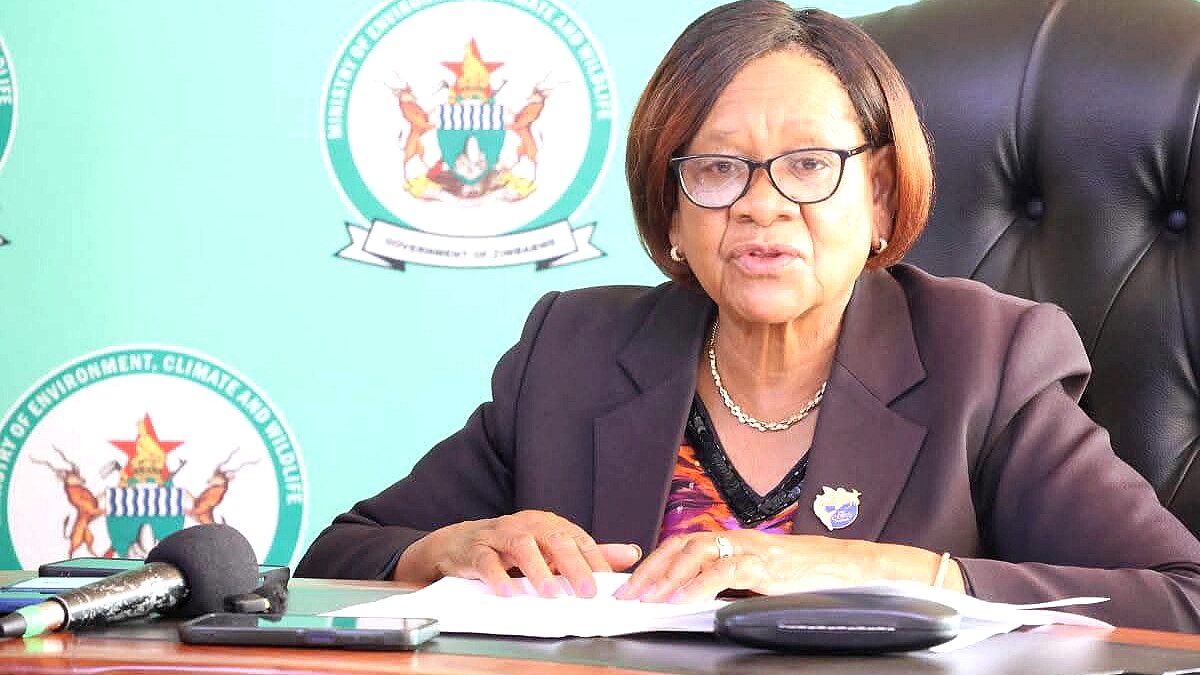
Zimbabwe has set a target of reducing hydrofluorocarbon consumption by 10 percent by 2029, as the country intensifies efforts to phase down gases blamed for accelerating climate change.
The target forms the centrepiece of the Stage I Kigali Implementation Plan, being rolled out by the Ministry of Environment, Climate and Wildlife in partnership with the United Nations Environment Programme and the United Nations Development Programme.
Announcing the milestone ahead of World Ozone Day on 16 September, Minister of Environment, Climate and Wildlife Hon. Dr. E. Ndlovu said the plan builds on Zimbabwe’s obligations under the Kigali Amendment to the Montreal Protocol, a decision reached by parties in Rwanda in October 2016 to curb hydrofluorocarbons used mainly in refrigeration and air conditioning.
“With support from the UN Agencies and Multilateral Fund complementing the Government of Zimbabwe, tools and equipment have been procured for use by refrigeration and air conditioning technicians and distributed to polytechnic institutions and refrigerant recovery centres nationwide,” Ndlovu said.
The rollout comes as the Kigali Amendment marks its tenth anniversary this year, with 174 countries having ratified the agreement and universal ratification anticipated before year-end.
Zimbabwe joined the Montreal Protocol, adopted on 16 September 1987, as part of a global push to shield the stratospheric ozone layer, which absorbs the bulk of harmful ultraviolet radiation reaching the earth. Scientists have linked ozone depletion to rising skin cancer rates, eye cataracts, weakened immunity, and reduced crop yields.
The United Nations General Assembly designated 16 September as World Ozone Day through Resolution 49/114 in December 1994. This year’s theme, “Global Action for a Cooler Planet: Celebrating 10 Years of Sustainable Cooling under the Kigali Amendment to the Montreal Protocol,” frames a decade of progress since the amendment’s adoption.
Ndlovu credited technicians, industry players and government agencies for advancing compliance, describing the equipment distribution as a practical step toward meeting the 2029 reduction goal.