
South Africa and Zimbabwe have reached an agreement allowing eligible prisoners to be transferred between the two countries, a move expected to ease congestion in South African correctional facilities while enabling inmates to serve their sentences closer to their families.
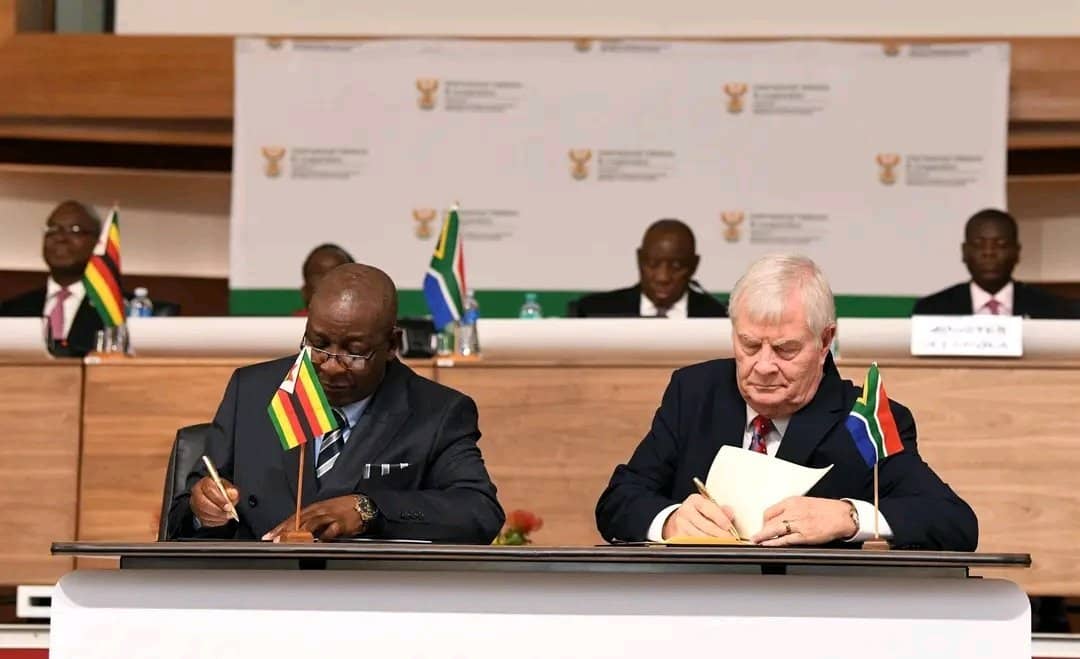
The agreement was formalised in Johannesburg on Friday through a memorandum of understanding signed by South Africa’s Correctional Services Minister Pieter Groenewald and Zimbabwe’s Justice Minister Ziyambi Ziyambi.
Groenewald said the arrangement would initially involve the repatriation of South African prisoners serving sentences in Zimbabwe, while thousands of Zimbabwean nationals currently incarcerated in South Africa could potentially be transferred under the agreement.
“There are only 12 South Africans in Zimbabwe who they will send back to us. This memorandum of understanding with Zimbabwe, as far as I’m concerned, is a breakthrough and will make a huge difference especially on overcrowding in our facilities,” Groenewald told journalists.
More than 4,000 Zimbabwean nationals are currently being held in South African correctional facilities, compared with 12 South Africans in Zimbabwean prisons, according to Groenewald.
The agreement was signed on the sidelines of the South Africa-Zimbabwe Bi-National Commission and was witnessed by the presidents of the two countries.
South Africa is grappling with severe overcrowding in its prisons, with the country’s 243 correctional facilities housing 170,518 inmates as of June, including 27,906 foreign nationals.
The Government estimates that keeping one prisoner in custody costs more than R460 per day, making the transfer of eligible foreign inmates potentially significant in reducing pressure on the correctional system and associated costs.
Chairperson of Parliament’s Portfolio Committee on Correctional Services, Kgomotso Ramolobeng, welcomed the agreement, saying prisoner transfers could have benefits beyond reducing overcrowding.
“Such bilateral agreements have the potential to ease pressure on correctional facilities, reduce incarceration costs and strengthen rehabilitation by allowing offenders to remain closer to their families and their support networks,” Ramolobeng said.
The development comes amid broader scrutiny of the costs associated with accommodating foreign nationals within South Africa’s justice system.
Figures covering the 2024-25 financial year show that the Department of Justice and Constitutional Development spent R76.1 million on interpreters and translators.
Shona interpretation accounted for R8.7 million, representing 11.5 percent of the total expenditure, with Shona interpreters reportedly being the most frequently used in five of South Africa’s nine provinces.
The prisoner transfer agreement is therefore expected to have implications not only for prison capacity, but also for rehabilitation, family support and the costs associated with keeping foreign nationals within South Africa’s correctional and justice systems.