📲 Join our WhatsApp Channel for Breaking News!
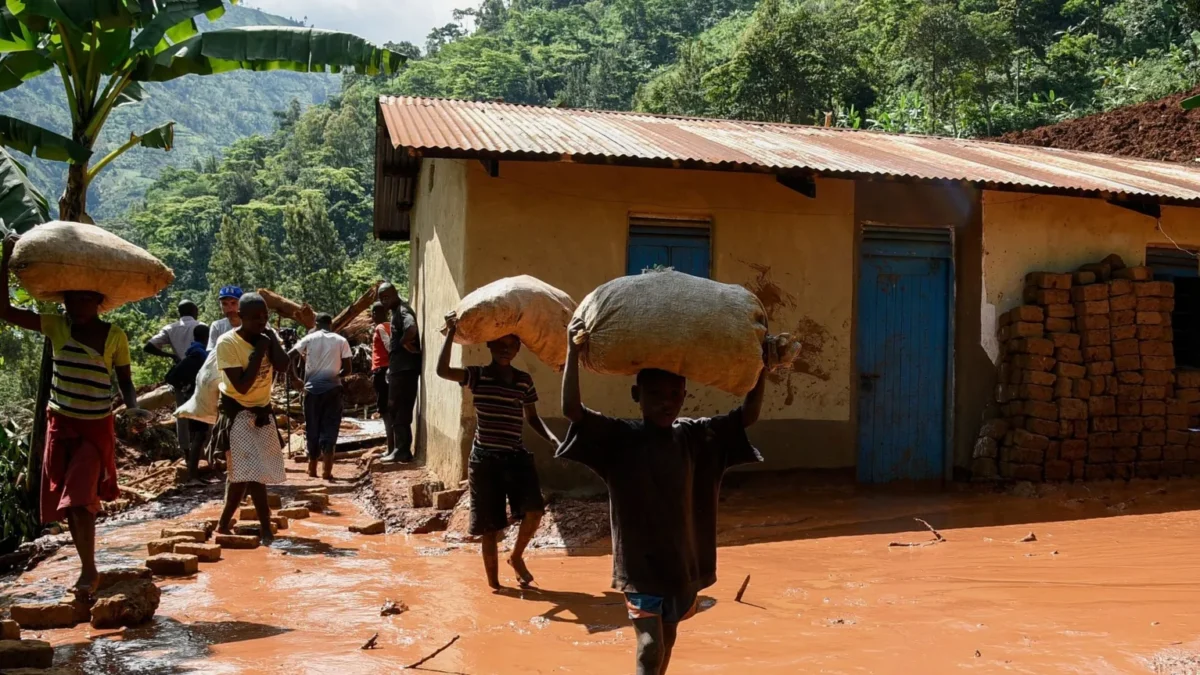
Follow on WhatsAppSurvivors of a deadly 2019 landslide in eastern Uganda that killed more than 50 people have taken their government to the United Nations, demanding compensation and relocation to safer areas.
📰 For this and more exclusive stories, read our weekly digital print edition.
Read E-PaperThe 48 survivors accuse the Ugandan government of failing to protect residents of Bududa, a mountainous district frequently affected by landslides.
They argue that the government’s relocation programme does not adequately protect their safety, land rights and livelihoods, especially as heavy rains increase the risk of further disasters.
The United Nations Human Rights Committee is considering the case, which is believed to be the first of its kind seeking climate adaptation measures and could set an important international precedent.
The 2019 landslide killed more than 53 people, including 33 children. Survivors say they continue to live in fear whenever heavy rains hit the area.
One of the complainants, William Tsama, lost four family members in the disaster.
“My quest should be a lesson,” he said.
“Victims in such situations, ignored by governments, can take them to court to compel them to help their citizens.”
Uganda introduced a relocation programme for people living in landslide-prone areas in 2011, but only a small number of residents have been moved.
Last month, the government introduced a new programme offering affected families 18 million Ugandan shillings (about US$4,300) to relocate.
Under the arrangement, families can receive two acres of land valued at eight million shillings and an additional 10 million shillings to build a house. Alternatively, they can receive the land allowance in cash alongside the housing grant.
The programme is expected to benefit 1,410 households living in high-risk areas.
However, some survivors believe the money is not enough to cover relocation costs and help families rebuild their lives.
The government has given residents in designated high-risk areas until December to move, warning that those who fail to leave could face forced eviction.
Apart from landslides, residents say changing rainfall patterns and declining soil fertility have affected farming and made it difficult for families to earn a living.
“I want to get a new good place for my people, so even if I die, they will be okay. I am an old man, but I am doing it for my children,” Tsama said.
The survivors first took legal action against the government in 2020 and later received support from environmental organisation Greenwatch in 2023.
They are seeking compensation for lost relatives and livelihoods, as well as emergency measures such as early-warning systems to alert people living in dangerous areas.
Greenwatch Executive Director Samantha Atukunda Kakuru Mwesigwa said the case seeks to ensure that governments take climate-related disasters more seriously.
“Justice for claimants is not just about winning in court. It is about forcing government policy to keep pace with a changing climate, and ensuring loss and damage is no longer an afterthought in disaster management,” she said.
Climate-related disasters have also affected other countries in the region.
In Kenya, floods and landslides killed at least 181 people between March and May 2024, according to the Kenya Red Cross, while similar disasters killed 135 people in Rwanda in May 2023.
Get instant news updates delivered straight to your WhatsApp.