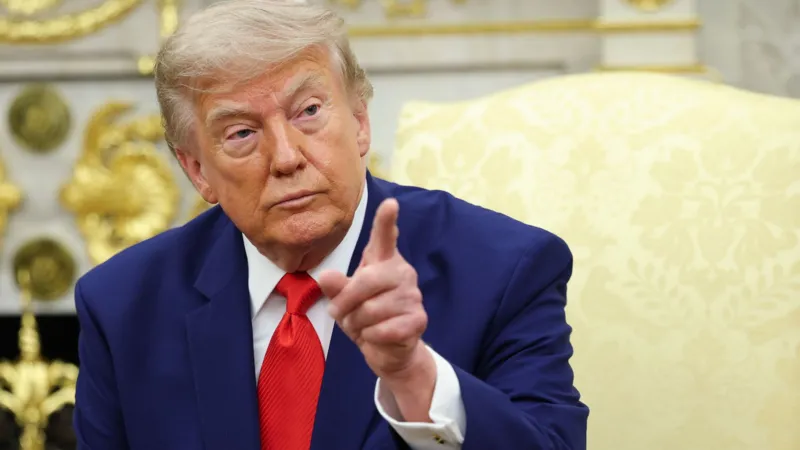
The United States has introduced a fresh round of tariffs affecting 60 of its major trading partners, marking the latest expansion of President Donald Trump’s trade agenda since returning to office last year.
📰 For this and more exclusive stories, read our weekly digital print edition.
Read E-PaperThe new measures impose import duties of between 10% and 12.5% on goods entering the US from countries including the United Kingdom, China, and the European Union. The tariffs replace a temporary levy that expired on Friday and apply to trading partners responsible for almost all US imports.
Washington says the tariffs are intended to address concerns that some countries have not taken sufficient action to eliminate forced labour from their supply chains.
US Trade Representative Jamieson Greer said the move is aimed at tackling human rights concerns while promoting fairer trade practices.
“Today’s action will begin to correct what is both a human rights abuse and distortive trade practice to improve the welfare of workers everywhere,” Greer said.
However, some trade analysts questioned the official explanation.
Caroline Freund, Dean of the UC San Diego School of Global Policy and Strategy, argued that the policy is primarily intended to support the Trump administration’s broader trade objectives rather than address labour issues.
She said the administration appeared to be seeking a legal basis to maintain tariffs after the US Supreme Court ruled earlier this year that many of the duties previously imposed under emergency powers were unlawful.
According to Freund, the administration’s focus remains reducing the US trade deficit and strengthening domestic manufacturing.
Trade policy specialist Deborah Elms of the Hinrich Foundation said the latest announcement demonstrates the administration’s determination to continue using tariffs as a key economic strategy. She noted that many affected countries may struggle to satisfy US requirements relating to forced labour.
Economists also warned that the higher import duties could increase costs for businesses and consumers, although exemptions for certain products may lessen the overall impact.
Wendy Cutler, an economic security expert at the Asia Society Policy Institute, said many countries are likely to respond by seeking stronger trade partnerships elsewhere to reduce their reliance on the American market.
The announcement has also raised concerns in the United Kingdom.
British Chambers of Commerce head William Bain said UK exporters may now be at a disadvantage compared with European Union businesses because EU goods are covered under a broader tariff arrangement, while UK products remain subject to the new universal tariffs in addition to any sector-specific duties.
Trade analyst David Henig said the UK’s competitive position had weakened slightly but noted that US trade policy remains unpredictable and could change again in the near future.
Governments around the world reacted cautiously to the new measures.
The UK government said there would be no immediate change to the tariff rates already facing British businesses and reiterated its commitment to preventing forced labour within global supply chains.
Brazil criticised the decision, describing the 12.5% tariff imposed on its exports as unjustified.
Japan also expressed regret over the new duties, while Australia’s Trade Minister Don Farrell called the measures completely unwarranted.
China rejected the US justification, insisting there is no forced labour in the country and accusing Washington of using the issue for political purposes.
Human rights organisations, however, have continued to raise concerns over allegations of forced labour involving Muslim minority communities in China’s Xinjiang region.
Tariffs have remained a central feature of President Trump’s economic policy. He has consistently argued that import duties protect American industries, reduce trade imbalances and encourage domestic manufacturing.
In April 2025, the administration announced sweeping tariffs of up to 50% on several trading partners under what it called “Liberation Day.”Those measures were later struck down by the US Supreme Court, which ruled that the President had exceeded his legal authority.
Since then, the White House has pursued alternative legal mechanisms to maintain its tariff programme. The administration has also imposed additional trade measures on countries including Brazil and Canada, while the ongoing tariff dispute between the US and China remains temporarily suspended.
Washington is also investigating another 16 countries over allegations of manufacturing overcapacity, a move that could result in additional tariffs in the coming months.