📲 Join our WhatsApp Channel for Breaking News!
Follow on WhatsAppZimbabwe has become the fifth-largest economy in Southern Africa following a significant revision of its Gross Domestic Product (GDP), which now includes previously unaccounted-for economic activity—especially from informal businesses and new enterprises that emerged after 2019.
📰 For this and more exclusive stories, read our weekly digital print edition.
Read E-PaperThe latest rebasing, conducted by the Zimbabwe National Statistics Agency (Zimstat) through the 2023 Economic Census, adjusted the country’s GDP from ZiG133.7 trillion (approximately US$35.2 billion) to ZiG168.5 trillion, now valued at US$44.4 billion. This reflects a broader measurement of economic activity, particularly in informal sectors and among newer businesses that were not captured in the previous GDP calculations based on 2019 data.
The updated GDP figure highlights hidden growth in Zimbabwe’s economy and demonstrates renewed momentum toward recovery and development.
Rebasing GDP involves recalculating the value of goods and services using a more current economic structure, incorporating sectors that had previously been overlooked. With the revised numbers, Zimbabwe now trails only South Africa (US$400 billion), Angola (US$115 billion), Tanzania (US$80 billion), and the Democratic Republic of Congo (US$71 billion), based on IMF projections for 2024. The Southern African Development Community (SADC) has 16 member countries in total.
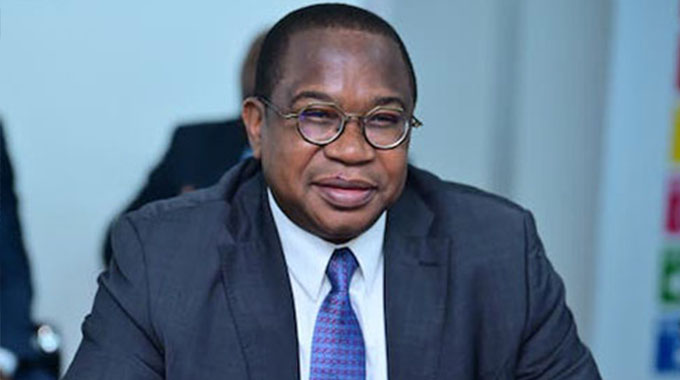
During a post-Cabinet press briefing on Tuesday, Finance and Economic Development Minister Professor Mthuli Ncube explained that the updated GDP reflects portions of the economy that had been growing but were not formally recorded.
“There’s a segment of our economy that has been operating outside the formal accounting systems. This revision begins to include that activity,” Ncube said. “Still, due to the high level of informality, some areas remain uncaptured, and we’ll continue improving our data collection methods.”
GDP serves as the key indicator of a nation’s economic performance, measuring the total output of goods and services over a given period. For ordinary citizens, a growing GDP can signify increased job prospects, better public services, and stronger infrastructure investment.
While the revised GDP won’t change the government’s current spending plans, it offers greater fiscal flexibility. Minister Ncube noted that the government would focus on broadening the tax base and improving revenue collection to match the economy’s expanded size.
“Our expenditure plans remain unchanged,” he said. “However, we now have an opportunity to enhance our tax revenues based on the newly captured GDP.”
He also clarified that Zimbabwe is not struggling with debt sustainability, but rather with liquidity—a situation that could improve as the formal economy grows.
“Zimbabwe doesn’t have a debt crisis per se, but liquidity remains a challenge,” Ncube stated. “This expanded GDP gives us greater capacity to manage our external debt obligations.”
To capitalize on the rebasing, the government is ramping up efforts to formalize informal businesses and increase digitalization across sectors to bring more players into the tax system.
“We are improving our ability to withstand economic shocks,” Ncube said. “Digital platforms will help us integrate more economic participants into formal systems.”
The Minister also acknowledged economic inequality and emphasized the government’s approach through progressive taxation and social safety nets.
“Inequality is a persistent challenge,” he admitted. “We aim to address it through a tax system that places more responsibility on the wealthier population, along with targeted social welfare programs to uplift vulnerable groups.”
With the revised data, Zimbabwe’s Gross National Income (GNI) per capita increased from US$2,259 to US$2,859 in 2023, with projections indicating it could surpass US$3,000 by 2025—a sign of rising national income and productivity.
Get instant news updates delivered straight to your WhatsApp.