Current Affairs
Zimbabwe, UAE Sign Health Cooperation Agreement to Boost Medical Systems
Zimbabwe has entered into a health partnership with the United Arab Emirates (UAE) through the signing of a Memorandum of Understanding (MoU) focused on improving healthcare systems in both nations.
The agreement outlines collaboration across various areas of healthcare, including primary and specialized care, emergency response, health financing, medical workforce development, and the adoption of technology to enhance healthcare delivery and outcomes.
This marks another strategic move by Zimbabwe to revamp its healthcare sector, coming just two months after similar agreements were signed with China and Belarus to support the rehabilitation of Parirenyatwa Hospital, the country’s largest referral medical facility.
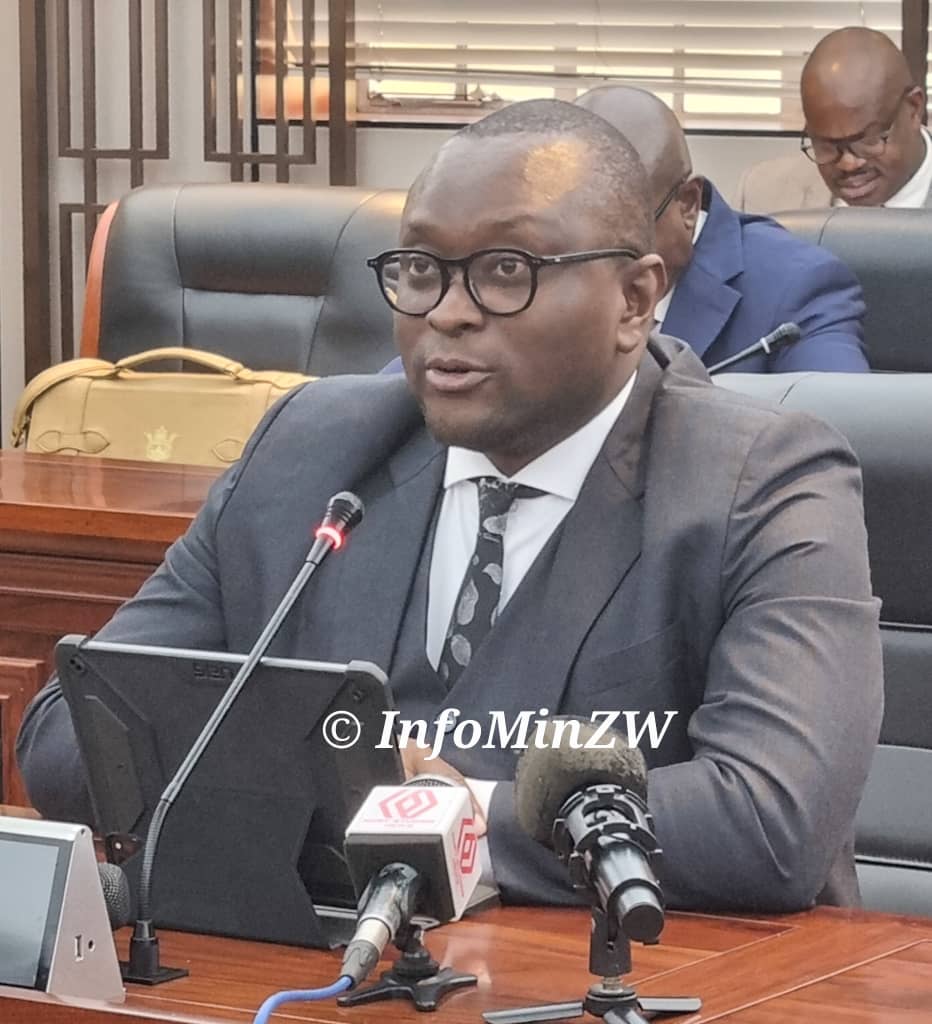
Information Minister Jenfan Muswere, speaking during a post-Cabinet media briefing on Tuesday, said the MoU is grounded in principles of mutual benefit, respect, and equality. The goal, he noted, is to build stronger healthcare systems through joint action.
“Cabinet approved the health cooperation agreement between Zimbabwe and the UAE, which is designed to promote joint development of healthcare infrastructure and services in both countries,” Muswere said.
He elaborated that the scope of the partnership includes:
-
Primary Healthcare: Joint initiatives in areas such as reproductive, maternal, neonatal, child, and adolescent health, as well as vaccination programs.
-
Specialist and Secondary Care: Cooperation in specialized medical services, diagnostic labs, pathology, and blood transfusion services.
-
Emergency Preparedness: Strengthening both countries’ capacity to respond effectively to health crises.
-
Health Financing: Exploring innovative funding mechanisms and resource optimization to improve overall service delivery.
-
Healthcare Workforce: Enhancing the training, retention, and development of medical professionals.
-
Health Technology: Utilizing digital tools and systems to improve patient care, hospital efficiency, and data management.
The MoU comes at a time when Zimbabwe’s public healthcare institutions face mounting challenges, including critical shortages of medical equipment and drugs, dilapidated infrastructure, and the ongoing loss of skilled staff due to poor working conditions and low salaries.
The government hopes that international partnerships like this one will help modernize the country’s health sector and improve access to quality care for its population.
Current Affairs
Amai Mnangagwa Visits Rotten Row Courts to Gain Insight Into Justice System
First Lady Amai Auxillia Mnangagwa attended several court proceedings at the Rotten Row Magistrates’ Courts in Harare on Wednesday as part of efforts to gain deeper insight into the operations of Zimbabwe’s justice system.
Her visit comes after a series of nationwide engagements with traditional courts, reflecting her continued interest in understanding how justice is administered at different levels across the country.
During the court sessions, the First Lady observed a number of rape-related cases to better understand how the formal legal system manages and processes sensitive matters involving sexual offences.
Current Affairs
Zimbabwe Economy Remains Resilient Despite Global Pressures
The Government says Zimbabwe’s economy remained broadly stable during the First Quarter of 2026 despite growing global uncertainty caused by escalating geopolitical tensions in the Middle East.
Cabinet considered and noted the First Quarter 2026 Economic Developments and Outlook report presented by the Minister of Finance, Economic Development and Investment Promotion, Honourable Mthuli Ncube.
“The global developments pose risks to Zimbabwe’s balance of payments, inflation, exchange rate stability, agricultural production, and foreign currency reserves,” he said.
However, Prof. Ncube noted that the domestic economy has remained stable and resilient due to sound macro-economic policies, a successful rainfall season, and continued economic reforms.
“The domestic economy has remained broadly resilient, anchored by sustained macro-economic stability and the successful rainfall season that has underpinned agricultural activity and continued policy reforms that are supporting and enhancing the ease of doing business,” said Prof. Ncube.
The report noted that commodity markets experienced renewed upward pressure and heightened volatility during the first quarter of the year, largely because of geopolitical tensions affecting global energy supply chains.
According to Prof. Ncube, rising production and transport costs are contributing to inflationary pressures, but measures are being implemented to protect jobs, sustain livelihoods, and cushion citizens from rising costs.
Economic growth for 2026 is projected at around 5%, mainly driven by a strong recovery in agriculture and continued expansion in the mining sector.
“Economic growth is still projected to moderate around 5% in 2026, reflecting anticipated strong agriculture sector recovery and mining sector growth underpinning overall growth of the economy,” he said.
The report also warned that increasing fertiliser prices as well as higher shipping and insurance costs are raising agricultural input costs, with possible negative effects on crop yields, food security, and economic activity.
To help contain inflation and lower production costs, Prof. Ncube said Government has already removed some taxes on diesel.
On fiscal performance, the Minister highlighted improved revenue collection and expenditure management.
“Fiscal developments in 2026 have so far been anchored on continued revenue recovery and expenditure containment, with total revenues projected to reach US$9.4 billion against a total expenditure of US$9.0 billion,” he said.
The report further showed that inflation continues to decline significantly compared to levels recorded in 2025.
Year-on-year inflation fell from above 90% in mid-2025 to 4.1% in January 2026 before easing further to 3.8% in February. Inflation slightly increased to 4.4% in March following crude oil price increases linked to Middle East tensions.
“This sustained decline highlights the effectiveness of stabilization measures implemented by the Government,” Prof. Ncube noted.
Looking ahead, the Minister said export performance is expected to remain strong, supported by gold, platinum group minerals, lithium, and tobacco exports in the medium term.
Current Affairs
Government Intensifies Fight Against Drug and Substance Abuse
The Government of Zimbabwe says it is making significant progress in the fight against drug and substance abuse, with thousands of arrests, major drug seizures, and rehabilitation programmes being rolled out across the country.
Speaking during the 15th Post-Cabinet Press Briefing, the Chairperson of the Zimbabwe National Committee on Drug and Substance Abuse and Minister of Defence, Honourable Oppah Muchinguri-Kashiri, presented an update on the National Drug and Substance Abuse Response, which was approved by Cabinet.
“The Zimbabwe National Committee on Drug and Substance Abuse is implementing a Multi-Sectoral Drug and Substance Abuse Plan (2024–2030), which is tailored to mitigate and ultimately eliminate the drug and substance abuse scourge in Zimbabwe,” Hon Muchinguri-Kashiri said.
She said the Committee coordinates interventions involving Government ministries, law enforcement agencies, communities, and the private sector through seven strategic pillars which include supply chain reduction, prevention, rehabilitation, psycho-social support, economic strengthening, media communication, and legal reforms.
The update revealed major progress in disrupting illegal drug supply networks across the country.
“A total of 2 889 accused persons were arraigned before the courts and 381 convictions were secured,” she said.
Hon. Kashiri also confirmed that approximately 453 drug suppliers, 2 436 individual end-users, and 31 drug bases were dismantled in the selected districts of Manicaland and Mashonaland West Provinces.
She disclosed that drugs and illicit substances worth nearly ZiG 79.9 million were confiscated during ongoing operations.
“These included crystal meth, cocaine, ecstasy tablets, dagga, khat and unregistered medicines including cough syrups,” Hon Kashiri stated.
In efforts aimed at protecting vulnerable children, she said “32 children living and working on the streets” were removed and placed under protection programmes, while 171 children were successfully reintegrated with their families.
Authorities also intensified inspections targeting liquor outlets and illegal operating premises.
“The Committee also conducted regulatory compliance inspections across the country’s provinces, with 615 liquor-licensed premises having been inspected and 36 unlicensed premises fined and closed,”she said.
Ministry added that awareness and prevention campaigns have so far reached “285 918 beneficiaries” nationwide as authorities scale up anti-drug education in schools and communities.
Meanwhile, rehabilitation, vocational training, entrepreneurship support programmes, and empowerment initiatives have been rolled out to “approximately 37 937 youths and women.”
Minister announced the launch of “a US$1 million Youth Empowerment Fund” aimed at supporting young people through income-generating projects and economic opportunities.
-
Current Affairs6 months agoOperation restore order
-
Crime and Courts8 months agoMasasi High School Abuse Scandal Sparks Public Outcry
-
Crime and Courts8 months agoKuwadzana Man Jailed for Reckless Driving and Driving Without a Licence
-
Current Affairs10 months agoBreaking: ZIMSEC June 2025 Exam Results Now Available Online
-
Current Affairs9 months agoMunhumutapa Day: Zimbabwe’s Newest Public Holiday Set for Annual Observance
-
Current Affairs7 months agoBREAKING NEWS: ZANU PF Director General Ezekiel Zabanyana Fired
-
Business7 months agoTino Tungwarara Launches Prevail Mart, Becoming One of Zimbabwe’s Youngest Retail Entrepreneurs
-
Current Affairs9 months agoNo Racism in Our Cricket: Government