By Desire Tshuma
📰 For this and more exclusive stories, read our weekly digital print edition.
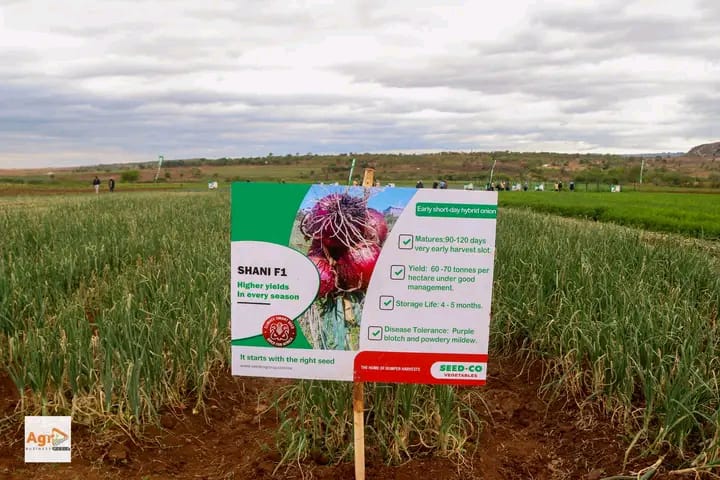
Read E-PaperArcturus — A thriving horticulture project in Arcturus provided the backdrop for a Seed Co Winter Vegetables Field Day on 30 September, as farmers and agricultural stakeholders gathered to learn how improved vegetable varieties, sound agronomic practices and access to markets can transform small-scale farming into a profitable business.
The field day was held at the farm of horticultural farmer Charles Nyandoro and showcased Seed Co’s vegetable varieties and demonstration plots while giving farmers an opportunity to exchange practical knowledge on production, crop management and profitability.
Nyandoro, who has been farming for more than a decade, said his journey into horticulture began modestly but has grown into a serious commercial venture.
“I started this as a hobby while growing herbs for fun; now I’m into serious business, heading towards being a big commercial farmer, and with these rich red soils I can make it,” said Nyandoro.
He has one hectare under onions, half a hectare of carrots, cabbages and peas and is expecting to harvest 80 tonnes of onions, 30 000 heads of cabbages, tonnes of carrots and seven tonnes of peas.
Nyandoro said he produces for both local and export markets, including Mozambique, in line with the National Development Strategy 2 and Vision 2030 of transforming Zimbabwe into an Upper-Middle Income economy.
“I am earning a decent living. I sell some of my produce locally and in Mozambique. Horticulture products have a ready market; hence, it is a lucrative business that everyone should take up, even at the household level,” he said.
The field day also placed emphasis on the importance of choosing the right seed varieties for specific growing conditions and markets. Seed Co says varietal selection is a key factor in determining yield potential, quality, maturity period, disease resistance, stress tolerance and ultimately profitability.
Seed Co Group Head of Agronomy and Public Relations Manager, Ms Wendy Madzura, urged farmers to embrace improved, climate-resilient horticultural varieties as Zimbabwe prepares for potentially difficult weather conditions.
“As weather variability continues to pose challenges to agricultural production, farmers must pay attention to climate resilience when choosing varieties. Improved varieties give you better yield potential, disease resistance, stress tolerance and marketable quality,” said Madzura.
She also encouraged farmers to link production decisions to market demand to ensure viable commercial returns.
Participants had the opportunity to inspect demonstration plots, compare vegetable varieties and engage Seed Co agronomists on crop management, maturity periods, disease resistance and yield potential.
Nyandoro’s experience illustrated how horticulture can provide opportunities for income generation and business growth, although access to finance remains important for farmers seeking to expand their operations.
The field day reinforced the value of practical demonstrations in helping farmers make informed decisions about seed selection, crop husbandry and investment in vegetable production.