
- New University of Zimbabwe facility advances the Government’s drive for climate-smart agriculture, home-grown innovation, value addition and stronger export markets.
China and Zimbabwe have commissioned a joint agricultural laboratory at the University of Zimbabwe, establishing a new platform to develop climate-resilient crops, improve agricultural ecosystems and turn scientific research into products that can raise farm productivity and exports.
📰 For this and more exclusive stories, read our weekly digital print edition.
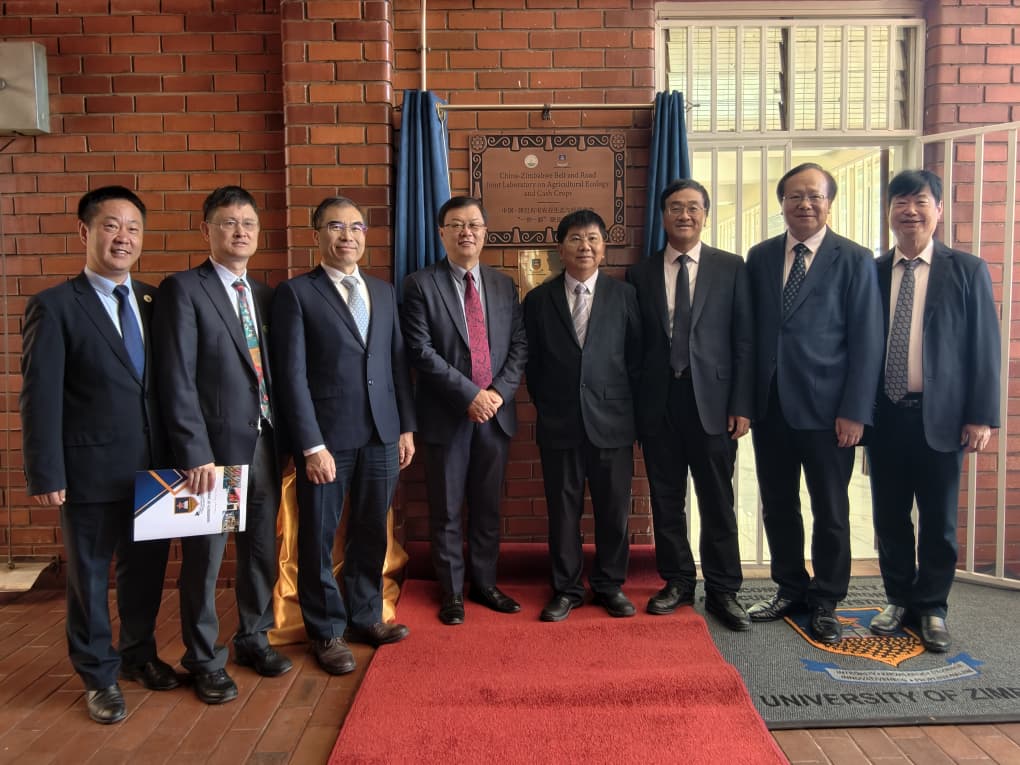
Read E-PaperThe China-Zimbabwe Belt and Road Joint Laboratory on Agriculture Ecology and Cash Crops was opened on Monday alongside the inauguration of its Academic Committee and an inaugural academic seminar.
Chinese Ambassador to Zimbabwe Zhou Ding said the facility marked a major step forward in science, technology and education cooperation between the two countries.
The laboratory will support collaborative research, academic exchanges and the training of Zimbabwean specialists. It will also connect local researchers to experts from the Chinese Academy of Sciences, the Chinese Academy of Engineering, Wuhan Botanical Garden and the China-Africa Joint Research Center.
Its commissioning comes as the Government intensifies efforts to climate-proof agriculture, expand irrigation, strengthen national food security and connect farmers to processing industries and export markets.
The facility adds a specialised scientific platform to national programmes aimed at improving rural incomes, increasing agricultural production and accelerating industrial development.
The next phase will be to translate its research into practical results, including locally tested seed varieties, trained farmers and extension officers, improved yields, efficient water use and competitive processed agricultural products.
What the laboratory will do
Zhou said the laboratory was established under China’s Belt and Road Science, Technology and Innovation Action Plan.
By the end of 2025, China had reportedly partnered with 50 countries to establish 70 joint laboratories, creating an international network for scientific research, technology transfer and skills development.
The Zimbabwe laboratory will concentrate on agricultural ecology and cash crops, with research expected to cover climate-resilient varieties, sustainable soil management, water planning, smart agriculture and value-added processing.
Its work is expected to support the movement of research from universities into farms, processing companies and commercial markets.
Preparations for the laboratory began before its formal commissioning.
Wuhan Botanical Garden reported that a delegation visited Zimbabwe in March 2025 and held discussions with the University of Zimbabwe on the procurement and transportation of laboratory equipment and the renovation of facilities.
The Chinese institution also discussed cooperation with Zimbabwean organisations in areas that included biodiversity conservation, sustainable agriculture and the development of new crop varieties.
The laboratory builds on existing cooperation between Zimbabwe and China in agriculture, education and technology.
Zhou cited projects involving Juncao mushroom-growing technology, climate-resilient crops, sustainable soil management, borehole drilling, water-resource planning and irrigation development.
He also pointed to the Zimbabwe Centre for High Performance Computing, which was constructed with Chinese grant funding. The centre supports agro-ecological data analysis, smart agriculture and other forms of advanced scientific research.
Together, these initiatives support the Government’s efforts to modernise agriculture through science, infrastructure and skills development.
How Zimbabweans stand to benefit
For farmers, the most immediate potential benefit is improved protection against droughts, high temperatures, crop diseases and other weather-related shocks.
Research that produces locally tested and affordable climate-resilient crops could reduce losses and improve harvests.
Better soil and water-management techniques could also help farmers use fertiliser, irrigation water and other costly inputs more efficiently.
These technologies will need to be tested over several farming seasons and across Zimbabwe’s different agro-ecological regions before they are distributed widely.
Government extension services, agricultural colleges and research institutions can play an important role in ensuring that successful technologies reach communal, small-scale and resettlement farmers.
For consumers, higher and more reliable agricultural production could improve food supplies and reduce the country’s exposure to poor harvests.
Combined with Government investment in agricultural inputs, irrigation, transport and storage, the laboratory’s research could strengthen the entire production chain from the field to the household food basket.
Students and researchers also stand to benefit from advanced equipment, shared scientific data, postgraduate supervision and exchange programmes with Chinese institutions.
The partnership supports Zimbabwe’s Education 5.0 model, under which universities are expected to teach, conduct research, innovate, serve communities and transform ideas into industrial products.
Developing strong local technical capacity will help Zimbabwe retain the knowledge, technology and intellectual value generated by the partnership.
The project could also create opportunities for workers and businesses involved in agricultural processing.
If its research helps Zimbabwe preserve, grade and process horticultural products, mushrooms, nuts, fruit and other cash crops locally, more value can remain in the country.
That could support employment in factories, laboratories, packaging, transport, storage, marketing and quality control.
China market creates major opportunity
The laboratory is also expected to help Zimbabwe take advantage of China’s expanded zero-tariff treatment for African exports.
China extended zero tariffs across all tariff lines to Zimbabwe and 19 other African countries that are not classified as least developed countries from May 1, 2026.
China’s Ministry of Commerce said the preferential arrangement would initially operate for two years while longer-term economic partnership agreements were negotiated.
The policy gives Zimbabwean products a more competitive entry point into one of the world’s largest consumer markets.
However, exporters will still be required to meet Chinese standards governing food safety, plant and animal health, traceability, product origin, quality, volume and consistency.
The laboratory can help farmers and companies meet these requirements by supporting research, product testing, certification and the development of higher-value agricultural goods.
Investment in accredited laboratories, cold-storage facilities, financing, producer organisations and buyer contracts could help extend the benefits from established exporters to small farmers.
The combination of food-security research and cash-crop development supports a balanced national agricultural strategy.
Higher productivity can strengthen domestic supplies of staple foods, while cash-crop exports generate foreign currency, rural incomes and demand for local processing, packaging and logistics.
From national vision to lasting impact
The laboratory’s Academic Committee now has an opportunity to transform a major diplomatic and scientific partnership into measurable national results.
A clear work plan identifying priority crops, research areas and participating districts would provide farmers, universities and local companies with a route into the programme.
Regular reporting could demonstrate progress by recording research projects completed, crop varieties submitted for approval, farmers and extension officers trained and technologies transferred to Zimbabwean businesses.
Other important measures would include the number of women and young people reached, improvements in yields, reductions in water and input use, and changes in farmer incomes.
Transparent reporting would strengthen public confidence and help guide future Government and private-sector investment.
The commissioning of the laboratory represents an important foundation for Zimbabwe’s agricultural modernisation agenda.
Its greatest promise lies in converting high-level scientific cooperation into affordable farming technologies, successful local enterprises, stronger exports and more resilient rural incomes.