Connect with us

Current Affairs

Hosting Ramsar COP15 is a landmark in wetland conservation leadership

Published

on

Hosting Ramsar COP15 is a landmark in wetland conservation leadership

By Innocent Mujeri and Nathan Muchemwa in Victoria Falls 

In a world increasingly defined by environmental challenges, Zimbabwe has taken a significant step forward in cementing its role as a responsible and visionary steward of natural resources.


From 23 to 31 July 2025, the country proudly hosts the Fifteenth Meeting of the Conference of the Contracting Parties (COP15) to the Ramsar Convention on Wetlands at the majestic Victoria Falls, a UNESCO World Heritage Site.


This is not only a historic first for Zimbabwe, but a powerful symbol of the nation’s growing leadership in global environmental governance.

The Ramsar Convention on Wetlands, established in 1971 in Iran, is the only international treaty focused specifically on the conservation and wise use of wetlands.


COP15, bringing together delegates from over 170 contracting parties, scientists, policymakers, NGOs, and development partners, is a platform for nations to deliberate on best practices, exchange ideas, and adopt frameworks for wetland preservation.

The selection of Victoria Falls as the host site could not be more appropriate.


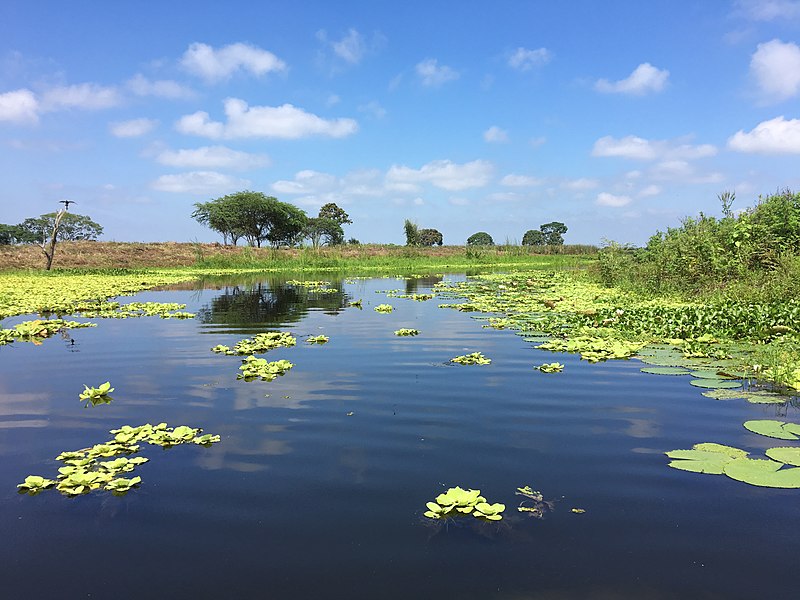
Known locally as “Mosi-oa-Tunya” (The Smoke That Thunders), Victoria Falls embodies the very essence of wetlands: biodiversity, natural beauty, tourism potential, and ecosystem services that sustain both people and wildlife.


The surrounding Zambezi River floodplains and wetlands support one of Africa’s richest biodiversity corridors, offering an ideal backdrop for discussions on protecting such ecosystems worldwide.


Hosting COP15 here allows Zimbabwe to highlight its natural endowments, not merely as touristic spectacles, but as vital ecosystems deserving of deliberate conservation efforts.


Zimbabwe’s hosting of COP15 is a bold testament to the country’s renewed commitment to sustainable environmental management.


In recent years, the Government of Zimbabwe, through the Ministry of Environment, Climate and Wildlife, has made tangible strides in protecting wetlands that had long been degraded by urban expansion, agriculture, and climate change.


Initiatives such as the Wetlands Management Policy, the establishment of the Environmental Management Agency (EMA), and the designation of Ramsar sites such as Driefontein Grasslands and Lake Chivero demonstrate Zimbabwe’s seriousness in implementing the Ramsar Convention at the national level.


By bringing COP15 to Victoria Falls, Zimbabwe sends a message to the world: we are not only participants in global environmental agreements, we are leaders.

The last Ramsar COP (COP14) was held in November 2022 in a hybrid format, with sessions in Wuhan, China, and Geneva, Switzerland.


That meeting produced the Wuhan Declaration, reaffirming the urgent need to protect wetlands amidst global biodiversity loss, climate change, and pollution.


It also adopted the Global Strategic Framework for Wetland Conservation 2025–2030, which now provides the guiding principles for COP15 deliberations.


Zimbabwe has taken this momentum seriously. In her official statement during the opening ceremony, Hon. Dr. Evelyn Ndlovu, Minister of Environment, Climate and Wildlife, underscored the theme: “Protecting Wetlands for Our Common Future.”


She called for unity, investment, and political will in addressing wetland loss globally — with Africa, and Zimbabwe in particular, poised to offer solutions rooted in indigenous knowledge and innovation.

Beyond the conference rooms and plenary sessions, the hosting of COP15 brings significant socio-economic benefits.


The influx of international delegates has already stimulated the hospitality industry, with hotels in Victoria Falls operating at near full capacity.


Tour operators, small businesses, and community projects around the area are enjoying a rare boost in visibility and income.


This aligns with Zimbabwe’s long-term strategy to leverage its environmental assets for economic development.


Wetlands are not just about frogs and birds — they are essential to food security, water purification, climate regulation, and ecotourism. Protecting them is not only a conservation imperative, but a developmental one.

One of the lesser-celebrated but most impactful aspects of COP15 has been the inclusion of youth voices and local innovators.


Young Zimbabwean environmentalists and university students have participated in side events and exhibitions, showcasing mobile apps for wetland monitoring, community-based mapping tools, and traditional practices for sustainable wetland use.


By nurturing this new generation of environmental stewards, Zimbabwe is investing not only in the future of its wetlands but in the long-term sustainability of its development model.


This is a departure from decades where environmental matters were relegated to the periphery of national discourse.


Zimbabwe’s moment as COP15 host is also a defining one for Africa. While wetlands cover roughly 10% of the continent, their degradation has accelerated due to population pressures, weak policy enforcement, and the effects of climate change.


Zimbabwe’s proactive hosting role sets a standard for other African nations to follow.

Indeed, the collaborative spirit exhibited at COP15 — from joint statements with SADC counterparts to technical working groups on transboundary wetlands — reflects an emerging consensus that African solutions must be part of the global wetland conservation narrative.

Hosting COP15 is not the end — it is a powerful beginning. Zimbabwe has gained global attention and acclaim, but this must now translate into real change on the ground.


Wetlands in Harare, Bulawayo, Masvingo and other urban centres must be restored and protected from illegal settlements and pollution.


Communities must be empowered through education, incentives, and infrastructure to play a role in wetland management. And most importantly, political leaders must remain accountable to the commitments made on this global stage.


Zimbabwe has proven that it can lead, inspire, and shape a positive environmental future — not just for itself, but for the world. The ripple effects of COP15 will be felt for years to come. And for a country that has faced its share of challenges, this is a victory worth celebrating.

Continue Reading
Click to comment

Leave a Reply

Your email address will not be published. Required fields are marked *

Current Affairs

Prevail donates 60 tonnes of food to Defence Forces at launch

Published

on

itai Mazire

Prevail International Group launched its Talk and Pay (TAP) Microfinance Company on Friday, donating two 30-tonne truck loads of rice and cooking oil to Zimbabwe’s Defence Forces during the ceremony.

The donation, handed over to Defence Minister Oppah Muchinguri-Kashiri by Prevail Group chief executive Tendai Sithole, recognised the contribution of the uniformed forces to national stability, the company said.

Speaking at the launch, Muchinguri-Kashiri welcomed TAP’s focus on the security sector and rural communities, stating that the payroll-based loan facility aligns with the Second Republic’s commitment to safeguarding workers’ welfare.

“Your inclusion of our hard-working labour force in your customer segment is consistent with the Second Republic’s commitment in safeguarding the welfare and dignity of our labour force,” she said.

The minister also noted that security personnel are often excluded from mainstream financial products, and that TAP’s targeting of women-led businesses and rural entities supports national development policy.

“Studies consistently confirm that capital availed to women circulates faster in the local economy,” Muchinguri-Kashiri added. “When women are extended with loans, you are investing in the whole household, and also in the community as a whole.”

Prevail Group International Chairman Dr Paul Tungwarara said TAP was developed following President Emmerson Mnangagwa’s call to support rural business units. The microfinance scheme will offer low-cost, payroll-based loans, with priority for women-led and rural-based enterprises.

Distribution of the donated rice and cooking oil to defence forces units is expected to begin shortly.

Continue Reading

Current Affairs

Churches Throw Weight Behind CAB3, Urge Parliament to Pass Bill

Published

on

The Zimbabwe Indigenous Interdenominational Council of Churches (ZIICC), representing a broad coalition of Apostolic, Pentecostal, Evangelical and indigenous Christian denominations, has thrown its full support behind the Constitution of Zimbabwe (Amendment No. 3) Bill, 2026, describing the proposed changes as necessary for national stability, development continuity and governance reform.

In a detailed submission presented to Parliament on Friday, the church body said the proposed constitutional amendments were lawful, democratic and aligned with Zimbabwe’s long-term development aspirations under Vision 2030.

The submission, signed by ZIICC patron Bishop Dr Nehemiah Mutendi and chairman Rev Dr Andrew Wutawunashe, argued that Parliament has the constitutional authority to amend the Constitution and should be allowed to deliberate on the Bill without interference from external groups.

“We call upon Parliament to pass this Bill in the national interest,” the churches said in the submission.

The churches said Zimbabwe’s elected representatives derive their legislative authority directly from the people and are constitutionally mandated to amend the Constitution where necessary.

“Parliament’s exercise of that mandate is not and cannot be a threat to democracy it is democracy itself,” the submission stated.

ZIICC said public consultations conducted by Parliament across the country had already fulfilled constitutional requirements for citizen participation, adding that no organisation or civic grouping had the power to veto Parliament’s legislative role.

The church organisation, which says it represents more than 8.7 million Zimbabweans, also backed proposals in the Bill extending presidential and parliamentary terms from five to seven years.

According to ZIICC, the longer governance cycle would provide government with enough time to implement major developmental programmes such as Vision 2030 and the National Development Strategy 1 (NDS1), both of which it said had previously been disrupted by political instability and the COVID-19 pandemic.

The churches argued that Zimbabwe required policy continuity and stability to fully implement national projects and recover from external shocks.

“Vision 2030 is not a slogan to our congregants. It is a promise that must be kept,” the submission read.

ZIICC further linked the proposed seven-year term to biblical teachings on restoration and completion, saying the concept resonated with Christian principles of renewal and national rebuilding.

The churches also defended proposals to reform Zimbabwe’s electoral system, including the introduction of a parliamentary model for electing the President.

They argued that direct presidential elections had historically heightened political tensions and divided communities.

“Our communities have paid the price of electoral toxicity with their peace, their livelihoods, and their social cohesion,” the churches said.

ZIICC said electing the President through Parliament would reduce political conflict while preserving democratic accountability through elected representatives.

The churches additionally welcomed proposals to establish a dedicated Zimbabwe Electoral Delimitation Commission, saying the move would improve transparency and professionalism in constituency boundary delimitation.

On traditional leadership reforms, the church body endorsed the removal of constitutional restrictions limiting the political participation of chiefs and traditional leaders.

ZIICC said traditional leaders were custodians of community governance and should enjoy the same constitutional freedoms as other citizens.

“A traditional leader is a Zimbabwean citizen,” the submission stated, adding that chiefs play a critical role in maintaining peace, resolving disputes and supporting development at grassroots level.

The churches also supported provisions repealing the National Peace and Reconciliation Commission’s constitutional status, noting that the commission’s original constitutional mandate had already expired in 2023.

ZIICC said reconciliation should not be confined to a single commission but should instead become a broader national responsibility involving churches, traditional leaders and communities.

The organisation pledged to intensify reconciliation and healing programmes across the country in partnership with government and community structures.

In a cover letter accompanying the submission, Rev Dr Wutawunashe said the churches believed the Bill advanced “the constitutional order of Zimbabwe in a manner consistent with the values and aspirations of our people.”

The submission comes as debate around Constitutional Amendment Bill No. 3 continues to intensify, with supporters arguing the reforms will enhance governance efficiency and policy continuity, while critics have raised concerns over some of the proposed changes.

Continue Reading

Current Affairs

Local Government cracks down on ‘Fundraising’ workshops for Councils

Published

on

Itai Mazire

The Ministry of Local Government and Public Works has issued a stern directive to local authorities, urging them to cease participation in non-essential workshops and conferences perceived as mere fundraising ventures by external entities.

The move, outlined in a memorandum signed by Permanent Secretary Dr. John Basera on 14 May 2026, shows a critical shift towards prioritizing efficient service delivery amidst ongoing financial challenges.

The memorandum highlights a growing concern within the ministry regarding the proliferation of such events.

“It has been noted with concern that some institutions and entities are organising workshops and conferences targeting local authorities primarily for their fundraising purposes,” said Dr Basera.

This directive comes as local authorities grapple with

depressed revenue collection.

The Ministry emphasizes the need to re-direct resources towards core functions.

“Considering the current challenges facing local authorities, particularly depressed revenue collection and the need to prioritize efficient service delivery, it is imperative that available resources be directed towards operational and service delivery-related activities,” he said.

Local authorities are now advised to significantly reduce their involvement in events that do not directly contribute to improving public services.

The memorandum explicitly warns against arrangements that offer little to no tangible benefit.

“Accordingly, local authorities should not support or tolerate arrangements by third-party entities requiring the purchase of tables, payment of conference fees, accommodation costs and related expenditures which offer limited or no tangible value to service delivery outcomes.”

This new position is effective immediately and will remain in force until further notice, signaling a resolute effort by the Ministry to streamline operations and ensure accountability in resource allocation within local governance.

Continue Reading

Trending