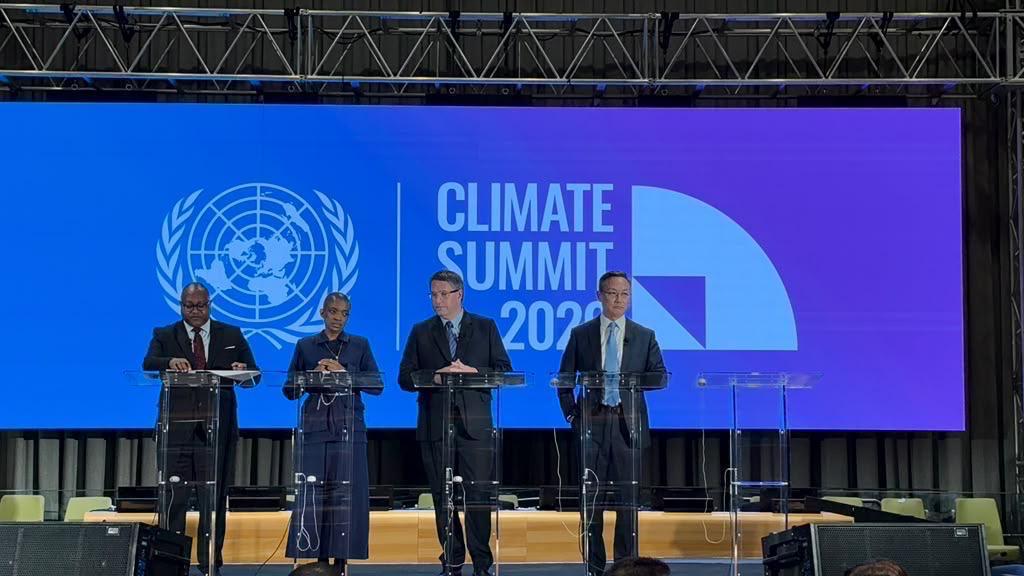
Tourism and Hospitality Industry Minister Barbara Rwodzi has taken Zimbabwe’s climate action agenda to the global stage, highlighting the link between environmental protection, resilient destinations, economic growth and livelihoods at the United Nations Climate Summit in New York.
📰 For this and more exclusive stories, read our weekly digital print edition.
Read E-PaperMinister Rwodzi represented Zimbabwe at the high-level meeting convened by UN Secretary-General António Guterres on September 23 during the 81st United Nations General Assembly. The summit brought together governments, businesses, financial institutions, civil society and other stakeholders to accelerate practical climate solutions and strengthen international cooperation.
Addressing the gathering, Rwodzi reaffirmed the country’s commitment to the Paris Agreement and its Third Generation Nationally Determined Contribution (NDC3.0), which targets a 40 percent reduction in per-capita greenhouse gas emissions by 2035 against the business-as-usual scenario. The updated contribution also expands climate adaptation priorities to include tourism, forestry and biodiversity alongside agriculture, water, infrastructure and disaster-risk management.
“Climate action must be anchored in the realities of our people and must create tangible economic value, employment opportunities and improved livelihoods. For Zimbabwe, tourism is inseparable from the health of our ecosystems, the protection of biodiversity and the resilience of the destinations that attract visitors. Our approach therefore connects climate-smart agriculture, sustainable resource use, resilient infrastructure and responsible tourism with our broader national development objectives. We remain committed to implementing our NDC3.0 commitments while ensuring that climate action contributes meaningfully to sustainable economic growth and strengthens communities that depend on natural resources,” Rwodzi said.
She said climate resilience was already being pursued through programmes such as Pfumvudza/Intwasa, which is designed to strengthen agricultural resilience and support food security amid changing climatic conditions.
The Minister also pointed to mineral beneficiation as another component of the country’s economic transformation agenda, citing local lithium processing that has produced more than 16 000 tonnes of lithium sulphate valued at close to US$100 million.
For the tourism industry, the climate discussion carries particular significance because Zimbabwe’s visitor economy relies heavily on natural landscapes, wildlife, biodiversity and outdoor experiences. Climate-related pressures on water resources, ecosystems and infrastructure therefore have implications for the sustainability of destinations and tourism-dependent communities.
Rwodzi’s participation comes as the country prepares to host the first meeting bringing together all UN Tourism Member States for the International Year of Sustainable and Resilient Tourism 2027.
The forthcoming global gathering is expected to provide another platform for advancing discussions on how tourism can respond to climate change while supporting economic development, conservation and community livelihoods.
The Climate Summit itself placed emphasis on scaling existing solutions, expanding access to climate finance, accelerating clean-energy transitions and strengthening communities’ capacity to withstand climate impacts.
Zimbabwe’s climate commitments therefore place tourism within a broader development framework in which environmental sustainability, food production, infrastructure, natural-resource management and economic activity are increasingly interconnected.