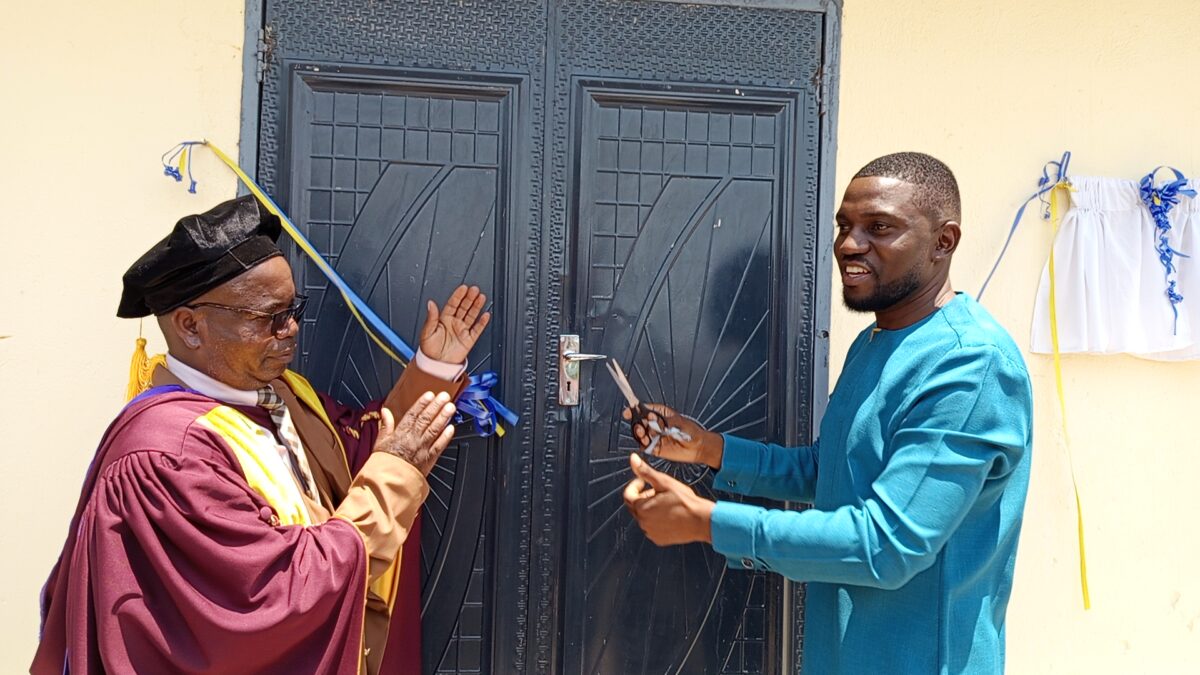
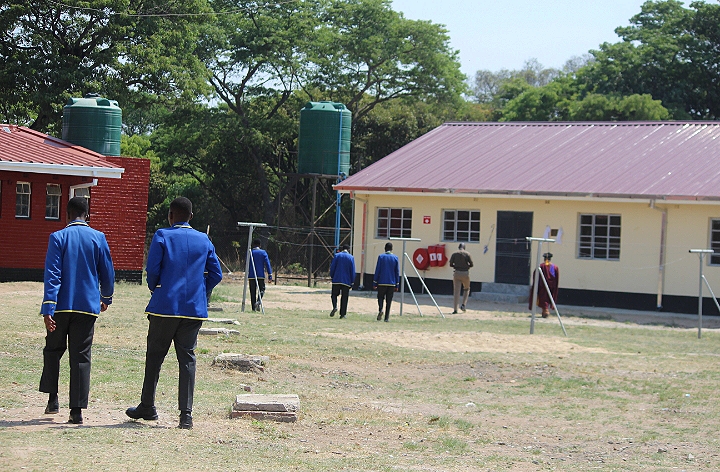
Nyatsime College has reopened its renovated boys’ boarding house, which is expected to accommodate about 186 students, as the institution seeks to strengthen its learning environment while sustaining strong academic performance and advancing its infrastructure development programme.
📰 For this and more exclusive stories, read our weekly digital print edition.
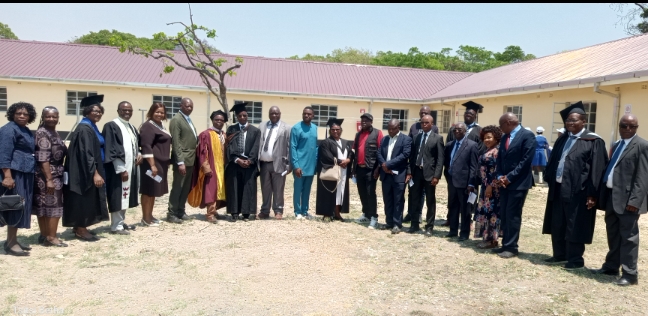
Read E-PaperThe official reopening took place during the college’s prize-giving day, where parents and other stakeholders gathered celebrate the learners’ achievements and assess the institution’s progress.
The boarding facility was reconstructed and upgraded after a fire on September 17, 2025, destroyed its roof and damaged the walls, leaving the college with the task of restoring an important component of its boarding infrastructure.
The restoration was undertaken through a collaborative effort involving the college administration, the school board, the School Development Committee (SDC) and parents.
SDC chairperson Ms P. Manyara said the reopening represented an important milestone for the school community after a difficult period.
“Today, as we witness the opening of the renovated dormitory, we are reminded that challenges may arise, but through determination, cooperation and faith, we can overcome them,” she said.
Manyara acknowledged the school board, the principal, the administration, parents and other contributors whose combined efforts made the restoration possible.
She said the completion of the project 8s going to allow the college to redirect attention on other outstanding infrastructure priorities.
Among the planned developments are the construction of a boarding master’s house to strengthen the management and supervision of boarding facilities and the completion of a multipurpose hall that could serve educational and community purposes.
“As the School Development Committee, we remain committed to working collaboratively with the school board, the administration and parents in support of the college’s development agenda,” Manyara said.
She added that a school’s success should not be judged solely by examination results, but also by the values it instils, the skills it imparts and the opportunities it creates for future generations.
Principal Shepherd Masaraure said the college recorded an Ordinary Level pass rate of approximately 99 percent in 2025, while its Advanced Level candidates achieved a 100 percent pass rate for the third consecutive year.
The institution is targeting further improvement at Ordinary Level while maintaining its Advanced Level performance.
“For Advanced Level, our target is to retain the 100 percent pass rate. At Ordinary Level, we want to move from approximately 99 percent to a full 100 percent pass rate,” Masaraure said.
He expressed confidence in the current candidates and credited the institution’s performance to a culture of discipline, staff commitment and continuous improvement.
Masaraure also highlighted the role of coaching in strengthening staff performance, saying the college had worked with Degas Built Coaching Group to train heads of departments and other members of staff.
The training, he said, had helped establish a culture in which departmental leaders guide and develop their teams rather than relying solely on conventional supervisory relationships.
The principal also announced that the college had received recognition through some awards presented in 2025 and 2026.
According to Masaraure, the college and its principal were recognised at the 2025 Honorable Cabinet Summit Awards, while Nyatsime received further recognition at the 2026 Africa World of Fame Masters of Masters Awards for its work in holistic secondary education, academic achievement, heritage preservation and leadership development.
Despite the completion of the dormitory, the college still faces infrastructure demands as it works to improve the learning and boarding environment.
The construction of a boarding master’s house and completion of the multipurpose hall remain among the projects requiring attention and resource mobilisation.
Board chairman J.T. Muguwe and other school stakeholders also participated in the proceedings, which included a presentation on the college’s garment factory and a showcase of garments produced by the institution.
The school choir and traditional dance group provided entertainment during the event, reflecting the college’s emphasis on cultural expression alongside academic achievement.
The reopening of the boys’ boarding house marks progress in restoring the institution’s facilities, while the college’s continued academic and infrastructure ambitions will depend on sustained cooperation among administrators, staff, parents and other stakeholders.