
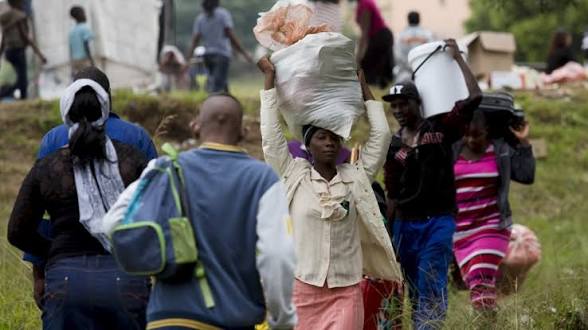
Johannesburg – More than 26,000 Zimbabwean nationals have returned home in recent weeks as uncertainty and anxiety mount ahead of South Africa’s 30 June deadline on immigration-related matters.
Figures released up to 22 June 2026 show that 26,000 undocumented Zimbabweans left South Africa during a three-week period. The majority, 24,211 people, returned voluntarily, while 1,755 received assistance through Zimbabwe’s Beitbridge Reception Centre.
According to Social Welfare Superintendent Nobuhle Ncube, many of the returnees originate from Harare and Mashonaland West. She said the influx has placed considerable strain on resources at the reception facility.
Although the International Organisation for Migration (IOM) is helping with transport and food vouchers, the centre continues to face challenges in providing adequate meals, particularly for the 767 children among the returnees.
Matabeleland South Minister of State for Provincial Affairs and Devolution, Albert Nguluvhe, encouraged communities to receive returning citizens with compassion.
He said those coming back had endured difficult circumstances and deserved support as they reintegrate into their communities.
Families returning from South Africa have also expressed concern over securing school placements and meeting tuition costs for their children. Authorities say discussions with the Ministry of Primary and Secondary Education are underway to address the issue.
Regional immigration officer Joshua Chibundu reaffirmed that Zimbabwe remains open to all its citizens returning home, noting that while verification procedures may sometimes be necessary, no Zimbabwean is denied entry.
Meanwhile, the Ministry of Local Government and Public Works has called for broader cooperation from government institutions, civil society and private stakeholders to strengthen support systems for repatriated citizens.
One returnee, who requested anonymity, said worsening conditions and safety concerns influenced the family’s decision to leave South Africa after more than a decade there.
The individual explained that despite surviving through casual and handyman work for 13 years, the situation had become increasingly difficult, particularly in Cape Town, prompting the family to prioritise the safety of their children by returning home.
The movement of thousands of Zimbabweans coincides with heightened tensions in South Africa, where authorities remain on alert ahead of demonstrations planned by groups campaigning against illegal immigration.
Government officials have appealed for restraint and warned against acts of vigilantism, emphasising that immigration matters must be handled through lawful processes.
Acting Police Minister Firoz Cachalia has stated that authorities will not tolerate xenophobic attacks, intimidation or any attempts by individuals to enforce the law outside official channels.
Despite these assurances, many migrant communities continue to report feelings of insecurity amid concerns over harassment and previous incidents of xenophobic violence.
International bodies, including United Nations and African Commission on Human and Peoples’ Rights, have raised concerns about allegations of discrimination and violence directed at foreign nationals.
For many Zimbabweans living in South Africa, uncertainty remains as developments surrounding immigration continue to unfold.