
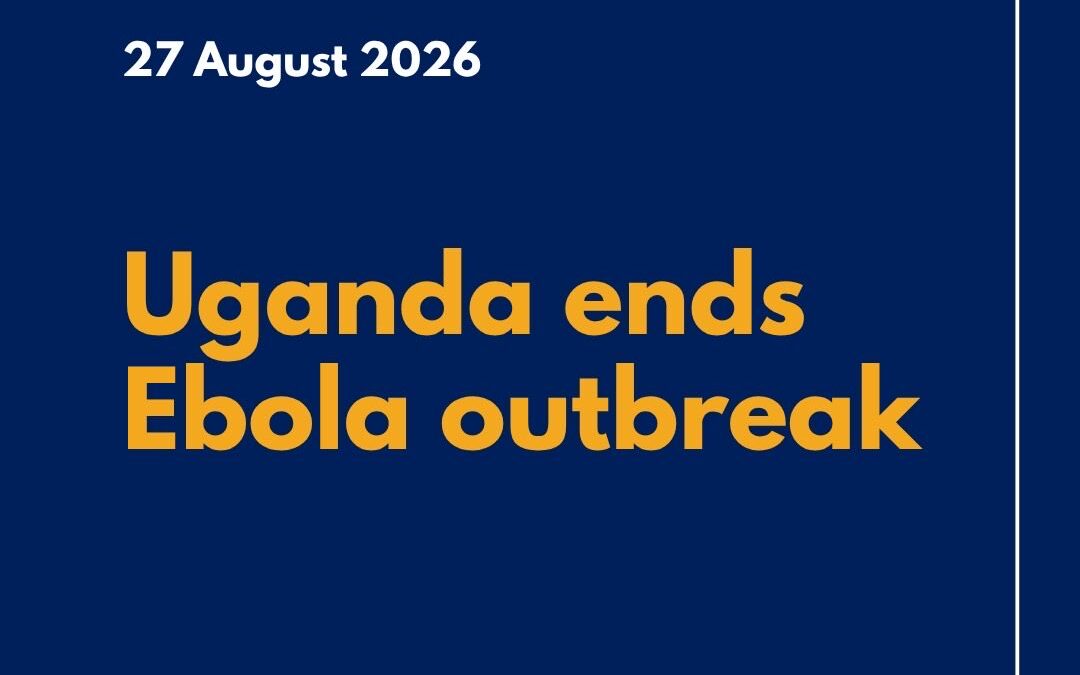
Uganda has declared the end of its Ebola outbreak after completing 42 consecutive days without recording a new confirmed case, marking a major public health victory as transmission continues in neighbouring Democratic Republic of the Congo.
The World Health Organisation and Africa Centres for Disease Control and Prevention confirmed the development on Thursday following the completion of the internationally required monitoring period.
Uganda declared the outbreak of Ebola disease caused by the Bundibugyo virus on May 15, 2026.
The country recorded 20 confirmed cases, including 15 imported from the DRC and five locally acquired among contacts and healthcare workers linked to the imported infections.
Eighteen patients recovered, while two died. More than 800 contacts were identified and monitored during the response.
Uganda’s last Ebola patient, who had contracted the virus in the DRC, was discharged from care on July 16 after recovering.
The country subsequently entered a 42-day enhanced surveillance period, equivalent to twice the virus’s maximum 21-day incubation period.
Completing the period without a new infection provides health authorities with reasonable assurance that no transmission chain linked to the last case was missed.
WHO Director-General Dr Tedros Adhanom Ghebreyesus congratulated Uganda’s government, healthcare workers and partners involved in controlling the outbreak.
“Uganda has demonstrated that with decisive action, Ebola outbreaks can be brought under control quickly,” Dr Tedros said.
“With a focus on preparedness, increased surveillance to find potential cases in health facilities and communities, and careful management of points of entry, countries can keep people and goods moving while ensuring people stay safe, or receive care if they are sick.”
Uganda interrupted local transmission through early case detection, laboratory confirmation, contact tracing, isolation, clinical care, infection prevention and community engagement.
Authorities also strengthened surveillance at health facilities and border entry points to identify possible imported cases while allowing cross-border movement and trade to continue.
Africa CDC Director-General Dr Jean Kaseya said Uganda’s success demonstrated the importance of decisive leadership, public trust and responsive health systems.
“Uganda has shown that Ebola can be stopped when leadership acts decisively, communities are trusted and public health systems reach people quickly,” Dr Kaseya said.
“This is a victory for Uganda and an important lesson for our continent.”
Regional risk remains
Despite Uganda ending its outbreak, health authorities warned that the country and the wider region remain exposed because Ebola transmission is continuing in the DRC.
Close social and economic links, cross-border trade and frequent population movements create the possibility of infected people travelling between countries.
WHO said the milestone should therefore not lead to reduced surveillance or preparedness.
The Ugandan government has continued screening travellers, investigating alerts and monitoring health facilities and communities for suspected infections.
Uganda’s Health Ministry reported that thousands of people were tested and screened during the response, while hundreds of contacts completed the required follow-up period.
The development also carries lessons for Zimbabwe and other African countries about maintaining functional disease-surveillance systems, trained healthcare workers and effective monitoring at airports and land borders.
There has been no confirmed Ebola case linked to the Ugandan outbreak reported in Zimbabwe.
However, international travel and regional trade mean health authorities must remain capable of rapidly detecting and isolating suspected cases.
WHO Regional Director for Africa Dr Mohamed Janabi said ending the outbreak was an important achievement, but long-term protection would depend on sustained investment in preparedness.
“Ending an Ebola outbreak is an important milestone, but the lasting achievement is a stronger ability to protect people from future health threats,” he said.
“Uganda has shown what sustained investment in preparedness can deliver.”
The WHO and Africa CDC said they would continue working with Uganda and neighbouring countries to preserve the gains while supporting efforts to stop transmission in the DRC.
Sources: World Health Organisation and Uganda Ministry of Health.