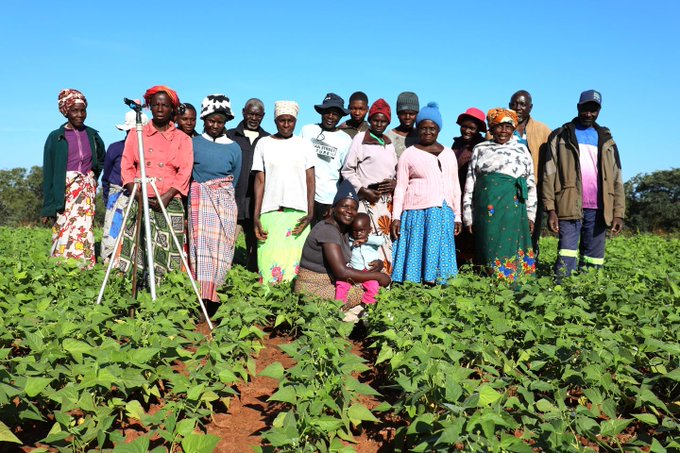
- Solar-powered irrigation has brought 27 hectares back into production after three decades of delays, raising hopes among 203 Chipinge farmers.
CHIPINGE — After nearly three decades of unreliable production, water is finally flowing through Farai Irrigation Scheme, giving more than 200 farming families hope of escaping their dependence on increasingly unpredictable rainfall.
📰 For this and more exclusive stories, read our weekly digital print edition.
Read E-PaperThe 27-hectare scheme in Ward 29 of Chipinge District was established in 1995 to support year-round farming. However, incomplete infrastructure and governance problems prevented it from reaching its intended capacity.
Its revival has been supported through the Green Climate Fund-financed Climate Resilient Livelihoods Project, implemented by the Government of Zimbabwe with assistance from the United Nations Development Programme.
The work included installing a solar-powered pumping system, improving water-abstraction facilities and developing a modern irrigation network. Farmers are also receiving practical instruction in climate-smart agriculture.
The investment has enabled 203 beneficiaries, including 112 women, to begin cultivating crops under more reliable irrigation.
Farmers have planted 18 hectares of sugar beans, five hectares of wheat and two hectares of maize during the first production season. The crops cover 25 of the scheme’s 27 hectares.
While the healthy crop stands have generated optimism, the scheme has not yet produced its first harvest. Its economic impact, crop yields and ability to operate sustainably therefore remain to be tested.
Long-term success will depend on effective management, regular maintenance of the solar and irrigation equipment, access to agricultural inputs and reliable markets for the produce. These concerns are particularly important because governance and incomplete infrastructure contributed to the scheme’s earlier difficulties.
Farmers learn in the field
Agricultural Extension Officer Lorraine Chimbadzwa is using the Farmer Field School approach to help beneficiaries improve production.
Instead of relying entirely on classroom instruction, farmers meet in demonstration plots, observe crop development and compare different agricultural practices.
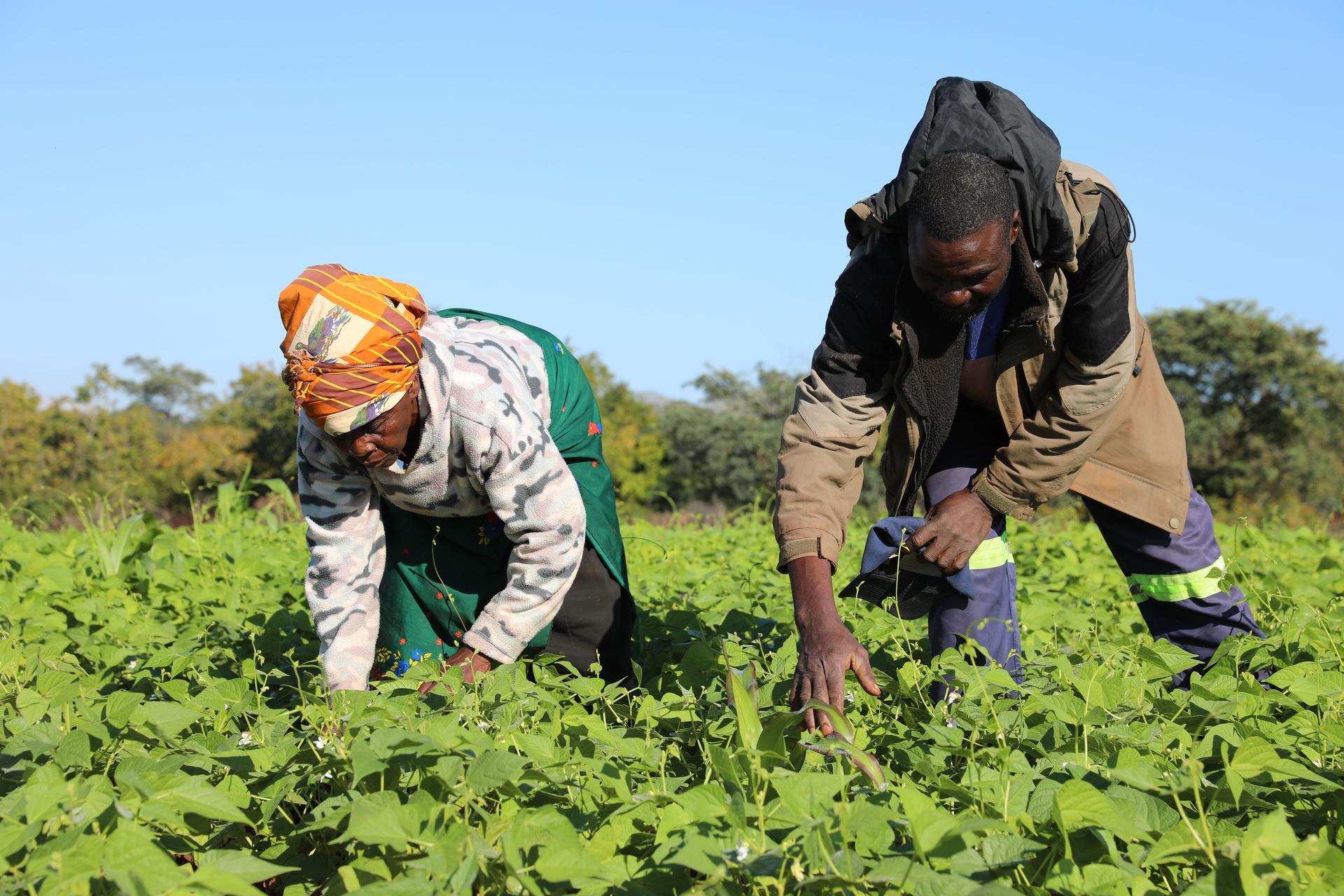
One plot contains fertilised and unfertilised sections, allowing farmers to see the difference in crop performance and make decisions based on results from their own fields.
“The Farmer Field School approach is changing the way farmers think,” Chimbadzwa said. “When they compare crops side by side, they gain confidence in adopting improved farming practices because the evidence is right in front of them.”
The approach is intended to strengthen farmers’ ability to identify problems, test possible solutions and share knowledge. Such skills could become important after outside technical support ends.
A 30-year wait
For 51-year-old Saliwe Khumbula, a mother of five, the revival closes a long period of disappointment.
She remembers the optimism that accompanied the scheme’s establishment in 1995. Her eldest son was five years old at the time and is now 36.
“We believed our lives were about to change,” Khumbula said.
“But years passed and nothing happened. Every farming season we depended on rainfall, and whenever the rains failed, our harvests suffered.”
She said access to irrigation had made it possible for farmers to plan production with greater confidence.
“We are no longer farming just to survive; we are farming to improve our lives,” she said.
Khumbula hopes the scheme will improve household food supplies and generate income through the sale of surplus crops. Those expectations will depend on the size and quality of the first harvest, as well as the prices farmers obtain.
Young farmers see opportunity
Memory Maronga, 22, is among the younger beneficiaries who believe reliable irrigation can make agriculture a viable business.
“Many young people think farming is too risky because it depends on rainfall,” she said.
“Now we have reliable irrigation, and we are learning modern farming techniques.”
Maronga said practical training had helped farmers understand why particular methods worked instead of simply following instructions.
She wants to expand her production and encourage more young women to consider agriculture as a source of income.
“If we have water, knowledge and commitment, we can build successful businesses through farming,” she said.
Women constitute more than half of Farai’s beneficiaries and are participating in crop production, training and the scheme’s management.
Their involvement could strengthen household food security and incomes, but continued access to land, inputs, finance and decision-making structures will be necessary if those gains are to last.
First harvest will provide the test
Farai’s revival comes as farming communities face growing pressure from irregular rainfall and prolonged dry periods. Irrigation can reduce farmers’ exposure to those conditions, although it does not remove other risks such as crop disease, input costs, equipment failure and unstable produce prices.
Solar-powered pumping may lower dependence on grid electricity and fuel, but the system will still require technical skills, spare parts and a sustainable plan for maintenance.
The first harvest will therefore be an important measure of whether the restored infrastructure and new farming practices can produce meaningful improvements in food security and income.
For now, the green fields represent progress after years of delay, but also the beginning of a longer test.
Farai Irrigation Scheme will only fulfil its original promise if the community can maintain the infrastructure, manage the project transparently and turn successful harvests into dependable livelihoods.