Current Affairs
ZIMRA Introduces Online System for Exporters’ Trade Certification
The Zimbabwe Revenue Authority (ZIMRA) has taken a bold step towards modernising trade processes by launching a new digital platform for the issuance of COMESA Certificates of Origin.
This development is expected to simplify trade procedures and reduce processing times for exporters.
The newly adopted electronic system hosted on the Zimbabwe Electronic Single Window (ZeSW) platform—completely replaces the traditional manual process. This innovation places Zimbabwe among the leaders in implementing COMESA’s Digital Free Trade Area vision, promoting seamless, paperless trade across the region.
COMESA Certificates of Origin are vital documents that allow Zimbabwean exporters to benefit from preferential tariff treatment when trading within the 21-member Common Market for Eastern and Southern Africa (COMESA) bloc.
With the new platform, traders will now enjoy instant document processing, faster approval times, and enhanced security features. The system also enables customs officers to verify certificates in real time, helping to curb document fraud and ensure the integrity of trade transactions.
ZIMRA has set August 1, 2025, as the deadline for full transition to the digital system. From that date forward, physical certificates will no longer be accepted for regional trade, making digital compliance mandatory.
“This marks a significant milestone in our journey to simplify and secure trade processes,” said a ZIMRA official. “We encourage all exporters, agents, and trade practitioners to register on the ZeSW platform as soon as possible to avoid disruptions.”
To fully benefit from the new system, businesses involved in exporting must register on ZeSW, train staff in digital certificate procedures, and update their internal processes to comply with the new requirements.
This move is part of a broader national effort to boost Zimbabwe’s trade efficiency through digital transformation—cutting down paperwork, enhancing transparency, and speeding up trade-related approvals from days to just minutes.
Current Affairs
Local Government cracks down on ‘Fundraising’ workshops for Councils
Itai Mazire
The Ministry of Local Government and Public Works has issued a stern directive to local authorities, urging them to cease participation in non-essential workshops and conferences perceived as mere fundraising ventures by external entities.
The move, outlined in a memorandum signed by Permanent Secretary Dr. John Basera on 14 May 2026, shows a critical shift towards prioritizing efficient service delivery amidst ongoing financial challenges.
The memorandum highlights a growing concern within the ministry regarding the proliferation of such events.
“It has been noted with concern that some institutions and entities are organising workshops and conferences targeting local authorities primarily for their fundraising purposes,” said Dr Basera.
This directive comes as local authorities grapple with
depressed revenue collection.
The Ministry emphasizes the need to re-direct resources towards core functions.
“Considering the current challenges facing local authorities, particularly depressed revenue collection and the need to prioritize efficient service delivery, it is imperative that available resources be directed towards operational and service delivery-related activities,” he said.
Local authorities are now advised to significantly reduce their involvement in events that do not directly contribute to improving public services.
The memorandum explicitly warns against arrangements that offer little to no tangible benefit.
“Accordingly, local authorities should not support or tolerate arrangements by third-party entities requiring the purchase of tables, payment of conference fees, accommodation costs and related expenditures which offer limited or no tangible value to service delivery outcomes.”
This new position is effective immediately and will remain in force until further notice, signaling a resolute effort by the Ministry to streamline operations and ensure accountability in resource allocation within local governance.
Current Affairs
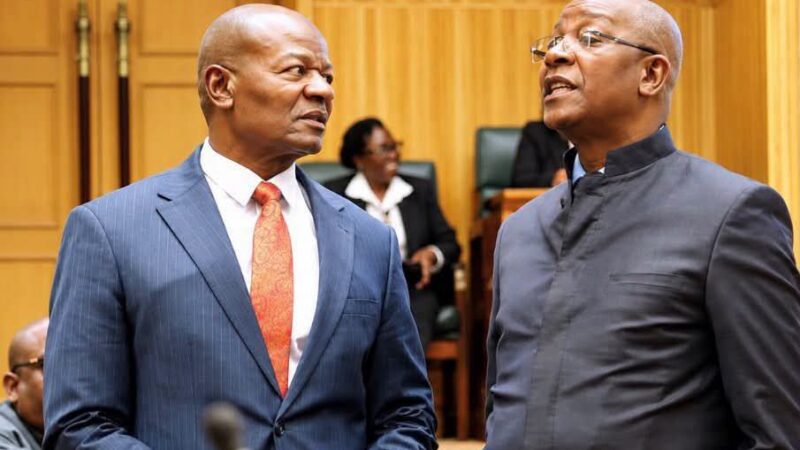
Malaba Urges Proper Governance in Farewell Address
Retired Chief Justice Luke Malaba called for governance that serves all citizens and praised inter-branch cooperation as he delivered the vote of thanks at his retirement ceremony.
Speaking at a special sitting of the Constitutional Court, Malaba said the rule of law requires leaders to govern properly and create conditions for others to thrive.
Malaba said he leaves a vision of a Zimbabwe that all citizens can be proud to belong to, built on revolution, reform and adding value to people’s lives. He said he was proud to have lived and worked in government until his retirement
“Let us have a vision of a Zimbabwe where we can all be proud to belong. The vision of a revolution, the vision of reform, the vision of adding value to the lives of the people,” Malaba said.
He noted there is no rulebook defining what a Chief Justice should do, saying it falls to the person in office to create and innovate. Malaba said creation is only possible when those in power allow it and respect the judiciary’s role.
“There are no rules, there is no definition of what a Chief Justice should do. It is that person who is in an office of a Chief Justice who must create,” he said.
Malaba credited the executive and legislative arms for allowing the judiciary to operate independently. He said the progress was not his achievement alone but the result of many in government.
“The three arms of government have worked marvelously allowing the judiciary to pursue independently what is best for the country. It is a journey by many people in government,” he said.
Current Affairs
Bulawayo Resident Dies from Acute Gastro-enteritis Amidst Contaminated Water Concerns
Bulawayo, Zimbabwe – A tragic incident in Bulawayo has highlighted critical public health concerns, with a resident succumbing to acute gastro-enteritis, commonly known as stomach flu. The death is reportedly linked to the consumption of contaminated borehole water in Pumula South, following disruptions to the municipal reticulated water supply.
The unfortunate fatality was documented in the latest health surveillance report issued by the Bulawayo City Council (BCC). Investigations detailed in the report indicate that the deceased did not seek timely medical intervention, leading to severe diarrhea and dehydration that ultimately proved fatal. Post-mortem examinations confirmed that the patient died from hypovolemic shock, a direct consequence of acute gastro-enteritis.
Further compounding the household’s distress, another individual within the same residence subsequently fell ill. Fortunately, this person recovered after receiving treatment at Mpilo Central Hospital, underscoring the severity of the water contamination.
Laboratory tests conducted on water samples from the affected borehole in Pumula South revealed significant contamination, specifically identifying the presence of non-faecal coliforms. This finding points to a serious breach in water safety standards, posing a substantial risk to public health.
Council health officials noted challenges in their investigation, as family members reportedly declined stool sampling and contact tracing efforts. This non-cooperation can impede comprehensive epidemiological assessments and the implementation of effective public health interventions.
The broader context of Bulawayo’s water infrastructure raises further alarms. Recent council water quality checks indicated that a staggering 62% of water points tested across the city failed one or more safety criteria, including instances of faecal contamination. This widespread issue has impacted numerous public facilities, including schools and clinics, in areas such as Nkulumane, Emganwini, and Luveve.
Adding to the crisis, the council’s most recent environmental health report also brought attention to persistent sewer overflows in Emganwini and numerous complaints regarding foul-smelling water in various residential zones. The report explicitly warned that the city’s aging sewer systems and the increasing pressure on existing water networks are significantly elevating public health risks.
In March alone, Bulawayo recorded 247 cases of diarrhea, with one fatality, as detailed in the report. Residents in the western suburbs, particularly affected by the worsening water situation, voiced their concerns, stating that they often have no alternative but to rely on potentially unsafe borehole water sources.
In response to these alarming developments, council health officials have issued an urgent advisory. Residents are strongly urged to boil or disinfect any water obtained from unverified sources. Furthermore, they emphasize the critical importance of seeking immediate medical attention for symptoms such as diarrhea, vomiting, and dehydration to prevent further tragic outcomes.
-
Current Affairs6 months agoOperation restore order
-
Crime and Courts8 months agoMasasi High School Abuse Scandal Sparks Public Outcry
-
Crime and Courts8 months agoKuwadzana Man Jailed for Reckless Driving and Driving Without a Licence
-
Current Affairs10 months agoBreaking: ZIMSEC June 2025 Exam Results Now Available Online
-
Current Affairs9 months agoMunhumutapa Day: Zimbabwe’s Newest Public Holiday Set for Annual Observance
-
Current Affairs7 months agoBREAKING NEWS: ZANU PF Director General Ezekiel Zabanyana Fired
-
Business6 months agoTino Tungwarara Launches Prevail Mart, Becoming One of Zimbabwe’s Youngest Retail Entrepreneurs
-
Current Affairs9 months agoNo Racism in Our Cricket: Government