Connect with us

Current Affairs

Discovery Ambulance, Hoops 4 Hope Lead Drug Fight

Published

on

Discovery Ambulance, Hoops 4 Hope Lead Drug Fight

By Abel Karowangoro

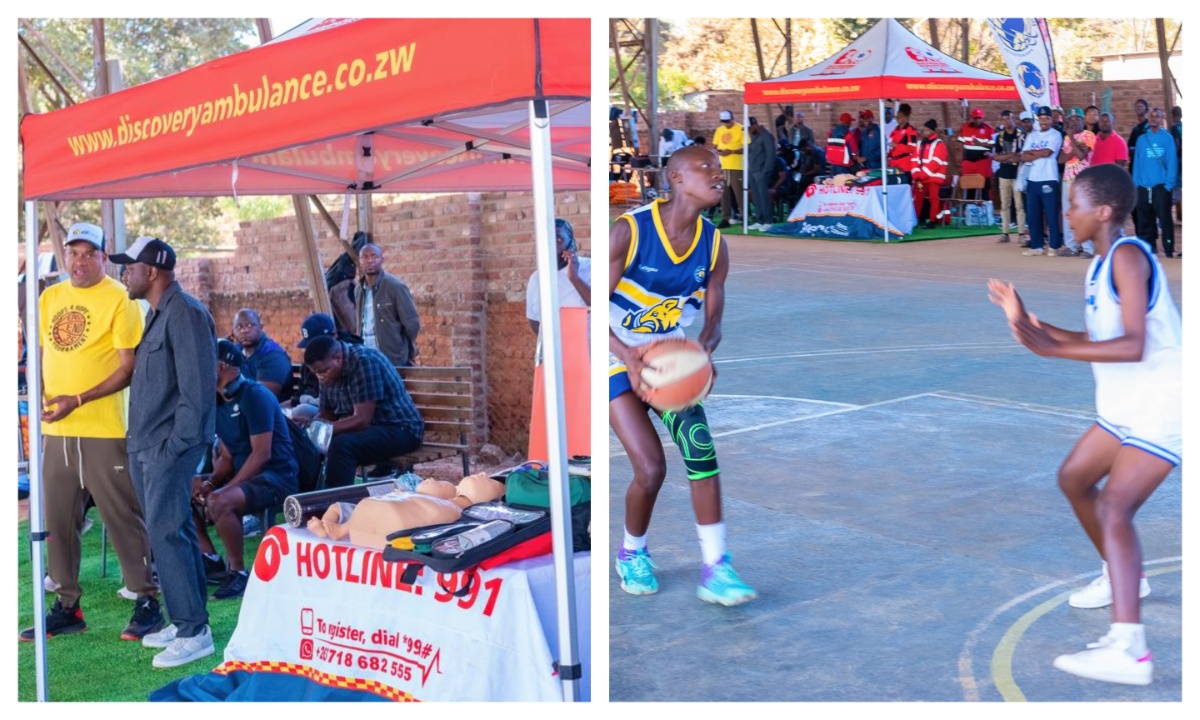
Discovery Ambulance Services (DAS), in partnership with Hoops 4 Hope Zimbabwe, will this Saturday, July 26, host the Communities Basketball Festival (CB-Fest) at the Dzivarasekwa Basketball Court. The event will run from 9:30 AM until late and is free and open to the public.


Held under the theme “Every Life Matters. Every Second Counts,” CB-Fest aims to promote healthy lifestyles, community resilience, and emergency preparedness while raising awareness about the dangers of drug and substance abuse, particularly among youth in high-density areas.


 Basketball, Life Skills, and Health Education Combine for Community Impact

 Basketball, Life Skills, and Health Education Combine for Community Impact

The centerpiece of the festival is a community basketball tournament featuring local teams, a three-point shooting contest and a slam dunk competition. Through the power of sport, organisers hope to attract and engage young people while delivering critical messages around DASA prevention.

“We are not just providing emergency services, we are investing in prevention,” said David Munowenyu, CEO of Discovery Ambulance Services.

“CB-Fest is about empowering our youth through sports, health education, and skills that can save lives.”

Hoops 4 Hope Zimbabwe, a long-time advocate of youth development through sport, is a key partner in the event.


The organisation runs community basketball programs across Zimbabwe, combining sport with a life skills curriculum.


“As Hoops 4 Hope, we’re thrilled to partner with Discovery Ambulance Services for our upcoming Communities Basketball Festival,” said Faith Sekete, Marketing Manager for Hoops 4 Hope Zimbabwe.


“Together, we’re promoting a healthier lifestyle and spreading a powerful message: ‘Let’s Fight Drug and Substance Abuse.’


This partnership embodies our shared commitment to community well-being and sets a great example for young people to make positive choices.”


First Aid Training and Health Education on the Agenda
 Basketball, Life Skills, and Health Education Combine for Community Impact

Basketball, Life Skills, and Health Education Combine for Community Impact

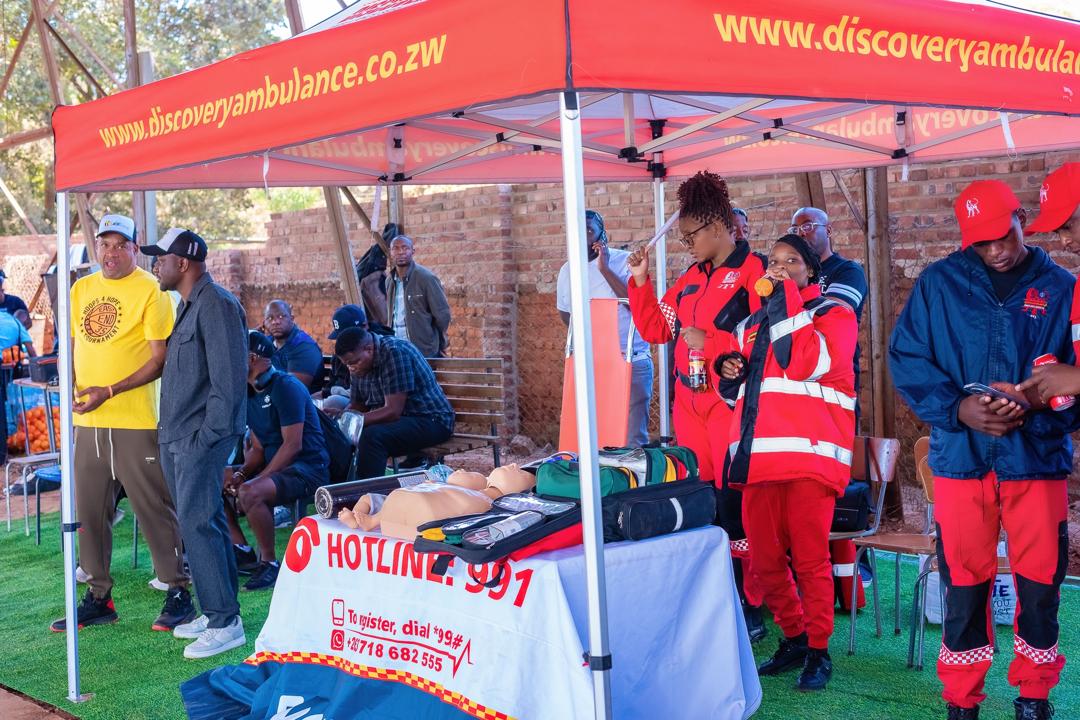
In addition to basketball, CB-Fest will feature free first aid training conducted by certified DAS professionals. Attendees of all ages will have the opportunity to learn:

  • Cardiopulmonary resuscitation (CPR)
  •  Emergency wound care
  • Fracture and trauma management
  • How to respond to drug overdoses and alcohol poisoning

“We want our communities to be health-conscious and emergency-ready. First aid is a skill everyone should have,” said Munowenyu.


Health booths, an ambulance open tour, substance abuse prevention talks, live music, refreshments, and giveaways will round out the day’s activities, making CB-Fest both educational and entertaining.


Building Resilience Through Community Engagement

CB-Fest is part of a broader community empowerment initiative designed to engage young people constructively and reduce exposure to harmful behaviours. For Hoops 4 Hope, it is a continuation of ongoing efforts to create safe, supportive spaces for youth.


“This festival is a follow-up to all the programs we’ve been implementing to keep young people meaningfully engaged,” added Sekete.

 “Every weekend, around 300 youth participate in our community basketball programs. Through these activities, they not only enjoy the game but also benefit from our life skills curriculum, which addresses critical issues like drug abuse, peer pressure, and tolerance.”


Since its inception, Hoops 4 Hope has reached over 100 primary and high schools and worked with nearly 30 associations across Zimbabwe, using basketball as a platform for personal and community development.


As Zimbabwe grapples with rising substance abuse—especially in urban and peri-urban areas like Dzivarasekwa—initiatives like CB-Fest are a timely response that blends sport, education, and healthcare into a powerful community-led strategy.


DAS and Hoops 4 Hope are encouraging schools, churches, sports clubs, and families to attend the event and take a stand against drug and substance abuse.

 “This isn’t just about basketball,” said Munowenyu.

“It’s about protecting our youth, strengthening our communities, and giving people the tools they need to save lives.”

Current Affairs

Churches Throw Weight Behind CAB3, Urge Parliament to Pass Bill

Published

on

The Zimbabwe Indigenous Interdenominational Council of Churches (ZIICC), representing a broad coalition of Apostolic, Pentecostal, Evangelical and indigenous Christian denominations, has thrown its full support behind the Constitution of Zimbabwe (Amendment No. 3) Bill, 2026, describing the proposed changes as necessary for national stability, development continuity and governance reform.

In a detailed submission presented to Parliament on Friday, the church body said the proposed constitutional amendments were lawful, democratic and aligned with Zimbabwe’s long-term development aspirations under Vision 2030.

The submission, signed by ZIICC patron Bishop Dr Nehemiah Mutendi and chairman Rev Dr Andrew Wutawunashe, argued that Parliament has the constitutional authority to amend the Constitution and should be allowed to deliberate on the Bill without interference from external groups.

“We call upon Parliament to pass this Bill in the national interest,” the churches said in the submission.

The churches said Zimbabwe’s elected representatives derive their legislative authority directly from the people and are constitutionally mandated to amend the Constitution where necessary.

“Parliament’s exercise of that mandate is not and cannot be a threat to democracy it is democracy itself,” the submission stated.

ZIICC said public consultations conducted by Parliament across the country had already fulfilled constitutional requirements for citizen participation, adding that no organisation or civic grouping had the power to veto Parliament’s legislative role.

The church organisation, which says it represents more than 8.7 million Zimbabweans, also backed proposals in the Bill extending presidential and parliamentary terms from five to seven years.

According to ZIICC, the longer governance cycle would provide government with enough time to implement major developmental programmes such as Vision 2030 and the National Development Strategy 1 (NDS1), both of which it said had previously been disrupted by political instability and the COVID-19 pandemic.

The churches argued that Zimbabwe required policy continuity and stability to fully implement national projects and recover from external shocks.

“Vision 2030 is not a slogan to our congregants. It is a promise that must be kept,” the submission read.

ZIICC further linked the proposed seven-year term to biblical teachings on restoration and completion, saying the concept resonated with Christian principles of renewal and national rebuilding.

The churches also defended proposals to reform Zimbabwe’s electoral system, including the introduction of a parliamentary model for electing the President.

They argued that direct presidential elections had historically heightened political tensions and divided communities.

“Our communities have paid the price of electoral toxicity with their peace, their livelihoods, and their social cohesion,” the churches said.

ZIICC said electing the President through Parliament would reduce political conflict while preserving democratic accountability through elected representatives.

The churches additionally welcomed proposals to establish a dedicated Zimbabwe Electoral Delimitation Commission, saying the move would improve transparency and professionalism in constituency boundary delimitation.

On traditional leadership reforms, the church body endorsed the removal of constitutional restrictions limiting the political participation of chiefs and traditional leaders.

ZIICC said traditional leaders were custodians of community governance and should enjoy the same constitutional freedoms as other citizens.

“A traditional leader is a Zimbabwean citizen,” the submission stated, adding that chiefs play a critical role in maintaining peace, resolving disputes and supporting development at grassroots level.

The churches also supported provisions repealing the National Peace and Reconciliation Commission’s constitutional status, noting that the commission’s original constitutional mandate had already expired in 2023.

ZIICC said reconciliation should not be confined to a single commission but should instead become a broader national responsibility involving churches, traditional leaders and communities.

The organisation pledged to intensify reconciliation and healing programmes across the country in partnership with government and community structures.

In a cover letter accompanying the submission, Rev Dr Wutawunashe said the churches believed the Bill advanced “the constitutional order of Zimbabwe in a manner consistent with the values and aspirations of our people.”

The submission comes as debate around Constitutional Amendment Bill No. 3 continues to intensify, with supporters arguing the reforms will enhance governance efficiency and policy continuity, while critics have raised concerns over some of the proposed changes.

Continue Reading

Current Affairs

Local Government cracks down on ‘Fundraising’ workshops for Councils

Published

on

Itai Mazire

The Ministry of Local Government and Public Works has issued a stern directive to local authorities, urging them to cease participation in non-essential workshops and conferences perceived as mere fundraising ventures by external entities.

The move, outlined in a memorandum signed by Permanent Secretary Dr. John Basera on 14 May 2026, shows a critical shift towards prioritizing efficient service delivery amidst ongoing financial challenges.

The memorandum highlights a growing concern within the ministry regarding the proliferation of such events.

“It has been noted with concern that some institutions and entities are organising workshops and conferences targeting local authorities primarily for their fundraising purposes,” said Dr Basera.

This directive comes as local authorities grapple with

depressed revenue collection.

The Ministry emphasizes the need to re-direct resources towards core functions.

“Considering the current challenges facing local authorities, particularly depressed revenue collection and the need to prioritize efficient service delivery, it is imperative that available resources be directed towards operational and service delivery-related activities,” he said.

Local authorities are now advised to significantly reduce their involvement in events that do not directly contribute to improving public services.

The memorandum explicitly warns against arrangements that offer little to no tangible benefit.

“Accordingly, local authorities should not support or tolerate arrangements by third-party entities requiring the purchase of tables, payment of conference fees, accommodation costs and related expenditures which offer limited or no tangible value to service delivery outcomes.”

This new position is effective immediately and will remain in force until further notice, signaling a resolute effort by the Ministry to streamline operations and ensure accountability in resource allocation within local governance.

Continue Reading

Current Affairs

Malaba Urges Proper Governance in Farewell Address

Published

on

Retired Chief Justice Luke Malaba called for governance that serves all citizens and praised inter-branch cooperation as he delivered the vote of thanks at his retirement ceremony.

Speaking at a special sitting of the Constitutional Court, Malaba said the rule of law requires leaders to govern properly and create conditions for others to thrive.

Malaba said he leaves a vision of a Zimbabwe that all citizens can be proud to belong to, built on revolution, reform and adding value to people’s lives. He said he was proud to have lived and worked in government until his retirement

“Let us have a vision of a Zimbabwe where we can all be proud to belong. The vision of a revolution, the vision of reform, the vision of adding value to the lives of the people,” Malaba said.

He noted there is no rulebook defining what a Chief Justice should do, saying it falls to the person in office to create and innovate. Malaba said creation is only possible when those in power allow it and respect the judiciary’s role.

“There are no rules, there is no definition of what a Chief Justice should do. It is that person who is in an office of a Chief Justice who must create,” he said.

Malaba credited the executive and legislative arms for allowing the judiciary to operate independently. He said the progress was not his achievement alone but the result of many in government.

“The three arms of government have worked marvelously allowing the judiciary to pursue independently what is best for the country. It is a journey by many people in government,” he said.

Continue Reading

Trending