📲 Join our WhatsApp Channel for Breaking News!
Follow on WhatsAppGwanda State University (GSU) has taken a major step towards strengthening Zimbabwe’s industrial and agricultural development following the commissioning of two innovation facilities designed to promote research, skills development and local production.
📰 For this and more exclusive stories, read our weekly digital print edition.
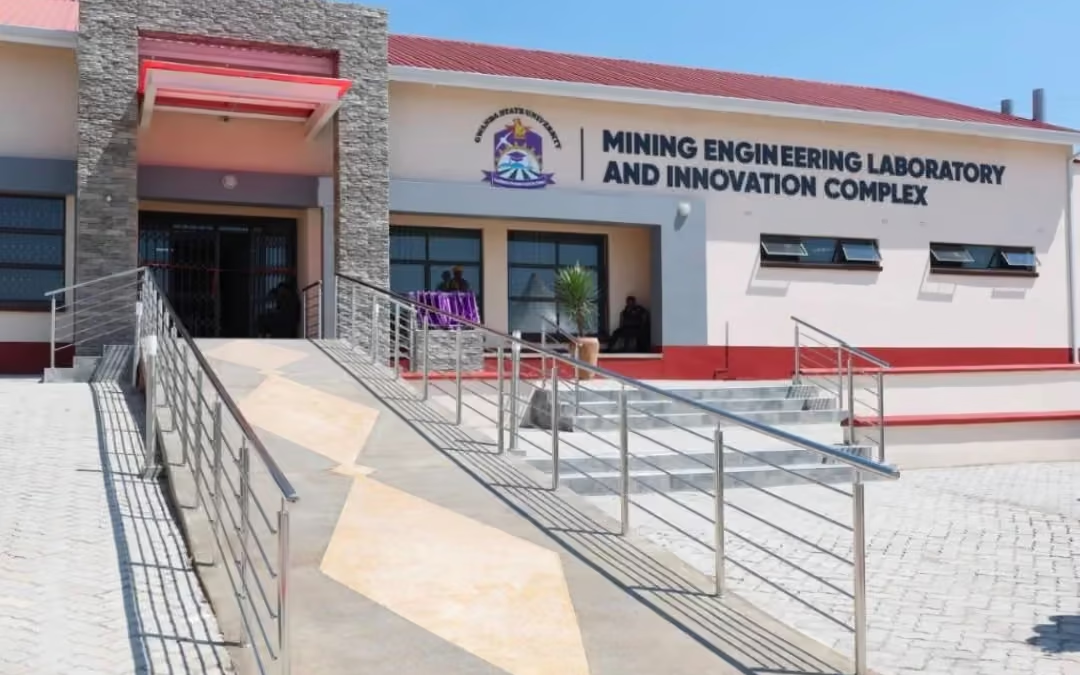
Read E-PaperPresident Emmerson Mnangagwa officially opened the Mining Engineering Laboratory and Innovation Complex and the Agro-Innovation Complex during the institution’s fifth graduation ceremony, which saw 104 students receiving their qualifications.
The two facilities are expected to create opportunities for practical learning, scientific research and technological development while strengthening the relationship between universities and industry.
Their establishment comes as Zimbabwe implements the National Development Strategy 2 (NDS2), covering the 2026-2030 period, which places emphasis on industrialisation, agricultural modernisation, productivity and the beneficiation of locally available resources.
The Mining Engineering Laboratory and Innovation Complex is expected to strengthen technical expertise and research in the country’s mining industry, particularly in mineral processing and value addition.
Matabeleland South, where GSU is located, has considerable mineral deposits, including gold, making the facility strategically important to efforts aimed at expanding mining knowledge and developing locally driven solutions.
Zimbabwe has been pushing to reduce its dependence on exporting unprocessed minerals by encouraging local processing and manufacturing. This requires investment in modern technology, specialised skills and research infrastructure.
Through practical training and scientific investigations, the university’s mining facility could help address operational challenges while supporting the development of technologies suited to local mining conditions.
Small-scale miners could also benefit from research-based knowledge and improved mining techniques, particularly through partnerships between the university, mining companies and mining communities.
Such cooperation could contribute to safer operations, improved efficiency and increased returns from the country’s mineral resources.
However, the facility’s effectiveness will depend on sustained research funding, access to modern equipment and partnerships that allow innovations to move from laboratories into commercial mining operations.
Agro-Innovation Centre Targets Agricultural Transformation
The second facility, the Agro-Innovation Complex, is expected to support Zimbabwe’s efforts to improve agricultural productivity, strengthen food security and modernise farming practices.
Agriculture remains an important pillar of the economy, sustaining millions of livelihoods while supplying raw materials to various manufacturing and processing industries.
The new complex is expected to provide a platform for research and innovation aimed at addressing challenges affecting farmers and agricultural production.
Potential areas of focus include developing improved crop varieties, strengthening resilience to climate change and introducing farming technologies that respond to Zimbabwe’s agricultural conditions.
The facility could also contribute to the growth of agro-processing by supporting research that improves the quality and availability of locally produced agricultural raw materials.
Improved production and processing systems would help reduce post-harvest losses, strengthen agricultural value chains and create opportunities for businesses involved in food processing and manufacturing.
Its long-term success, however, will depend on whether research findings can be converted into affordable and accessible solutions for farmers and agricultural enterprises.
Education 5.0 Links University Research To Industrialisation
The commissioning of the two innovation complexes also demonstrates the Government’s continued push to implement the Education 5.0 model, which places innovation and industrialisation alongside teaching, research and community service.
Under this approach, universities are expected to become active contributors to economic development by producing technologies, products and solutions that address challenges facing different sectors.
The graduation of 104 students alongside the opening of the facilities highlights the importance of combining academic qualifications with practical knowledge and technical expertise.
GSU graduates are expected to contribute to various sectors, including mining, agriculture, manufacturing and technology, while the innovation centres could provide opportunities for collaboration between researchers and businesses.
Through stronger university-industry partnerships, research institutions can help companies improve production methods, develop new products and commercialise locally generated ideas.
Achieving these objectives will require continued investment in equipment, research programmes, skilled personnel and opportunities for graduates to apply their knowledge in the workplace.
GSU Facilities Align With NDS2 And Vision 2030
The two complexes are also aligned with Zimbabwe’s wider economic transformation programme under NDS2, which seeks to accelerate industrial growth, increase productivity and promote value addition between 2026 and 2030.
In the mining sector, the focus is on expanding local mineral processing and developing industries capable of producing higher-value goods from the country’s natural resources.
In agriculture, priorities include improving output, strengthening food security and expanding agro-processing capacity.
The education sector is expected to support these ambitions by producing skilled graduates and research outputs that respond directly to the economy’s needs.
These objectives also feed into the country’s Vision 2030 ambition of achieving upper-middle-income economy status.
While the commissioning of the GSU facilities represents an investment in research and innovation infrastructure, their ultimate value will be determined by the practical results they deliver.
These include new technologies, improved mining and farming methods, stronger industry partnerships, employment creation and increased local production.
The broader task for Zimbabwe’s universities will be to ensure that research findings translate into practical economic benefits rather than remaining confined to academic institutions.
For Gwanda State University, the two innovation complexes provide an opportunity to strengthen the contribution of higher education to Zimbabwe’s mining, agricultural and industrial development.
Get instant news updates delivered straight to your WhatsApp.