📲 Join our WhatsApp Channel for Breaking News!
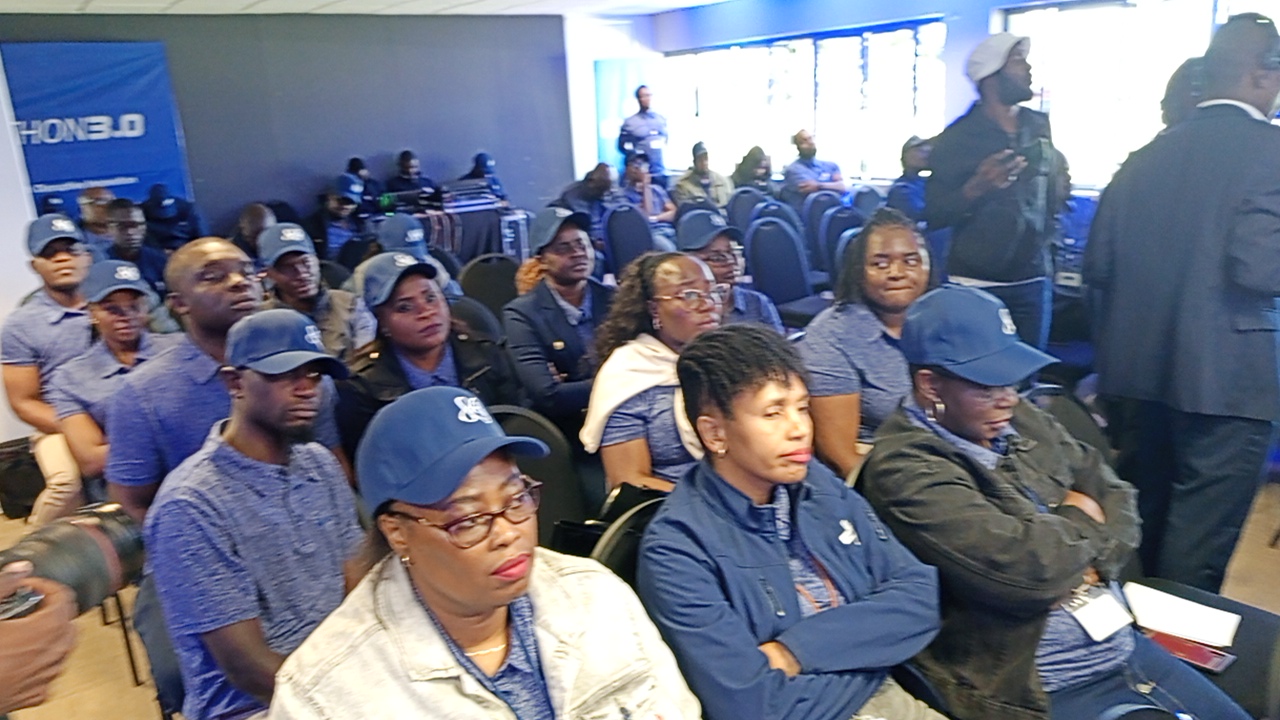
Follow on WhatsAppThe Ministry of Health and Child Care and Cimas Health Group have called for stronger collaboration to turn Zimbabwean healthcare innovations into practical, affordable and accessible solutions, as the third edition of the Cimas Healthathon attracted a recorded 372 submissions from across the country.
📰 For this and more exclusive stories, read our weekly digital print edition.
Read E-PaperSpeaking at the grand finale of the Cimas Healthathon 3.0, Dr Celestino Dhege, representing the Minister of Health and Child Care, said the healthcare innovation must ultimately be judged by the difference it makes to ordinary people, particularly communities that remain underserved.
“Innovation is not only about technology or software. It is about finding new and better ways of doing things,” Dr Dhege said.
He said that innovation could take the form of new healthcare financing models, smarter referral pathways, locally manufactured diagnostic tools or medicines, or community health workers reaching villages that conventional clinical services struggle to reach.
“The real measure of innovation lies with the outcomes we deliver to our people, to our population,” he said.
Dr Dhege challenged innovators to ensure their solutions improved access, reduced healthcare costs, help health workers to perform their duties more effectively and extended quality healthcare to people previously left behind.
He said Zimbabwe still faces significant access barriers, particularly in rural and underserved communities, and urged innovators to “design for the many, not the few”.
“Equity must be at the heart of every solution we develop,” he said, warning that sophisticated innovations that remained inaccessible to the majority of Zimbabweans could not be considered complete solutions.
Dr Dhege also called for greater private-sector participation in healthcare, saying that the government could not transform the health system on its own.
He urged the private sector to invest in healthcare innovation through capital, expertise, infrastructure, technology and capacity to test, refine and scale promising solutions.
The call extended to academia, healthcare professionals, medical aid societies, technology companies and development partners, with Dr Dhege stressing the need for a coordinated health system rather than institutions working in isolation.
He also called on doctors and medical aid societies to rebuild trust and resolve longstanding disputes over tariffs, co-payments and delayed settlements.
“Doctors and medical aid societies are not adversaries. You are partners serving the very same patient,” he said.
Dr Dhege further invited healthcare funders, providers, actuaries, technologists, academics and innovators to contribute to the proposed National Health Insurance for Zimbabwe, which he described as central to the country’s journey towards universal health coverage.
Against this policy backdrop, Cimas Health Group chief executive officer Mr Vuli Ndlovu said the dramatic growth in the Healthathon participation demonstrates Zimbabwe’s depth of talent and creativity.
Ndlovu said the initiative had grown from receiving only six submissions more than five years ago to nearly 400 entries this year.
“What excites me even more is what they represent. They represent young people who looked at a problem and decided not to walk away,” he said.
He said that the submissions represented innovators who were choosing to spend their evenings and weekends developing solutions rather than merely discussing Zimbabwe’s challenges.
Ndlovu said the geographic spread of the entries was equally significant, demonstrating that innovation was not confined to Harare, universities or established institutions.
“Innovation has got no address,” he said, “solutions can emerge from classrooms, hospitals, rural clinics, healthcare workers, software developers or ordinary people who have experienced a problem and decided to act.”
However, he cautioned against celebrating ideas without following them through to implementation.
“Ideas are important, but ideas alone do not change lives,” he said. “What changes lives is when an idea becomes the solution. When a solution becomes the product then the product reaches a patient.”
Ndlovu challenged this year’s finalists to continue refining their concepts beyond the competition.
“Do not fall in love with your solution. Fall in love with the problem,” he said, motivating the innovators to listen to patients, healthcare workers and communities and remain willing to adapt.
The depth of the competition was reflected in the range of solutions developed by the Top 10 finalists.
Among the most striking was Silica Guard, developed by Panashe Chandiwana and Takudzwa Mukaro, which ultimately won the competition.
The innovation targets healthcare challenges facing Zimbabwe’s artisanal miners through a mobile and artificial intelligence-assisted screening and referral platform.
The system is designed to enable trained village health workers to screen miners using mobile phones, classify health risks and generate appropriate advice. Where a miner is suspected of having a serious condition, the platform can facilitate referral to a health facility and track whether the patient reaches hospital.
The innovators also proposed creating a database of artisanal miners, a highly mobile population that can be difficult for conventional health systems to monitor.
Importantly, the team said the system was not intended to replace doctors, but to identify people who need medical attention and ensure they reach healthcare professionals at the right time.
Dr Dhege said he was particularly impressed by Silica Guard’s focus on developing a healthcare solution for artisanal miners and invited Chandiwana and Mukaro to present their innovation at the Ministry of Health and Child Care offices.
Another finalist, Grip-Co, tackled a different but equally pressing access challenge which is rehabilitation.
The team highlighted research indicating that 78 percent of patients in northern primary healthcare settings did not have access to rehabilitation beyond primary care, while shortages of physiotherapists and occupational therapists meant some patients could access rehabilitation only once or twice a month.
For patients required to travel, transportation costs could add another barrier.
Grip-Co proposed a lightweight wearable glove capable of capturing movement data, supported by an ESP32 embedded system, to make rehabilitation more measurable and support monitoring between clinical appointments.
The project illustrated the Healthathon’s emphasis on solutions designed around actual patient experiences rather than technology for its own sake.
The competition also produced innovations across other areas of healthcare, including screening, diagnostics, preventive and rural healthcare, rehabilitation, data protection, emergency response and chronic disease management.
The judges said that the projects were assessed on whether they addressed genuine healthcare problems, attempted to provide workable solutions, improved access, had potential to reduce healthcare costs and demonstrated originality.
They also emphasized collaboration, urging participants to view the Healthathon as the beginning of an innovation journey rather than its conclusion.
One example involved a proposal to use the WhatsApp platform to improve access to treatment for sexually transmitted infections, which raised challenges around prescription requirements and anonymity. Judges suggested that the concept could potentially be combined with another team’s work on redacting sensitive information to produce a stronger future solution.
The emphasis on collaboration mirrored Ndlovu’s broader message that healthcare challenges are too complex for one institution to solve alone.
He said government, private healthcare providers, medical aid societies, universities, healthcare professionals, technology companies and innovators ultimately converge around one objective which is helping people to live healthier and longer lives.
Ndlovu also challenged the sector to think beyond “patient experience”, arguing that illnesses affect families and communities as well as individuals.
“It’s not about patient experience, it’s a human experience,” he said.
The Healthathon culminated in Silica Guard taking first place and winning US$3,500, with the Runtime Terrors coming second and receiving US$2,000, while Blood Geo Alert Team finished third.
For Dr Dhege, however, the awards represented only one stage in a much larger national effort.
He urged participants who did not win to continue refining their ideas, testing them, finding partners and pursuing implementation.
“This is the beginning, not an end,” he said.
He called for the government, the private sector, academia, innovators and communities to work together towards a health system capable of serving the country aspires to build by 2030 and beyond.
Ndlovu echoed the message, saying the real test of the Healthathon would not be what happened on the stage, but what happened after it.
The challenge now is to ensure that Zimbabwe’s growing pool of health innovators has the partnerships, investment and institutional support required to transform promising ideas into solutions that can ultimately reach the people who need them most.
Get instant news updates delivered straight to your WhatsApp.