📲 Join our WhatsApp Channel for Breaking News!
Follow on WhatsAppThe Zimbabwean Government has slashed tourism levies, license fees, and permits by up to 50%, a decision the Tourism Business Council of Zimbabwe (TBCZ) says will ease the cost burden on operators and boost the competitiveness of the country as a travel destination.
📰 For this and more exclusive stories, read our weekly digital print edition.
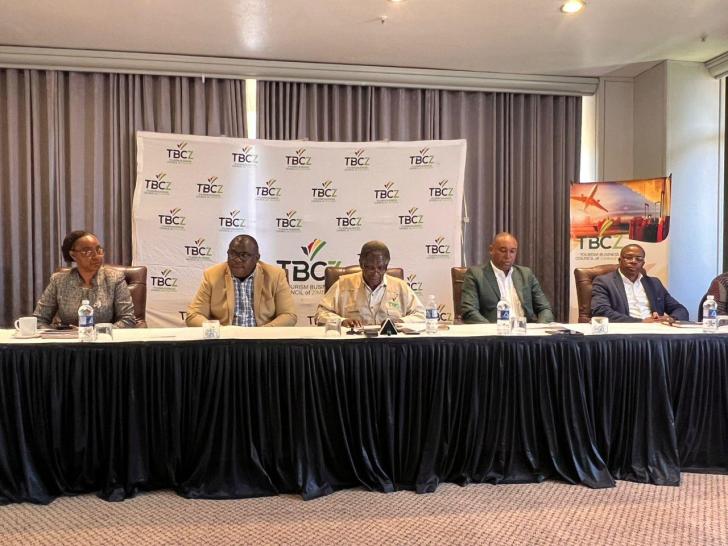
Read E-PaperThe resolution was passed by Cabinet on August 26, 2025, and announced at a media briefing in Harare on Monday by TBCZ Chief Executive Officer Paul Matamisa, who read a statement on behalf of Council President Clive Chinwada.
According to TBCZ, high regulatory costs have long undermined Zimbabwe’s appeal in regional and international markets, with operators warning that the pricing structure was unsustainable. The tourism sector currently contributes 12% to GDP, earns US$1.2 billion annually in foreign currency, and employs over 30,000 people.
Matamisa said the levy reductions are a welcome relief for an industry seeking to rebound and expand its contribution to the economy, but warned that more action is needed to unlock full growth potential.
“Operators have carried the burden of excessive costs for years. The reduction is significant, but further support is required to ensure sustainable growth,” he said.
TBCZ also called on the Government to prioritize investment in key tourism infrastructure, including road networks, power supply, and airports. The Council highlighted deteriorating conditions on major tourist routes—such as Bulawayo–Victoria Falls, Harare–Kariba, and the Eastern Highlands—as major deterrents to domestic and international travel.
Air connectivity also remains a challenge. The Council urged upgrades to airports in Masvingo and the Eastern Highlands, the revival of Kariba’s airport, and the recapitalization of Air Zimbabwe to improve national and regional access.
The tourism sector continues to face frequent power outages, with many operators forced to rely on diesel generators, further driving up operational costs.
The TBCZ welcomed progress on the review of the Tourism Bill and called for full stakeholder consultation before its enactment. It also backed the recently launched 2026–2030 National Tourism Policy, describing it as a progressive framework aligned with Vision 2030 goals of transforming Zimbabwe into an upper-middle-income economy.
To improve investment planning and policy formulation, the Council urged the establishment of a Tourism Satellite Account (TSA) to better measure the true economic contribution of the sector.
The TBCZ said it is optimistic about the sector’s growth outlook, provided reforms are fully implemented and backed by infrastructure upgrades and reliable energy supply.
The Council reiterated its commitment to working with Government and private stakeholders to build a US$5 billion tourism economy by 2030.
Hospitality Association of Zimbabwe (HAZ) Acting President, Mrs. Emma Kativhu, described the move as a timely and strategic intervention that could significantly enhance the country’s competitiveness in the region.
She noted that the tourism sector had been constrained by steep levies and permit costs, which discouraged both investment and visitor interest in Destination Zimbabwe.
“This marks a crucial turning point for the industry. The reduction of these costs removes a major barrier that has long worked against us in attracting regional and international tourists,” she said.
ALSO READ : Munhumutapa Day: Zimbabwe’s Newest Public Holiday Set for Annual Observance
Get instant news updates delivered straight to your WhatsApp.