
The deposit-taking microfinance bank licence forms the foundation for the Bard Santner Group’s longer-term banking ambitions. The group, which has offices in Harare, Johannesburg, South Africa, and New York, United States, is developing a diaspora-focused institution that it says will be the first of its kind in Zimbabwe and the region.
📰 For this and more exclusive stories, read our weekly digital print edition.
Read E-PaperSouth Africa boasts Africa’s most developed financial technology ecosystem, including digital banks and neobanks, accounting for 40% of the continent’s fintech market revenue.
Driven by high smartphone penetration and progressive regulatory support, digital fintech companies are transforming financial access for consumers and underserved small businesses.
Bard Santner Bank’s diaspora-focused model is unique, but it will draw lessons from established digital banking institutions such as GoTyme Bank and Bank Zero in South Africa.
The Reserve Bank of Zimbabwe (RBZ) has announced the registration and regulatory approval of Bard Santner Microfinance Bank as a deposit-taking microfinance institution.
In a public notice, the RBZ said:
“Notice is hereby given, in terms of the Microfinance Act (Chapter 24:30), as read with section 5 of the Microfinance (General) Regulations, 2025, (SI 85 of 2025), of the registration of Bard Santner Microfinance Bank Limited as a deposit-taking microfinance institution with effect from 1 October 2026.”
The licence authorises the bank to undertake 15 activities, including:
-
Receiving savings deposits.
-
Extending credit, including: a) Consumer and mortgage credit.
b) Factoring, with or without recourse.
c) Financing commercial transactions.
d) Recovering amounts extended through foreclosure or other means.
e) Forfaiting, which involves the medium-term discounting without recourse of bills, notes and other documents representing an exporter’s claims against the recipient of exported goods.
3. Providing bank guarantees.
4. Facilitating exports and imports, subject to the Exchange Control Act [Chapter 22:05].
5. Providing structured finance.
6. Buying and selling financial instruments, either for the bank’s own account or on behalf of customers, including underwriting money market instruments, bills of exchange and certificates of deposit.
7. Providing money transmission services.
8. Buying and selling foreign currencies, subject to the Exchange Control Act [Chapter 22:05].
9. Issuing and administering payment instruments, including credit cards, travellers’ cheques and bankers’ drafts.
10. Providing money-broking services.
11. Safekeeping and administering valuables, including securities.
12. Providing portfolio management and advisory services, as well as financial agency and consultancy services.
13. Offering financial leasing.
14. Entering into or taking cession of hire-purchase contracts in accordance with the Hire Purchase Act [Chapter 14:04].
15. Providing credit reference services.

The bank intends to offer these services, with a particular focus on diaspora remittances, an area in which Bard Santner already operates through its subsidiary, TX Money Transfer, a remittance service provider.
Bard Santner Bank will operate as a cross-border financial connector, built around real-time payments and a banking architecture designed to support diaspora transactions and small and medium-sized enterprise (SME) trade.
The potential market is substantial.
Zimbabwe’s diaspora remittances reached US$2.45 billion in 2025, representing a 14% increase from the previous year and accounting for approximately 16.1% of the country’s total foreign currency earnings.
Formal remittances reached US$1.62 billion in the first seven months of 2026, up 24% from the same period in 2025, according to the RBZ.
Remittances play a major role in Africa’s financial and development landscape.
African diaspora remittances were estimated at US$124.2 billion in 2025, surpassing foreign direct investment and official development assistance across the continent.
Africa’s collective gross domestic product is approximately US$3.4 trillion, with a population of about 1.5 billion people.
Trade across the continent is also supported by the African Continental Free Trade Area, an agreement involving 54 African Union member countries that aims to create the world’s largest free trade area by the number of participating countries.
Despite the substantial volumes involved, remittances have traditionally been viewed primarily as money for household consumption rather than as a source of capital for investment and economic development.
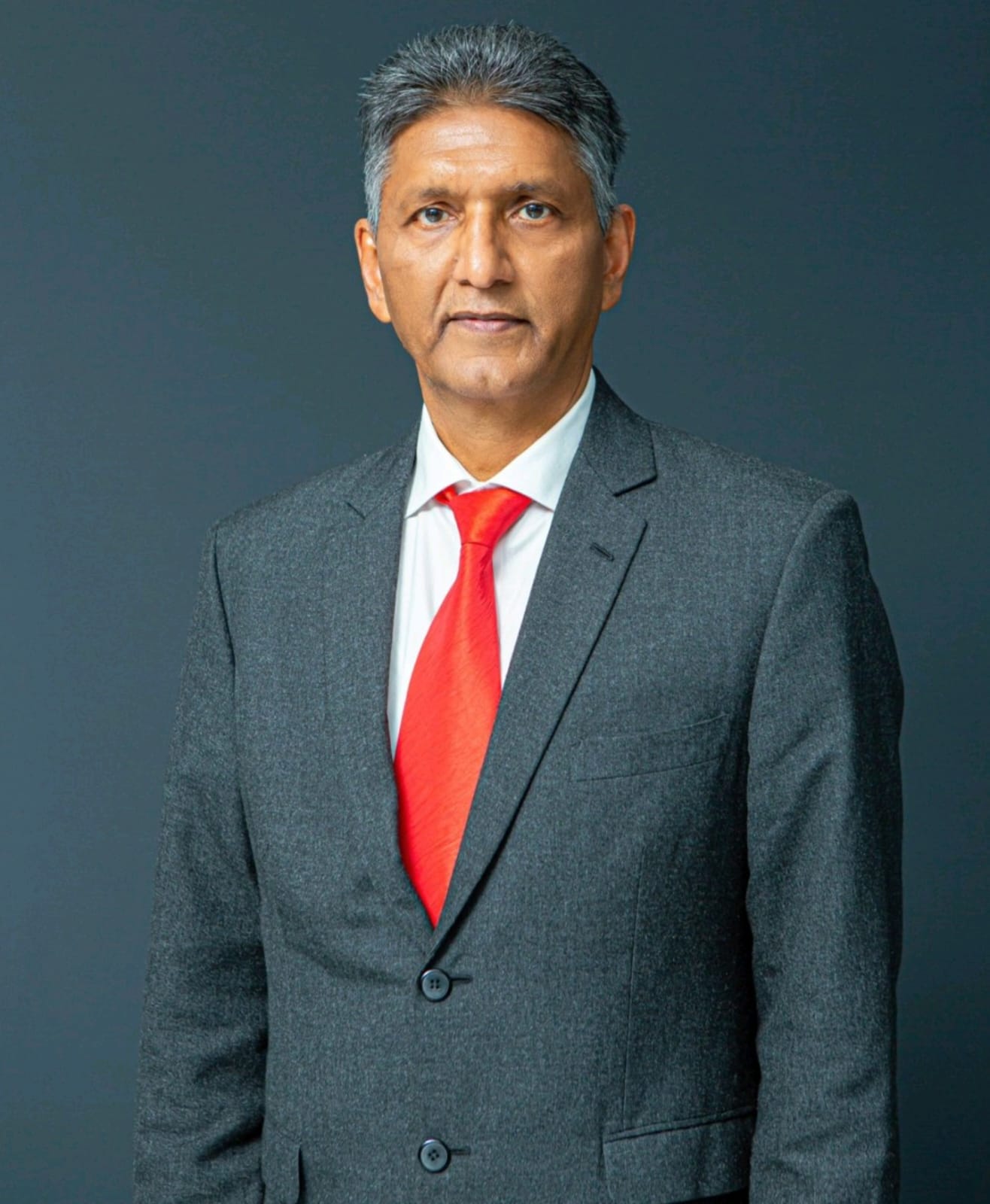
Bard Santner Bank managing director Ngonidzashe Chikowore said this approach needed to change.
“This is not the launch of just another start-up bank,” Chikowore said.
“Zimbabwe and Africa do not need another bank for the sake of a bank.
“What our people need, at home and abroad, is an institution, no matter how small to start with, that meets them where they live, earn, transact and aspire.
“We are a start-up institution, but we know that in the digital era, it is not always about scale.
“Yes, size matters, but so does agility.”
In the digital era, agile, technology-driven banks can compete with traditional financial institutions by prioritising customer experience over asset size.
While established banks benefit from large balance sheets and economies of scale, smaller digital-first banks and fintech companies use technology, faster service delivery and personalised offerings to attract customers.
The shift from a size-first to a service-first approach highlights how technology is reshaping competition in banking and finance.
Chikowore said Bard Santner Bank intends to grow and eventually secure a merchant or commercial banking licence, but its immediate focus is on agility and practical value rather than scale alone.
“Winning institutions view banking not as a series of physical locations, but as an invisible, embedded utility.
“They design services around the user’s life events rather than the bank’s own internal products, offering personalised services.
“Modern consumers expect financial interactions to feel like ordering a ride-share, a pizza or streaming a movie.
“This means 24/7 availability, instant loan or transaction approvals, where applicable, and predictive financial insights driven by AI.
“Digital-first banks operate with a fraction of the cost-to-income ratio seen in traditional banks. By replacing manual paperwork with automated APIs, they pass savings back to customers through higher interest yields and lower fees.”
Chikowore said Bard Santner Bank would provide digital and cross-border financial services within Zimbabwe’s established legal and regulatory framework, while serving customers across international markets.
“A nurse in Manchester, UK, or a doctor in Melbourne, Australia, or a restaurant worker in Johannesburg, South Africa, should be able to send money home or fund a business in Harare or Bulawayo as easily as he or she pays an electricity bill electronically, orders an Uber or pizza digitally.
“A businessman in Harare, Johannesburg, Nairobi or Cairo should be able to invest in Lagos without losing a week to settlement delays. That is the concept and standard we are bringing.”
The bank says its model differs from that of a traditional financial institution adding digital services to an existing banking structure. Instead, Bard Santner is building a digital-first institution supported by a deposit-taking microfinance bank licence, with the aim of providing Zimbabweans, Africans and other global customers with financial services suited to their cross-border lifestyles.
For years, African banking has relied on infrastructure designed for a less connected world, characterised by extensive branch networks, paperwork and a domestic focus. Such systems can struggle to serve people who earn in one currency, live in another country and build wealth across multiple markets.
Analysts have welcomed Bard Santner Bank’s entry into the regulated financial sector, saying its specialised focus on the diaspora could deepen financial markets, increase foreign currency inflows and provide customers abroad with a safe, compliant and innovative platform.
The bank’s planned products will target mobile-first customers and reflect the realities of cross-border financial activities. These include multi-currency accounts, the conversion of remittances into investments, diaspora-linked savings instruments and SME trade finance designed for African markets.
As a deposit-taking microfinance bank, Bard Santner Bank will operate within the regulated deposit-taking framework, subject to capital adequacy standards, governance requirements and ongoing supervisory oversight.
The licence allows the institution to offer a range of financial products and services, including savings and deposits, lending and payments.
Bard Santner Microfinance Bank has indicated that its rollout will be phased and guided by disciplined implementation and international best practices, with full banking operations expected to commence soon.
“The licence is not merely a vote of confidence in Bard Santner, but also a responsibility,” Chikowore said.
“Durable institutions are not built on speed alone. They are built on capital, corporate governance and trust.”
Bard Santner Group chief executive Senziwani Sikhosana said the bank aims to become a next-generation financial institution focused on empowering the global diaspora.
“Securing this deposit-taking microfinance bank licence is a transformative moment for millions of Zimbabweans and other global citizens who call more than one country home.
“We will not just be moving money; we are bridging people and economies. This licence allows us to build a trusted foundation where the diaspora can save, invest and grow their wealth securely, directly contributing to individual, organisational and national economic development in their home countries in a structured and sustainable way.”