

- Zimbabwe’s first commercial blueberry shipment to China has opened a new market for the country’s rapidly expanding horticulture industry.
- China–Zimbabwe trade reached a record US$4.4 billion in 2025, increasing by 15.2 percent and giving Zimbabwe a US$740 million trade surplus.
- Zimbabwe is seeking Chinese cooperation in AI-powered content localisation, 5G broadcasting, professional training and modern newsroom technologies.
- The next test is translating Beijing’s commitments into investment, employment, modern media systems and expanded markets for Zimbabwean products.
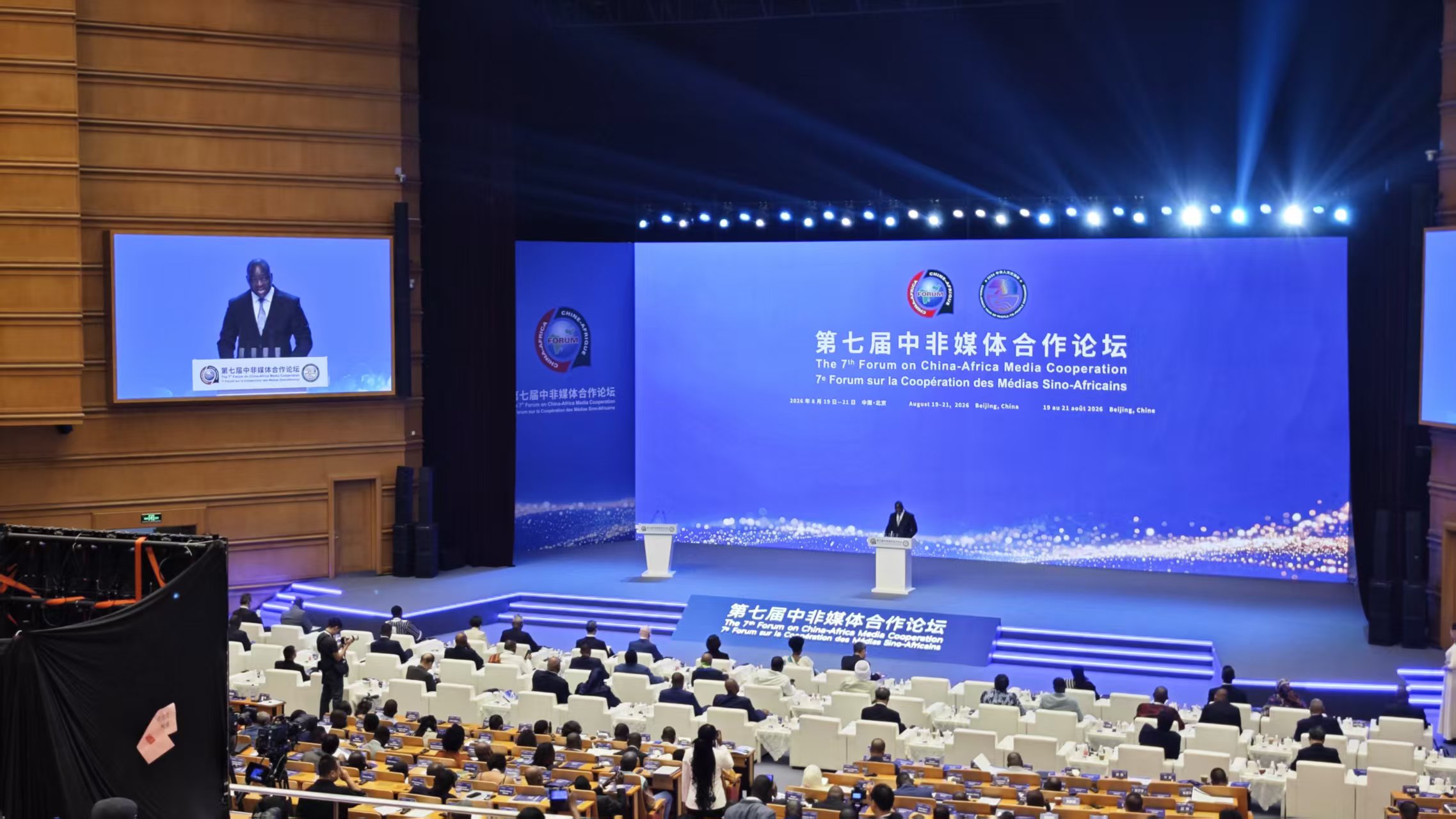
Zimbabwe has placed artificial intelligence, modern broadcasting and export promotion at the centre of its media cooperation with China, with Information Minister Dr Zhemu Soda using the country’s first commercial blueberry shipment to China to demonstrate how strategic communication can support trade and economic development.
By Abel Karowangoro, Editor, Hurumende News Hub, and Ning Kai (Victor), China Broadcasting International Economic and Technical Cooperation Co., Ltd.
Dr Soda led Zimbabwe’s delegation to the Seventh Forum on China–Africa Media Cooperation, which opened in Beijing on August 20 under the theme, “Sharing New Opportunities for Development, Creating a New Future for Audio-Visual Media.”
The forum was co-hosted by China’s National Radio and Television Administration, the Beijing Municipal People’s Government and the African Union of Broadcasting.
It brought together about 400 representatives from China and 45 African countries, including a record 33 ministerial-level delegates.
Speaking during the main forum, Dr Soda highlighted Zimbabwe’s first commercial export of fresh blueberries to China in July.
“In July, just recently, Zimbabwe successfully exported its first shipment of fresh blueberries to China, opening up new opportunities and broad horizons for our horticultural industry,” Dr Soda said.
The shipment followed the signing of a phytosanitary market-access protocol between Zimbabwe and China in September 2025.
China’s decision to introduce zero-tariff treatment for imports from 53 African countries with which it has diplomatic relations, effective May 1, 2026, has further improved the competitiveness of qualifying Zimbabwean products.
Zimbabwe began exporting blueberries to China in July, becoming one of the African countries seeking to benefit from the Chinese market’s growing demand for fresh produce.
Reuters reported that Zimbabwe is now Africa’s third-largest blueberry producer after Morocco and South Africa. Production increased from about 8,000 tonnes in 2024 to 9,500 tonnes in 2025 and is projected to reach approximately 12,000 tonnes from 850 hectares in 2026.
Blueberries signal an export shift
Blueberries are increasingly being viewed as evidence that Zimbabwe can diversify its exports to China beyond minerals and tobacco.
According to figures attributed to Chinese customs authorities, bilateral trade reached a record US$4.4 billion in 2025, representing a 15.2 percent increase from the previous year.
Zimbabwe exported goods worth approximately US$2.57 billion to China while importing products valued at US$1.83 billion, producing a trade surplus of about US$740 million.
Chinese Ambassador to Zimbabwe Zhou Ding has also identified agriculture, mineral beneficiation and digital infrastructure as sectors capable of driving stronger bilateral trade.
The export of blueberries represents a potential shift towards higher-value agricultural products, alongside citrus fruits, avocados and macadamia nuts.
However, capturing a meaningful share of the Chinese market will require greater investment in irrigation, cold-storage facilities, packaging, certification and transport, as well as continuous compliance with sanitary and phytosanitary regulations.
Zimbabwean blueberry producers have also identified expensive credit and limited access to long-term financing as constraints on the industry’s expansion.
Media enlisted to promote trade
Dr Soda said Zimbabwe’s media industry was prepared to provide greater coverage of the results of China–Zimbabwe economic cooperation.
This approach would position the media as more than a channel for Government announcements. Broadcasting, digital content and documentary production could be used to promote Zimbabwean products, explain Chinese import requirements and connect local producers with international markets.
“We will also learn from China’s media experience through short-term courses and other formats to upgrade the skills of our professionals and jointly tell more vivid stories like the blueberry story,” Dr Soda said.
The minister’s delegation included Ministry of Information Chief Director Dr Jonathan Gandari, Zimpapers chief executive William Chikoto and ZBC chief executive Sugar Chagonda.
Dr Soda told the forum that Zimbabwe wanted to adopt AI-powered systems for automated content localisation, advanced audience analytics and the modernisation of broadcasting infrastructure.
AI-assisted transcription, translation, subtitling and voice technologies could enable Zimbabwean broadcasters to distribute information rapidly in Shona, Ndebele and other indigenous languages.
The technology could also help local media organisations analyse audience behaviour, produce specialised content and reach Zimbabweans living outside the country.
Beijing declaration targets AI and co-productions
The forum adopted the Joint Declaration of the Seventh Forum on China–Africa Media Cooperation and announced 80 achievements in radio, film, television and audiovisual cooperation.
China and the participating African countries agreed to strengthen news exchanges, joint productions, programme translation, reciprocal broadcasting, youth training and cooperation in emerging formats such as micro-dramas.
The declaration also calls for cooperation in the application and governance of artificial intelligence.
Under the China–Africa Audiovisual Innovation Programme, forum materials indicated that 133 audiovisual productions and 60 episodes of agricultural programmes were translated into English, French, Arabic and Swahili between September 2024 and June 2026.
Zimbabwe now has an opportunity to advocate for programmes to be translated into Shona and Ndebele while placing locally produced documentaries, films, agricultural programmes and tourism content on Chinese and African platforms.
Training must benefit the whole industry
Dr Soda said cooperation with China had created scholarship and professional training opportunities for Zimbabwean media practitioners.
These opportunities include intensive short courses and undergraduate and postgraduate placements at Chinese universities.
Their impact will be greater if they extend beyond senior executives and public broadcasters to independent publications, community radio stations, universities, filmmakers, technicians and young digital creators.
Zimbabwe’s media industry is increasingly being shaped by online publications, podcasts, streaming services and social media producers operating outside traditional broadcasting institutions.
These emerging platforms require modern equipment, sustainable financing and training in artificial intelligence, data journalism, cybersecurity and digital-content monetisation.
Implementation is the next test
The Beijing forum has presented Zimbabwe with opportunities in broadcasting technology, artificial intelligence, skills development, co-productions and international content distribution.
However, the benefits will depend on measurable implementation.
Zimbabwe will need to complete the digitisation of broadcasting, improve internet connectivity, modernise studios and establish guidelines governing AI accuracy, copyright, privacy, deepfakes and the use of audience data.
The country must also protect local intellectual property and ensure that Zimbabwean producers participate as equal partners in international co-productions.
The blueberry shipment demonstrates that bilateral agreements can translate into tangible economic activity. The challenge is to replicate that progress across media technology, local content production and other export industries.
Zimbabwe’s Beijing mission will ultimately be judged by whether it delivers modern newsrooms, skilled professionals, more indigenous-language programming and stronger international markets for Zimbabwean stories and products.