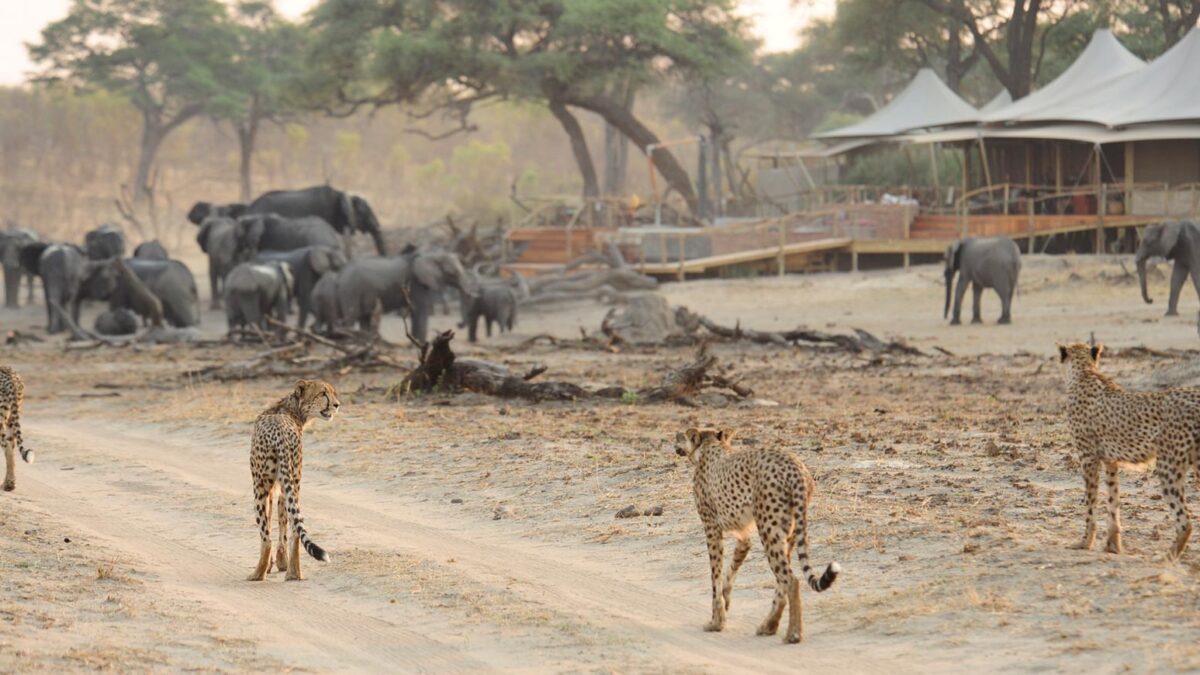
HWANGE, Zimbabwe — Severe drought and declining water supplies in and around Hwange National Park are forcing wildlife to move closer to human settlements in search of water and food, heightening the risk of human-wildlife conflict.
📰 For this and more exclusive stories, read our weekly digital print edition.
Read E-PaperPark authorities say prolonged dry conditions are putting increasing pressure on wildlife, with animals such as elephants and lions venturing into communities located near the park in search of water and grazing.
During a visit to rural Hwange on Tuesday, U.N. Resident Coordinator in Zimbabwe Rosemary Kalapurakal heard concerns from residents who said encounters with wildlife were becoming more frequent and were threatening livestock and the safety of villagers.
Some parents have reportedly become increasingly worried about allowing their children to travel to school because of the risk of encountering wild animals.
“We are not saying we do not want the animals,” one community representative said. “We like our animals. We want them to be here. But we also want to be protected.”
Water Crisis Hits Communities
The drought is also placing communities under severe water pressure, with villagers reporting that several boreholes have dried up while those still functioning are struggling to meet demand.
Residents said falling groundwater levels were making it increasingly difficult to access adequate supplies for households and livestock.
“We cannot live without water,” one community leader said. “The water table is very low. Some boreholes are dry. One borehole is serving too many households.”
Hwange National Park is also heavily dependent on artificially pumped water to sustain wildlife during dry periods.
Authorities are increasingly turning to solar-powered pumping systems to replace diesel generators, a move expected to reduce operating costs while improving the reliability of water supplies.
Climate Change Raises Concerns
Kalapurakal said the water crisis could become more severe as the effects of climate change intensify.
“I am very worried about water,” she said. “That is only going to become a bigger and bigger challenge because of climate change.”
Communities living alongside the park are now calling for measures to reduce encounters between people and wildlife.
Among their demands are stronger predator-proof livestock kraals, early-warning systems to alert residents when dangerous animals are nearby, improved communication networks and better-resourced rapid response teams.
Residents are also seeking investment in deeper and solar-powered boreholes, water storage tanks and small dams to improve access to water for both households and livestock.
The worsening situation highlights the growing challenge of balancing wildlife conservation with the safety and livelihoods of communities living on the edges of Zimbabwe’s protected areas.