Zimbabwe recorded US$10.7 billion in foreign currency inflows during the first half of 2026, with the figure projected to reach about US$20 billion by year-end, President Emmerson Mnangagwa said on Tuesday.
📰 For this and more exclusive stories, read our weekly digital print edition.
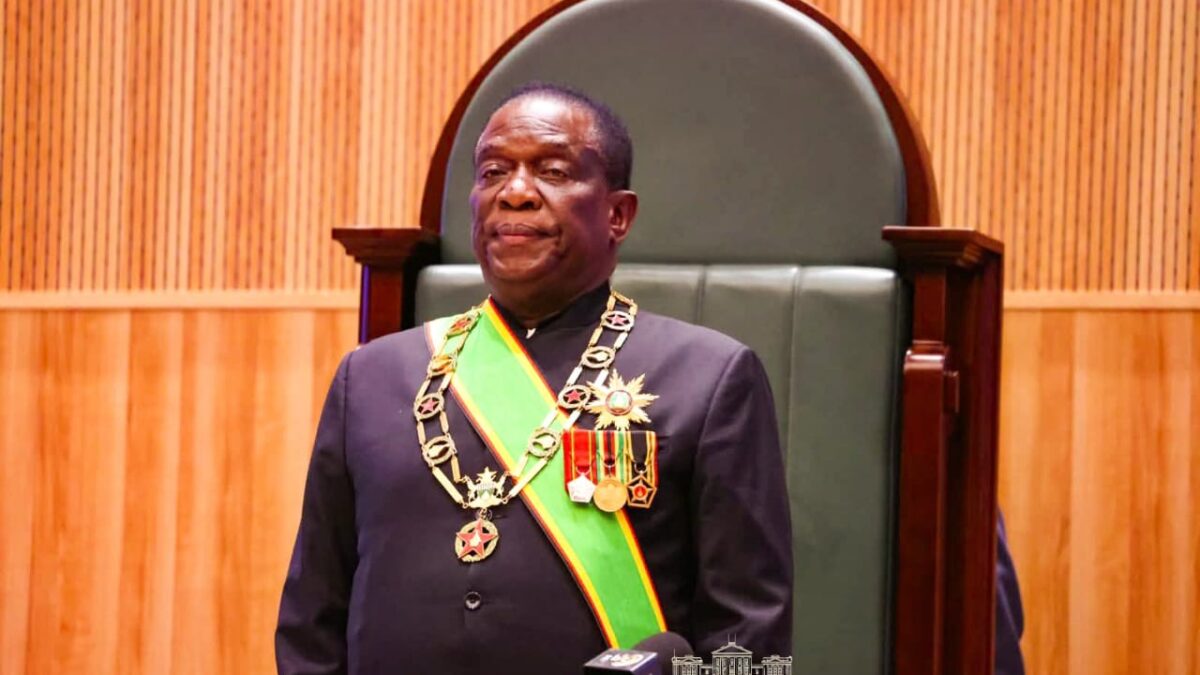
Read E-PaperAddressing Parliament during the State of the Nation Address at the New Parliament Building, Mnangagwa said the country had maintained macro-economic stability, with inflation remaining in single digits since January.
“Zimbabwe is open for business. The country has achieved sustained macro-economic stability over a considerable period of time,” he said.
The President said the economy recorded 8.3 percent growth, supported by strong performance in agriculture, which expanded by 27.9 percent and contributed 2.2 percentage points to overall GDP growth.
However, he warned of below-normal rainfall across the SADC region during the 2026/27 agricultural season.
In response, Government has introduced a six-pillar agricultural resilience plan covering strategic grain reserves, climate-smart production, financing, livestock drought mitigation, coordination and early-warning systems.
Mining also featured prominently in the President’s address, with Government continuing to promote exploration, investment and local mineral processing.
President Mnangagwa highlighted the production of lithium sulphate in Zimbabwe and ongoing investments in mineral processing, iron and steel.
“In line with our thrust on mineral beneficiation and value addition, we take pride in that we recently recorded the first locally-produced lithium sulphate from Africa,” he said.
He said Government would also continue supporting small-scale miners through formalisation, financing and access to equipment.
On energy, Mnangagwa said electricity generation had improved, with Kariba and Hwange supplemented by independent power producers, captive plants and solar projects.
“Frequent load shedding is now a thing of the past,” he said.
Government is also expanding rural electrification through grid extensions and mini-grids, with the aim of connecting all public institutions.
Infrastructure development is another major focus, with fresh work planned on sections of the Harare-Beitbridge, Harare-Kanyemba, Harare-Nyamapanda, Bulawayo-Victoria Falls, Harare-Chirundu and Kwekwe-Nkayi-Lupane highways.
Government also plans to complete the Mabvuku Interchange and continue developing other strategic interchanges.
On rail infrastructure, Mnangagwa said Zimbabwe and Zambia were developing a 311-kilometre Kafue-Lion’s Den railway link.
Rehabilitation of the 614-kilometre Chicualacuala-Plumtree railway line is expected to be completed by August 2027. The project forms part of a US$12 billion tripartite railway agreement involving Zimbabwe, Mozambique and Botswana.
Tourism and aviation also featured in the address, with Mnangagwa reporting continued growth in tourism during the first half of 2026.
The refurbishment of Masvingo Airport has been completed, while the upgrading of Kariba Airport is planned.
Two additional international airlines are expected to start flying into Zimbabwe in 2027, while cargo facilities at Victoria Falls and J.M. Nkomo International Airports are set for expansion.
Government is also continuing with the Presidential Title Deeds Programme, aimed at formalising property ownership in urban and peri-urban areas.
On skills development, Mnangagwa said Zimbabwe would host African Union Skills Week in October, while skills data is being used to support the reskilling, upskilling and employment of citizens returning from South Africa.
In the health sector, Government is expanding primary healthcare services and strengthening public health institutions, including measures aimed at improving access to essential medicines.