📲 Join our WhatsApp Channel for Breaking News!
Follow on WhatsAppZimbabwe risks missing its Vision 2030 goal of upper-middle-income status by six years unless it moves faster to turn recent economic stability into real jobs and industrial growth, the World Bank has cautioned.
📰 For this and more exclusive stories, read our weekly digital print edition.
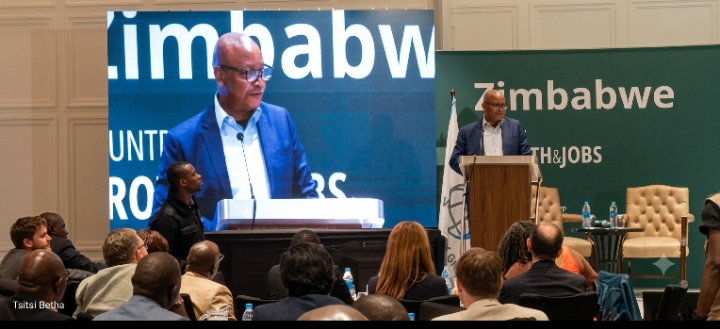
Read E-PaperThe caution came as the Bank launched its Zimbabwe Growth and Jobs Report at a high level session held at the Hyatt Miekles Hotel in Harare on Thursday morning. The report credits the country with creating a rare window of opportunity through macroeconomic stabilisation, but insists that window will not stay open forever without deeper reform.
Under current conditions, the World Bank projects Zimbabwe’s economy will expand by roughly four percent a year through 2030. At that pace, the nation would only reach upper-middle-income status in 2036, six years behind its own target.
Presenting the findings, World Bank Senior Country Economist Victor Steenbergen acknowledged the strides already made. Growth averaged nearly six percent between 2021 and 2025, and local-currency inflation dropped to single digits in early 2026 for the first time since 1997.
Yet Steenbergen was clear that stability has not translated into shared prosperity. Workers are leaving agriculture, he noted, but rather than moving into higher-value industries, most are drifting into low-productivity services and informal trade. Four in five jobs in Zimbabwe remain informal, median wages sit near 130 US dollars a month, and close to half the population still lives below the international poverty line.
Andrew Bvumbe, head of the Debt Management Office in the Ministry of Finance, Economic Development and Investment Promotion, closed the session with a blunt assessment of what comes next.
“At the end of the day, we don’t need stability. Stability must translate into transformation,” Bvumbe told the delegates. He argued that creating decent, productive work for young people should now sit at the centre of government policy.
Bvumbe pointed to agriculture, mining, manufacturing, construction, renewable energy and healthcare as sectors holding untapped potential, provided Zimbabwe builds value chains that keep more earnings and jobs at home. Cotton, he suggested, offers a clear example.
“Imagine what will happen if we go through that value chain,” he remarked, describing how deeper processing could lift the fortunes of small-scale cotton farmers and ripple outward into the wider economy.
The finance official also welcomed ongoing efforts to ease the cost of doing business, including moves to scrap unnecessary levies and licensing hurdles that have long burdened sectors such as hospitality. Cooperation with the private sector, he added, remains essential to unlocking fresh investment and production.
To guide that transformation, the World Bank report sets out three interlocking pillars: building foundational infrastructure, establishing a business-friendly regulatory climate, and mobilising private investment while reducing its risks.
The infrastructure pillar centres on dependable energy, transport links, irrigation and agricultural market systems. The regulatory pillar targets the trade costs, tax burdens and red tape that push businesses into informality. The third pillar calls for stronger property rights, secure land tenure, faster commercial justice, deeper financial markets and policies capable of drawing foreign direct investment.
Debt resolution underpins the entire strategy, according to the report. Clearing arrears would restore access to concessional financing and lower the country’s risk premium, freeing up room for both public infrastructure spending and private capital.
Bvumbe confirmed that government reforms are already under way to create fiscal space for critical infrastructure, particularly in energy, road networks and water reticulation. Sequencing matters, he suggested, with debt resolution and macroeconomic discipline laying the groundwork before larger infrastructure investment can follow.
Among infrastructure priorities, energy offers the highest returns, the report finds, followed closely by transport and irrigation. Such investment could generate construction jobs in the near term while easing the cost pressures currently holding businesses back from expanding their workforces.
On informality, the report suggests a shift in approach. Rather than pushing to eliminate informal work outright, it recommends helping businesses and workers climb toward greater productivity and, eventually, formal status. Informal activity already accounts for an estimated two-thirds of Zimbabwe’s GDP and sustains millions of households, including through artisanal and small-scale mining, which has become a vital source of income for rural communities and women in particular.
Bvumbe framed the path forward as one built on job-rich growth, skills development and entrepreneurship, paired with clear routes for informal workers to transition into the formal economy. Young people and women, he stressed, must remain at the heart of that strategy.
Earlier panel discussions brought together Labour and Economic Development Research Institute of Zimbabwe director Godfrey Kanyenze, Confederation of Zimbabwe Industries chief executive Sekai Kuvarika and IFC Senior Investment Officer Alfonce Mudzi. Their exchange centred on the need for coordinated reform, stronger private-sector participation, transparent public-private partnerships, policy certainty and regional competitiveness to attract both local and foreign capital.
Closing the event, Bvumbe expressed confidence that Zimbabwe possesses the resources, skills and political will to build a stronger economy, but stressed that turning potential into progress will require sustained cooperation among all stakeholders.
“Let us therefore continue working together to transform our economic potential into tangible improvement in the lives of our people,” he said.
The World Bank believes full implementation of its proposed reforms could meaningfully accelerate growth and deliver more, better-paying jobs, placing Zimbabwe on a credible path toward upper-middle-income status. Its report concludes that the country holds the natural resources, human capital and policy momentum needed for genuine transformation, but warns that the current window will not remain open indefinitely.
Get instant news updates delivered straight to your WhatsApp.