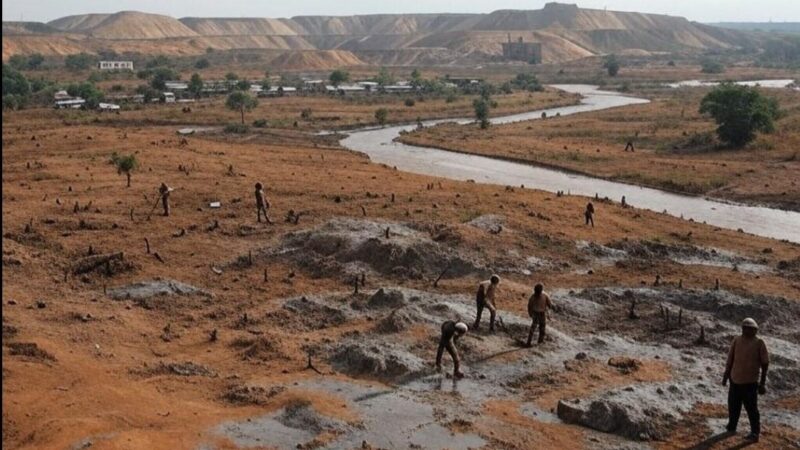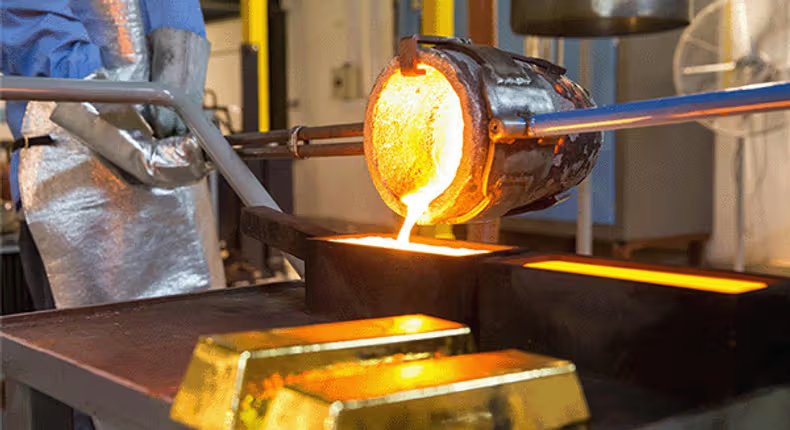
Zimbabwe’s drive to expand its mining sector has received a major boost following a significant increase in gold reserves at the Dokwe Gold Project in Matabeleland North, pushing the project’s estimated value beyond US$1 billion and cementing its status as one of the country’s largest undeveloped gold assets.
The latest resource update shows that proven and probable gold reserves at Dokwe have increased by 42 percent to 1.13 million ounces, while total gold resources are estimated at approximately 1.6 million ounces.
Located in Tsholotsho District, about 110 kilometres west-northwest of Bulawayo, the project is expected to become one of Zimbabwe’s most important gold-producing operations once development is completed.
According to project projections, the mine is expected to produce an average of 80,000 ounces of gold annually, with peak production reaching 100,000 ounces per year.
The operation is anticipated to have a mine life of approximately 20 years.
The project’s economic outlook is equally impressive. Pre-tax valuation estimates place the project at US$1.06 billion, while lifetime earnings before interest, taxes, depreciation and amortisation (EBITDA) are projected to approach US$2 billion.
Initial capital expenditure for mine development is estimated at US$164 million, with investors expected to recover their investment within a year of commercial production.
The development comes as Zimbabwe intensifies efforts to grow its mining sector and increase gold output.
The country is targeting 50 tonnes of gold production in 2026 after achieving a record 46.7 tonnes in 2025.
Gold remains Zimbabwe’s largest foreign currency earner, generating approximately US$4.61 billion in export revenues last year.
The precious metal also plays a strategic role in supporting the country’s gold-backed Zimbabwe Gold (ZiG) currency.
Industry analysts say Dokwe could become a significant contributor to national output.
At full production, the mine is expected to produce around three tonnes of gold annually, representing approximately six percent of Zimbabwe’s 2026 national production target.
The project also strengthens Zimbabwe’s growing pipeline of large-scale mining investments. It joins other major developments, including the expansion of the Bilboes Gold Project, as investors continue to show confidence in the country’s mineral sector.
Beyond increasing gold production, the Dokwe Gold Project is expected to create employment opportunities, stimulate local business activity, improve infrastructure and contribute to economic growth in Matabeleland North.
The rapid advancement of the project signals a new phase in Zimbabwe’s mining development agenda, with the country positioning itself as one of Africa’s leading gold-producing nations and an increasingly attractive destination for mining investment.
Government officials have repeatedly identified mining as a key pillar of economic transformation under Vision 2030, with large-scale projects such as Dokwe expected to play a critical role in driving exports, industrialisation and sustainable economic growth.