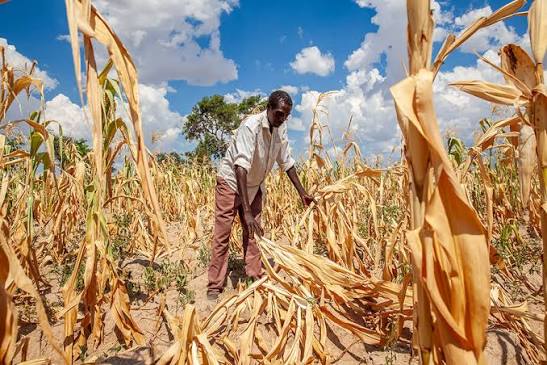
Zimbabwe could face another difficult agricultural season after international climate forecasters warned that a developing El Niño system may become one of the most intense ever observed.
📰 For this and more exclusive stories, read our weekly digital print edition.
Read E-PaperThe UK Met Office says the warming event in the Pacific Ocean could combine with the effects of human-driven climate change to make 2027 the hottest year recorded globally. The agency has described that possibility as “very likely”.
El Niño is a naturally occurring climate pattern that develops at irregular intervals, usually every two to seven years. It is associated with changes in ocean temperatures, wind circulation and rainfall across large parts of the world.
During a normal year, trade winds move across the Pacific from east to west, helping to keep warm water in the western region. When El Niño develops, those winds weaken or sometimes change direction, allowing unusually warm water to move towards the eastern Pacific. The ocean then releases additional heat into the atmosphere, influencing global temperatures and weather patterns.
The event is generally declared when sea-surface temperatures in a key Pacific monitoring zone rise at least 0.5 degrees Celsius above the long-term average. Current readings, however, are reportedly more than 2 degrees Celsius above normal, with Met Office projections indicating that the anomaly could rise beyond 3 degrees Celsius as the phenomenon reaches its peak.
Such a rise would be without precedent in records dating back to 1950. The Met Office believes the event could be the strongest witnessed since the nineteenth century, while some climate researchers have suggested that temperatures could reach 4 degrees Celsius above average.
Prof Adam Scaife, who leads long-range forecasting at the Met Office, said the strength of the signal was exceptional. He noted that he had not previously seen forecasts showing an El Niño of similar intensity.
There are also concerns about heat stored below the ocean surface. In some areas, water about 100 metres deep is said to be approximately 8 degrees Celsius warmer than usual. Scientists believe this subsurface heat could supply further energy to the event and help prolong its effects.
Weather conditions in other parts of the world are already showing possible signs of disruption. India has experienced weaker-than-average monsoon rainfall, while hurricane activity in the Atlantic has reportedly been lower. Dr Zeke Hausfather of Berkeley Earth said that, if the most extreme projections materialise, the event could rank among the strongest El Niño episodes in several centuries.
For Zimbabwe, the greatest concern is the likely impact on the 2026/2027 farming season. Forecasts point to a heightened risk of prolonged drought, below-average rainfall and periods of extreme heat, conditions that could place additional pressure on crop production, livestock, water supplies and rural livelihoods.
The prospect comes as Zimbabwe continues to strengthen its response to climate-related shocks. Farmers, communities and authorities may need to prioritise water conservation, drought-tolerant crops, early climate information and livestock protection measures ahead of the coming season.
Although El Niño is a natural phenomenon, scientists emphasise that rising global temperatures caused by human activity can intensify the heat associated with the event. The combination could make its consequences more severe for countries such as Zimbabwe, where agricultural production remains highly dependent on seasonal rainfall.