📰 For this and more exclusive stories, read our weekly digital print edition.
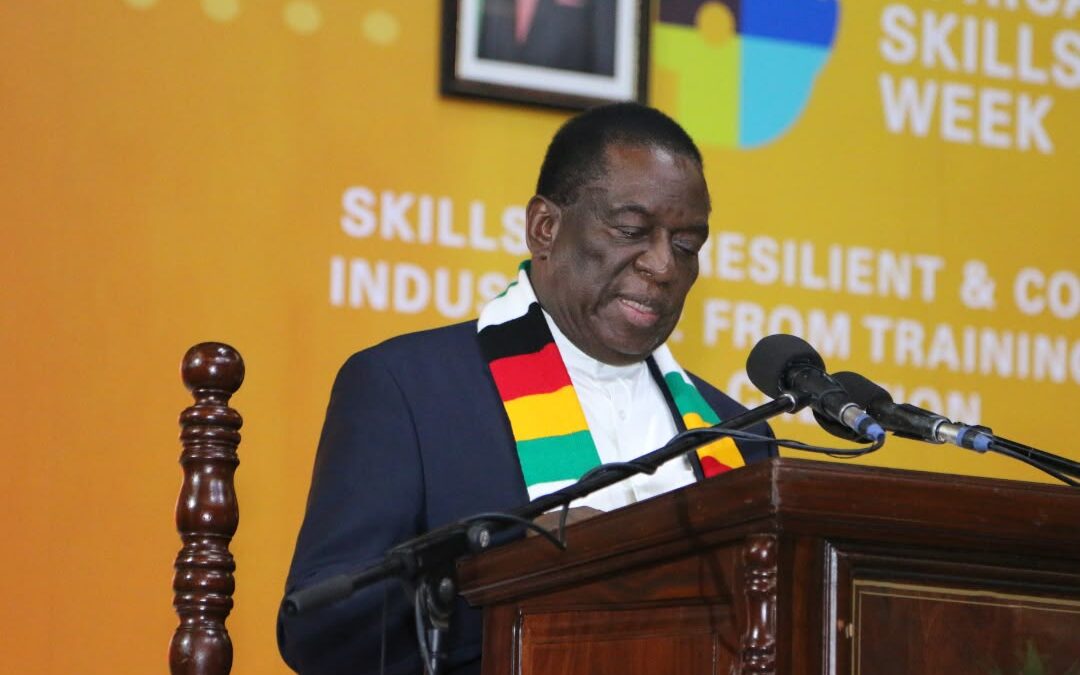
Read E-PaperPresident Emmerson Mnangagwa opened Africa Skills Week 2026 in Harare on Monday, urging the continent to stop exporting raw minerals, while German Ambassador to Zimbabwe H.E. Christoph Retzlaff pledged Germany’s continued the support for technical and vocational training and for stronger partnerships with African countries.
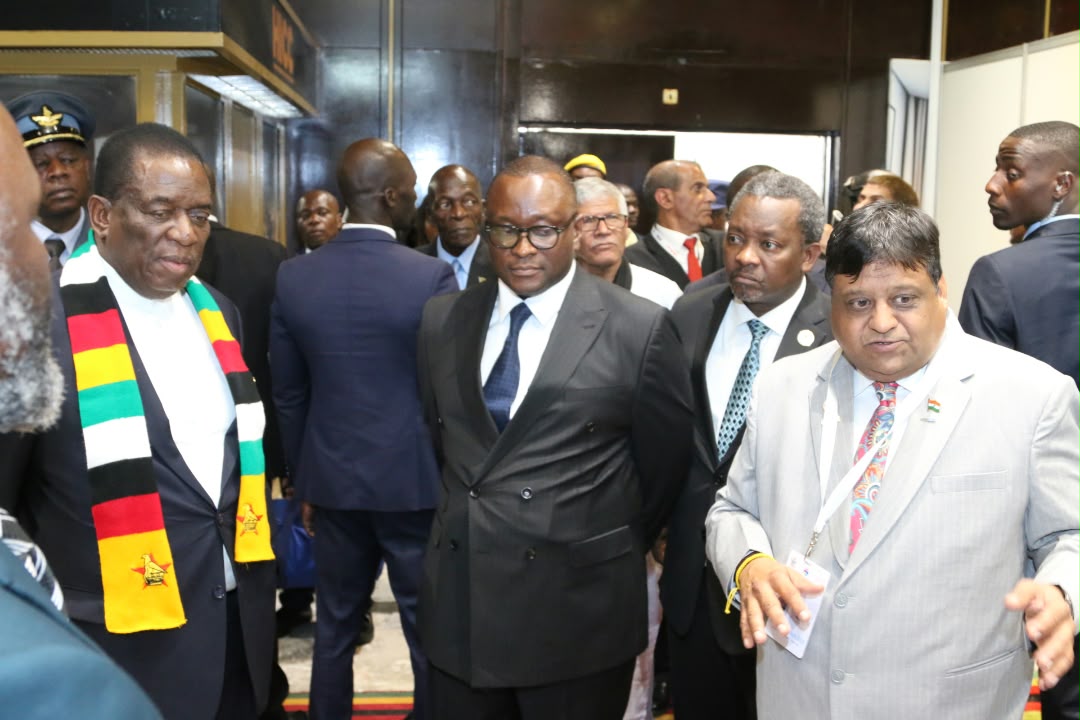
Speaking at the Harare International Conference Centre, President Mnangagwa said Africa’s mineral wealth and youthful population must be matched by specialised technical skills, technology and investment in local production. He called for faster mineral beneficiation and industrialisation to create jobs, strengthen regional trade and keep more economic value on the continent.
The week runs from October 12 to 16 under the theme “Skills for Resilient and Competitive African Industries: From Training to Value Creation.” It brings together policymakers, educators, industry representatives and development partners. The hosting minister is Dr Jenfan Muswere, Minister of Skills Audit and Development.
Ambassador Retzlaff reaffirmed Germany’s commitment to cooperating with African countries on technical and vocational education and training, describing skills, innovation and partnerships as key drivers of the continent’s future economic development. He thanked the Government of Zimbabwe and the African Union for hosting the conference, saying it came as technological advances, economic transitions and global shifts reshaped the world of work.
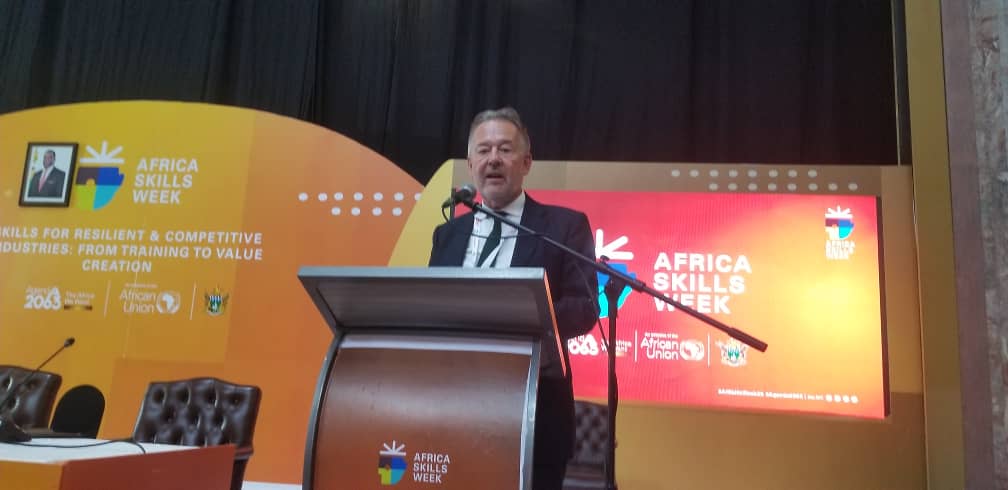
“Africa and Germany are united by a shared belief in the power of skills, innovation and partnerships to shape the Africa of tomorrow,” he said.
He said Africa’s young population was a major opportunity for economic transformation, provided young people received the education and practical skills needed for changing industries.
“Africa holds something truly remarkable: a generation whose energy and creativity and determination can transform challenge into opportunity,” he said.
Drawing on Germany’s experience, the ambassador stressed the role of practical learning in raising productivity and supporting industrial development. He welcomed the African Union’s leadership in placing skills at the centre of its development agenda, particularly through the Continental TVET Strategy 2025–2034. He cautioned, however, that such strategies would only make a difference if governments and institutions turned them into national reforms, regional cooperation and real opportunities for learners and workers.
“The challenge now is implementation and translating continental ambitions into national reforms, regional cooperation, practical opportunities.”
He also mentioned that the week offered a chance to deepen cooperation between African countries and their international partners, while ensuring that African governments and institutions stay in the lead in setting their own development priorities. Africa and Europe, he noted, face shared challenges including demographic change, technological transformation, climate change, skills shortages and the need to create employment. Those common concerns, he said, opened room for mutual learning and coordinated action, and Germany wanted to strengthen cooperation with African countries, including Zimbabwe, in economic development, training and employment.
Citing the African Union’s Agenda 2063, he underscored the importance of investing in education and skills for long-term development.
“As Agenda 2063 reminds us, Africa’s destiny will be determined by well-educated and skilled citizens,” he said.
He urged delegates to leave Harare with firm commitments. “Let us make this week here in Harare a turning point, a moment when ideas become commitments and commitments become the building blocks of a prosperous, peaceful and sustainable Africa.”
President Mnangagwa in his address reported that the implementation of the African Continental Free Trade Area (AfCFTA) had opened opportunities for intra-African trade and regional value chains, but warned that tariff cuts alone would not deliver the continent’s industrial ambitions.
“The operationalisation of the African Continental Free Trade Area has opened up avenues for intra-African trade, regional value chain integration, and collective industrialisation,” he said.
“However, this will not only succeed based on increased tariff reductions, trade in human capital, high-value manufactured goods, processed agricultural products, and competitive digital services across our borders.”
He said African countries needed specialised expertise in logistics, green technology, agro-processing, pharmaceuticals, packaging and international trade law.
On minerals, the President was emphatic that Africa should stop shipping out valuable resources without sufficient local processing.
“Under Agenda 2063 and the Action Plan for the Accelerated Industrial Development for Africa, local mineral beneficiation and value addition is now an urgent necessity,” he said.
“Our continent’s vast reserves of minerals, including lithium, platinum, nickel, cobalt, and rare earth elements, should never be extracted and exported as primary raw commodities. No. This current productive legacy should end.”
He proposed regional centres of excellence to train workers for Africa’s green transition, industrialisation and modernisation, and urged countries to strengthen implementation of the African Continental Qualifications Framework so that qualifications are recognised and workers can move across borders.
President Mnangagwa said industrial development must be inclusive, with gender equality, youth participation, disability inclusion and social justice built into skills policies.
“Going forward, due attention and empowerment in these fields should be accorded to both girls and boys,” he said, calling for greater participation of women in science, technology, engineering and mathematics (STEM) and technical trades.
On financing, he urged governments to consider domestic resource mobilisation, national training levies, investor partnerships and collaboration with financial institutions.
He challenged delegates to produce practical recommendations and implementation plans.
“Our deliberations must advance African solutions, African talents,” he said.
“The Africa Skills Week 26 is called upon to deliver tangible results, an actionable community, a robust implementation matrix, and a clear execution action plan.”
Concluding, he said Africa must take responsibility for its own development through unity, political commitment and sustained investment in its people.
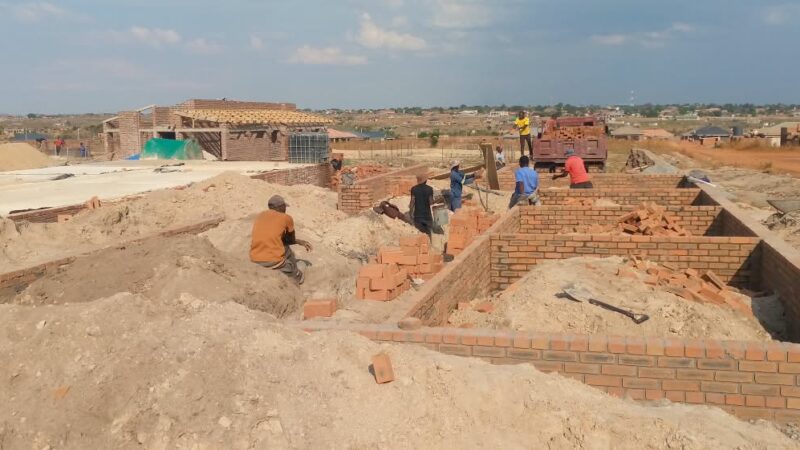
“We are masters of our own destiny. Through a shared vision, strong political will and dedicated investment in our people, we are building a resilient, competitive, integrated, and transformed African continent, brick by brick, stone upon stone, and step by step, forward ever, backwards never.”
He then declared Africa Skills Week 2026 officially open.
In his remarks, the African Union Commissioner for Education, Science, Technology and Innovation Professor Gaspard Banyankimbona said Africa urgently needed to narrow the gap between the number of young people entering the labour market and the jobs available to them. More than 12 million young Africans enter the labour market each year, he told delegates, while the formal economy absorbs only about three million.
He said industrialisation would demand investment in technical and vocational skills, technological capacity and the ability to manufacture for African and international markets. He also pointed to Africa’s small share of global investment in advanced technologies such as robotics and artificial intelligence, and called for stronger technological sovereignty.
Skills development, the Commissioner said, should be tied to AfCFTA opportunities, particularly in agro-processing, automotive manufacturing and pharmaceuticals. He stressed harmonising skills standards across countries and implementing continental frameworks, including the Continental Education Strategy for Africa, the Continental Technical and Vocational Education and Training Strategy, and the Science, Technology and Innovation Strategy for Africa.
Banyankimbona commended Zimbabwe’s Education 5.0 model, which links teaching and research with innovation, community service and industrialisation. He said outcomes of the week would feed into the African Union’s specialised technical committee meeting, scheduled for November 2 to 6, 2026, in Addis Ababa, Ethiopia. He also proposed upgrading Africa Skills Week into a high-level Africa Education and Skills Summit, subject to stakeholder agreement, and urged member states to organise national activities and turn continental commitments into practical action.
The United Nations Resident Coordinator in Zimbabwe Dr Rosemary Kalipura-Kau said skills development must deliver measurable economic outcomes, including higher productivity, competitive enterprises, decent employment and innovation. She called for closer alignment between skills policies and industrial strategies so that graduates and trainees can meet employers’ needs.
She named digital skills, STEM education, entrepreneurship and lifelong learning as key to preparing young people for shifting labour markets, and added that creativity, critical judgement, adaptability and problem-solving were growing in importance in a technology-driven economy.
Zimbabwe’s priorities in mineral beneficiation, industrial development, digital transformation and the energy transition, she said, require a workforce with relevant technical and professional capabilities. She linked skills development to the National Development Strategy 2 and Education 5.0, including innovation hubs, industrial parks, STEM education and digital skills programmes.
The United Nations intends to work with Zimbabwe on its next cooperation programme for 2027–2031, she said, strengthening ties between education and industry, investment and skills. Priority areas include agriculture, agro-processing, mining, manufacturing and the green economy, with a focus on young people and women. She also stressed that people with disabilities, rural communities and other marginalised groups must benefit.
The conference also featured youth-led science. Nayeli Chinzou, a 17-year-old student at Arundel School in Zimbabwe, presented research on biodegradable plastic made from cow dung fibres and locally available materials, including corn starch, water and a rice-based extract meant to improve the material’s properties.
She said the project was inspired by concern over discarded plastic containers and the need for alternatives that reduce pollution. Her work involved developing samples and testing their mechanical performance, durability, biodegradation and chemical composition, with early problems such as brittleness requiring further experimentation.
Chinzou reported winning five awards at the Zimbabwe Science Fair, including a gold medal, and said she represented Zimbabwe at an international science competition in Pittsburgh, where she earned further recognition. Her presentation showed how young African researchers can use local resources to tackle environmental and industrial challenges.
Africa Skills Week 2026 is expected to produce recommendations and implementation plans aimed at strengthening vocational training, linking education with industry and ensuring that investment in skills translates into productive employment and economic value across the continent.