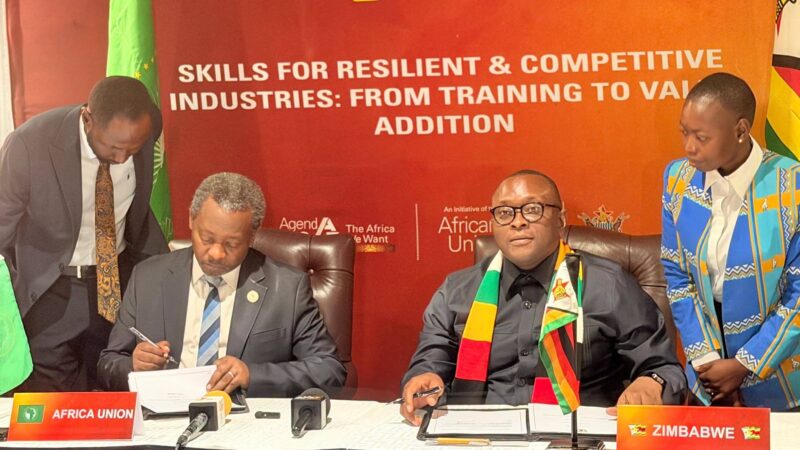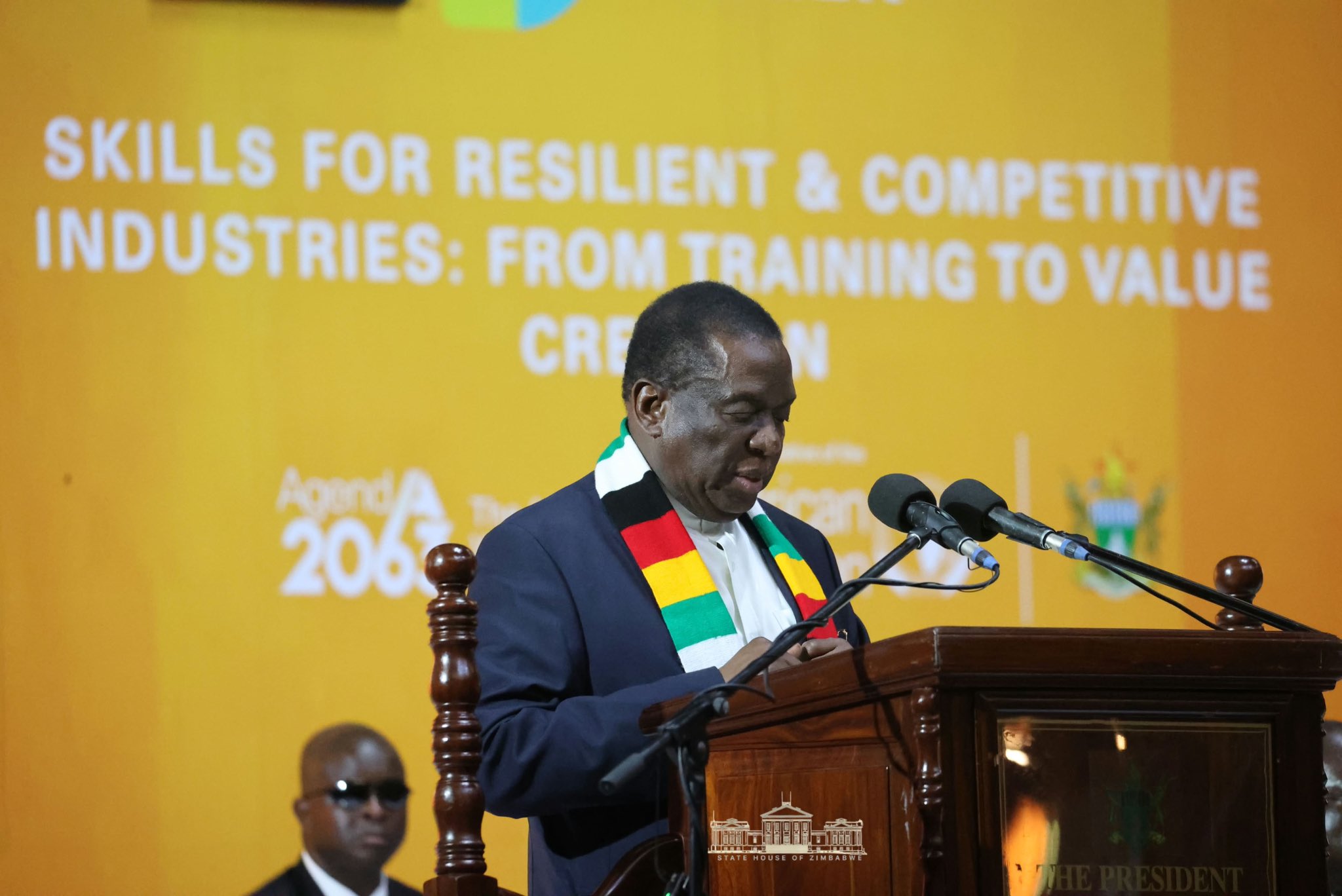
President Emmerson Mnangagwa has called on African countries to invest in practical skills development, technical training and enterprise creation, saying the continent must harness its youthful population to drive industrialisation and economic growth.
📰 For this and more exclusive stories, read our weekly digital print edition.
Read E-PaperSpeaking at the official opening of the African Union Africa Skills Week 2026 in Zimbabwe, Mnangagwa said African countries needed to move beyond theoretical education and equip young people with skills that respond to industry needs.
He said more than 60 percent of Africa’s population was under the age of 35, presenting an opportunity for economic transformation if young people received relevant training and opportunities to apply their skills.
“Our continent possesses the youngest population in the world, with over sixty percent under the age of thirty-five. This immense demographic potential must be converted into a competitive force through deliberate investments in relevant skills, work-based learning, and enterprise incubation,” said Cde Mnangagwa.
The President said this year’s theme, “Skills for Resilient and Competitive African Industries: From Training to Value Creation”, highlighted the need to connect education with practical economic activities.
He also emphasised that Africa’s development should be driven by its people rather than relying on external solutions.
“In Zimbabwe, our national development philosophy guides us: Nyika inovakwa, inotongwa, inonamatigwa, nevene vayo / Ilizwe lakhiwa, libuswe, likhu-le-ke-lwe ngabanikazi balo,” he said.
“The development of our continent cannot be outsourced, nor can it rely on external formulas,” Mnangagwa added.
He challenged delegates to develop practical proposals that address skills shortages, strengthen local industries and ensure that education contributes directly to production, innovation and job creation.
The week-long event has brought together African leaders, policymakers, industry representatives, academics and young people to explore ways of linking skills development with employment and economic growth.
Beyond technical training, discussions at the gathering have also highlighted the role of environmental sustainability and innovation in creating opportunities for young people.
Claris Mandoreba of Zimbabwe Sunshine Group said the organisation was working to promote a clean environment while helping young people develop responses to climate change and environmental degradation.
She said the initiative sought to equip young people with strategies that protect the environment while enabling them to earn a living.
Mandoreba said Africa Skills Week presented an opportunity to develop a wider market for young people involved in upcycling and integrated resource recovery initiatives in Harare and other parts of Zimbabwe.
The programmes focus on diverting waste from landfills and transforming it into useful products, creating opportunities for skills development and enterprise.
“We are hoping that the skills that the young people of Zimbabwe have gained can be passed on to the rest of the continent so that we share the vision of a clean Africa, an Africa that has its resources taken care of in the proper manner, instead of just wasting them, and turning our environment into landfills and gabbage disposal places,” she said.
Her remarks highlighted how practical skills can contribute not only to industrial development but also to environmental protection and employment creation.
Meanwhile, University of Zimbabwe Vice Chancellor Professor Paul Mapfumo said Africa Skills Week offered the institution an opportunity to showcase its innovations and products to potential markets across the continent.
He said the university was exhibiting products developed through its heritage-based innovation approach, which seeks to use local knowledge and resources to support industrialisation.
Among the products on display are drones designed for agricultural applications, with potential uses in health and mining, as well as Mbeu, a multi-grain bio-fertiliser produced by the university.
The institution is also showcasing skincare and pharmaceutical products developed as part of its Education 5.0 approach, which emphasises teaching, research, community service, innovation and industrialisation.
Mapfumo said the university’s products were contributing to Zimbabwe’s industrialisation drive while demonstrating how local research could be turned into practical solutions.
The contributions from government, environmental organisations and academic institutions reflect the broader objectives of Africa Skills Week: equipping young people with relevant skills, supporting innovation and ensuring that training translates into employment, enterprise development and locally produced goods and services.