The government has begun the process of reviewing laws and policies to ensure that intersex persons are legally recognised and that the challenges they face are addressed through legislative reforms.
📰 For this and more exclusive stories, read our daily digital print edition.
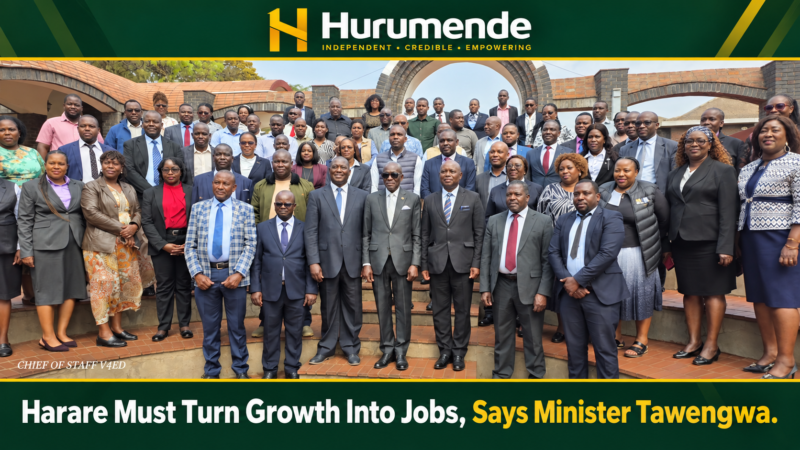
Read E-PaperThe initiative was announced during a high-level breakfast meeting held in Harare on Wednesday, bringing together Cabinet ministers, senior government officials, development partners, health experts, civil society organisations and representatives of the intersex community.
Justice, Legal and Parliamentary Affairs Minister Ziyambi Ziyambi officially opened the meeting, which was also attended by Health and Child Care Minister Dr. Douglas Mombeshora, Public Service, Labour and Social Welfare Minister Edgar Moyo, Women Affairs Permanent Secretary Dr Mavis Sibanda and Deputy Justice Minister Nobert Mazungunye.
Intersex people are born with natural biological sex characteristics, including chromosomes, hormones, or reproductive anatomy, that do not fit the typical definitions of male or female. This is a naturally occurring biological variation and is different from gender identity or sexual orientation.
The meeting reviewed findings from nationwide consultations conducted by the Ministry of Justice, Legal, and Parliamentary Affairs through the Law Development Commission, with technical support from the United Nations Development Programme (UNDP). The consultations highlighted several legal, medical, and social barriers faced by intersex people in Zimbabwe.
Among the key concerns raised was that Zimbabwe’s current legal system only allows people to be registered as either male or female. This has created difficulties for many intersex people when applying for birth certificates, national identity cards and other official documents, especially where their biological characteristics do not match the available legal classifications.
The study also found that the lack of legal recognition limits access to important services, including education, healthcare, banking, employment and voter registration.
Participants also highlighted health-related concerns, including reports of non-consensual medical procedures on intersex children, inadequate protection of bodily autonomy, limited access to sexual and reproductive healthcare and insufficient training for healthcare workers on intersex issues.
In addition, many intersex people continue to experience stigma, discrimination, social exclusion, interrupted education and reduced employment opportunities.
Addressing delegates, Minister Ziyambi said the review process was prompted by a court case that exposed shortcomings in Zimbabwe’s legal framework.
“We received a legal challenge on this matter, which prompted us to seek advice from the Attorney-General. As a ministry, we then decided to commission research to better understand the issues,” he said.
He noted that Zimbabwe’s Constitution currently recognises only two sexes male and female making it necessary to study how the law can respond to the needs of intersex persons.
Minister Ziyambi said the meeting was designed to gather expert views before the government develops policy recommendations.
“We want contributions from all stakeholders so that the policy we eventually submit reflects a whole-of-government and whole-of-society approach. This process is still ongoing, and the views shared today will help shape future reforms,” he said.
Public Service, Labour and Social Welfare Minister Edgar Moyo described the discussions as timely, saying they had brought attention to an issue that has received little public understanding.
He said existing legislation does not adequately cater for people who do not fall within the traditional male or female classifications.
“The testimonies we heard were deeply moving. Some people are repeatedly questioned whenever they travel because their appearance does not match the sex indicated on their identity documents. That is a difficult experience which requires legal solutions,” Moyo said.
He said the government would work towards reviewing legislation, strengthening public awareness and improving policies to ensure intersex persons are treated fairly and have equal access to public services.
As the ministry responsible for child protection and social welfare, he added that efforts would also focus on making Government services more inclusive.
Stakeholders who attended the meeting expressed optimism that the consultation process would lead to reforms that protect the rights, dignity and equality of intersex persons while improving their access to essential services across the country.